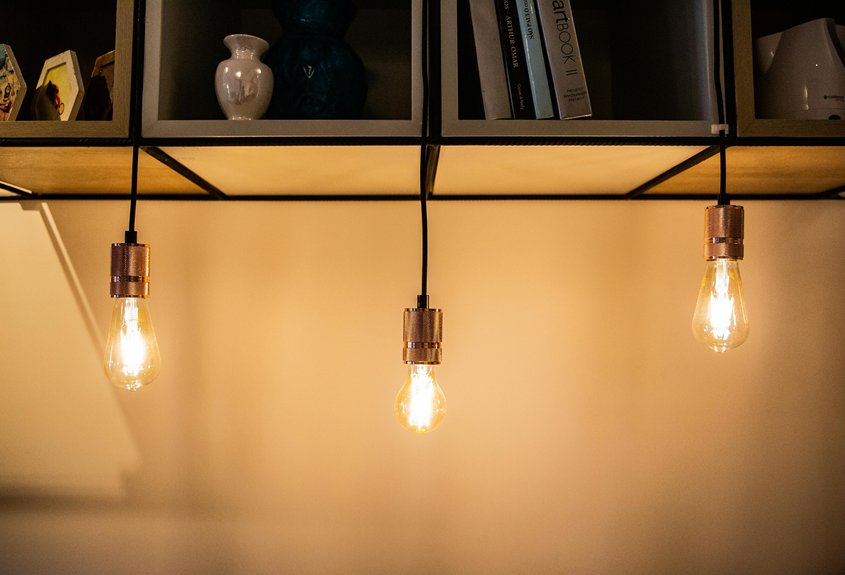
Forget wattage—it’s outdated. You actually want lumens, which measure real brightness. For your living room, aim for 1,500–3,000 lumens total using energy-efficient LEDs (they hit 78–130 lumens per watt versus incandescent’s measly 15).
A single 9-watt LED bulb delivers what an old 60-watt bulb managed. Check your fixture’s maximum wattage rating first—exceeding it risks overheating and fire hazards. Go dimmable for mood control, layer ambient plus task lighting, and stick with warm 2700K–3000K tones. Getting this right for your space requires attention to these details.
Lumens Matter More Than Wattage

Why do we still talk about wattage when picking light bulbs? Honestly, it’s outdated thinking. What actually matters is lumens—the measurement of brightness your living room needs.
Wattage is outdated thinking. What actually matters is lumens—the measurement of brightness your living room needs.
Here’s the truth: a 60-watt incandescent produces about 800 lumens. An LED doing the same job? Only 9 watts. That’s the energy efficiency gap right there.
For your living room, you’re targeting 1,500–3,000 lumens total brightness. With LEDs, that’s roughly 15–30 watts. Focus on lumens instead of wattage.
Why the difference? LED efficacy outperforms incandescent. We’re talking 78–130 lumens per watt for LEDs versus just 15 lpW for old incandescent bulbs.
Want flexibility? Grab dimmable LEDs. Adjust perceived brightness without rewiring anything. You’ll match your room’s needs while reducing energy consumption and costs.
Don’t Exceed Your Fixture’s Wattage Limit (Here’s Why)
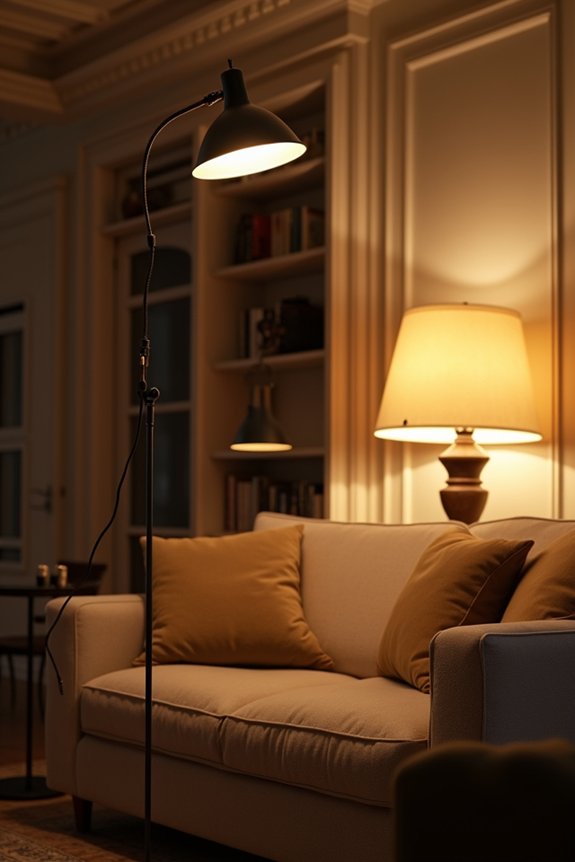
every light fixture has a maximum wattage rating, and it’s there for a reason. Your fixture’s rating isn’t a suggestion—it’s a safety boundary you shouldn’t cross.
When you exceed your fixture’s wattage limit, you’re risking real problems:
- Shortened bulb lifespan and voided warranties
- Overheating that damages the fixture itself
- Fire hazards and electrical failures
- Wasted energy despite higher wattage
If you want bright living rooms, here’s what works: check your fixture’s label first, then choose energy-efficient LEDs that deliver the lumens you need within that wattage limit. If brightness demands exceed your fixture rating, split lighting across multiple fixtures or install dimmable LEDs instead. Your safety depends on respecting these limits.
The Right Lumens For a Living Room
Now that you’ve got your fixture’s wattage sorted, it’s time to focus on what really matters for brightness: lumens. Here’s the thing—lumens measure actual light output, not energy consumption. You’ll want 1,500–3,000 lumens total in your living room for comfortable, even brightness.
LED bulbs work well here. They deliver 800–1,600 lumens per bulb while using just 15–30 watts total across your space. That’s a solid improvement compared to older bulbs.
I’d recommend layering multiple light sources—ambient, task, and accent lighting—to hit that range without overwhelming any single fixture. Grab dimmable LED bulbs so you can dial brightness down for relaxed evenings or crank it up when you’re working on projects. This flexibility gives your living room more utility.
Choose Your Living Room Color Temperature
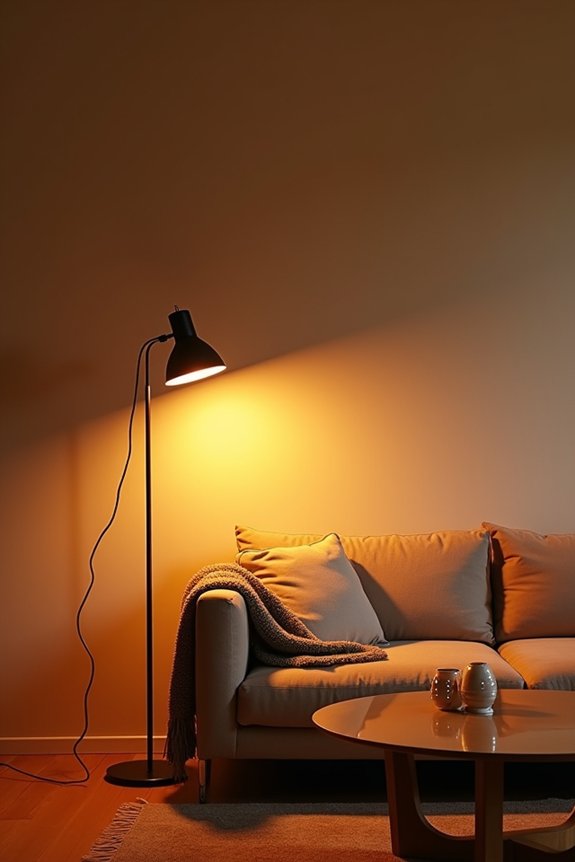
Color temperature—measured in Kelvin (K)—is just as important as brightness when you’re picking bulbs, because it’ll determine whether your living room feels like a relaxing space or a sterile office.
I recommend exploring these Kelvin temperature options:
- 2700K–3000K creates warm white lighting suitable for relaxation and conversation
- 2200K–2500K delivers extra warm mood lighting but limits practical task work
- 4000K provides neutral light mimicking daylight, ideal for reading without glare
- Mixed sources combining warm and neutral temperatures offer maximum flexibility
Here’s my approach: I layer different color temperatures throughout my space. My main lamps use warm white bulbs, while I add 4000K task lighting where I read or work. With LEDs and dimmer switches, I adjust warmth instantly without wasting energy. This mix of light sources lets me shift my room’s mood to suit different activities and times of day.
Why LEDs Deliver More Lumens Per Watt
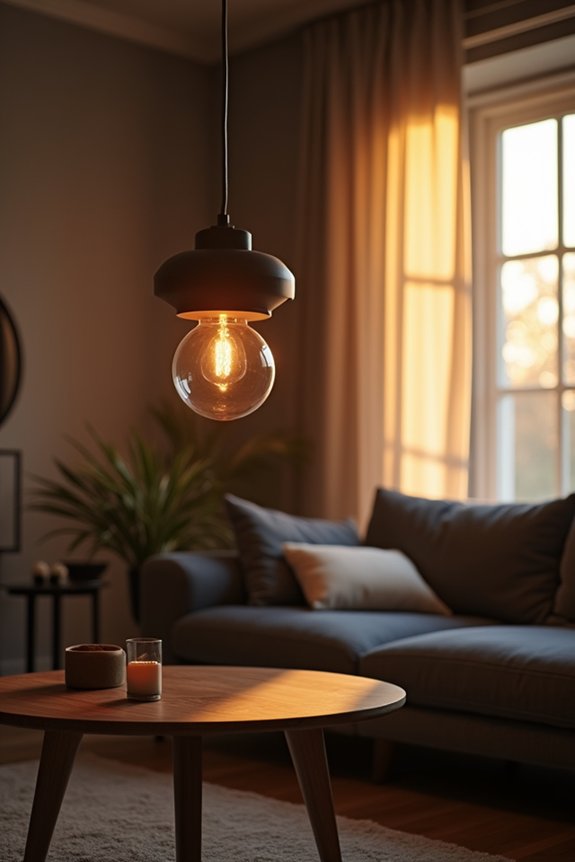
Want to know why I’ve ditched all my old bulbs? LEDs simply deliver more lumens per watt than anything else out there. Here’s what that means for your living room: while an old halogen bulb produces about 20 lumens per watt, an LED cranks out 78–130 lumens per watt. That’s solid efficiency.
This matters because you’re getting real brightness without wasting energy. Swapping a 43-watt halogen for a 9–13-watt LED keeps your room equally bright while slashing your electricity use. When you’re shopping for bulbs, forget about wattage—focus on lumens instead. That number tells you actual brightness. With LEDs’ superior lumen per watt performance, you’ll save money and keep your lights running longer without constant replacements.
Use Dimmer Switches to Cut Wattage and Set Mood
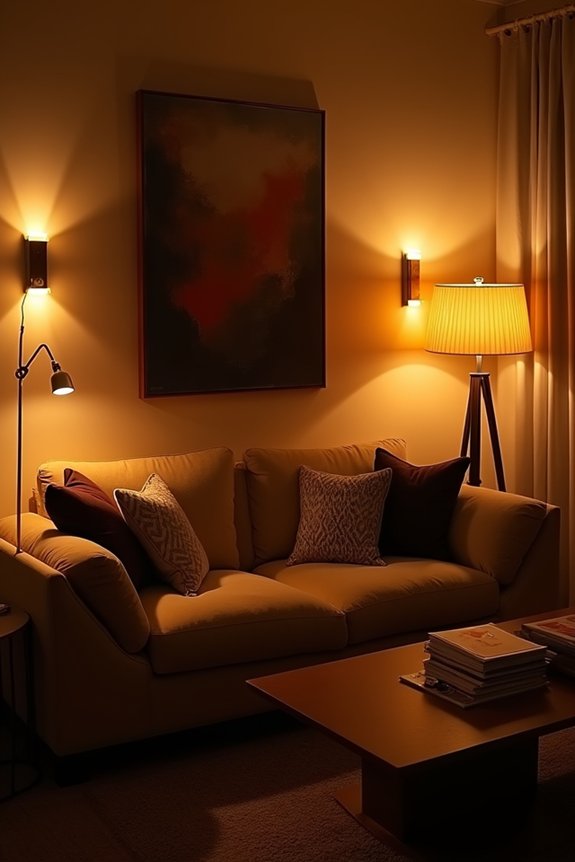
Once you’ve locked in your LED bulbs, you’ve got a powerful tool sitting right there in your wall: a dimmer switch. I love how dimmers let me shape the entire vibe of my living room without swapping bulbs or wasting energy. When I set my dimmer to 20–40%, I’m cutting wattage significantly while keeping enough light for reading or hosting. Lower operating power means less stress on your LED’s driver.
Dimmer switches let you cut wattage while preserving functional light and reducing stress on your LED’s driver.
Here’s what makes dimmers effective:
- Reduce energy use while preserving functional light
- Extend LED lifespan through decreased operating stress
- Lower heat output keeps your room cooler
- Pair with layered lighting for flexible ambient options
Just make sure your bulbs are dimmable and compatible with your dimmer type—that compatibility matters for avoiding flicker or buzzing. You’re not just saving energy; you’re building mood lighting that actually works for you.
Layer Your Lighting: Ambient, Task, and Accent
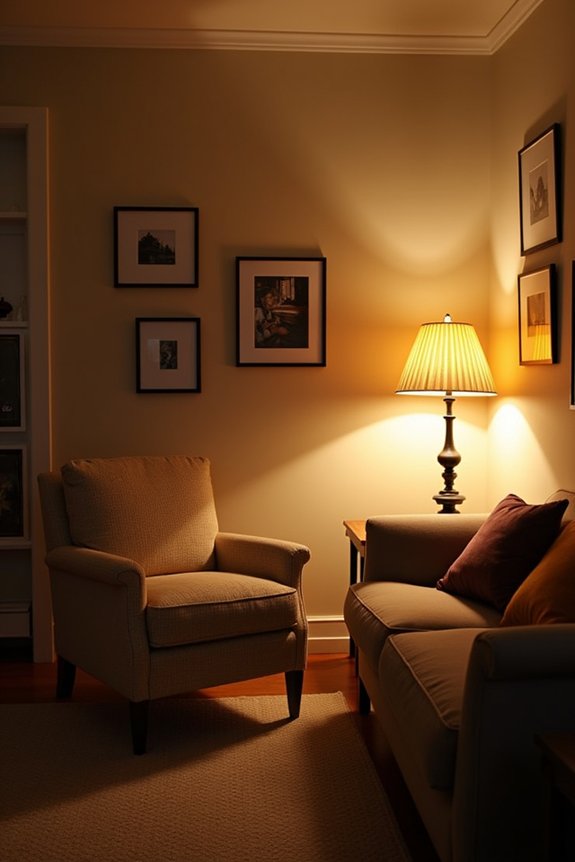
I’ll create a layered lighting setup by combining three types of fixtures that work together. Your ambient lighting—the base layer—needs about 1,500 to 3,000 lumens total from dimmable sources like ceiling fixtures or LED panels (around 15–30 watts), while task lighting adds focused brightness in the 500–1,000 lumen range for activities like reading without harsh shadows. Then I’ll accent specific features or artwork with smaller fixtures delivering roughly 100–300 lumens, choosing warm color temperatures (2700K–3000K) to tie everything together and create the mood you want in your space.
Ambient Lighting Foundation
The foundation of any well-lit living room starts with ambient lighting—that’s the general illumination that fills your entire space without creating harsh shadows or dark corners. I recommend aiming for 1,500–3,000 lumens total using dimmable LED bulbs. This range gives you flexibility to adjust the mood while keeping energy efficiency high.
Here’s what makes ambient lighting work:
- Choose 2700K–3000K color temperature for that soft, inviting warmth
- Select dimmable LEDs to control brightness and save energy
- Distribute fixtures evenly across your room’s ceiling
- Use fixture wattage ratings as safety guides, not targets
LED bulbs deliver the lumens you need without excessive wattage. By combining ambient lighting with task and accent options, you’ll avoid that clinical feeling from relying solely on general overhead light.
Task And Accent Layers
Now that you’ve got your ambient foundation in place, it’s time to add task and accent lighting to make your living room functional and visually interesting.
Task lighting directs bright light where you need it most—reading corners, desks, or side tables need roughly 450-900 lumens depending on the activity. I’d suggest 60-75 watt equivalent bulbs for focused work areas. These lighting layers work together; your ambient lighting provides baseline illumination while task lighting tackles specific jobs.
Accent lighting is different. It highlights artwork or architectural features using lower lumens with directional fixtures, typically 40-watt equivalent bulbs. This wattage creates visual interest without overwhelming your space. The key? Balance all three layers. You’re not stacking them haphazardly—you’re building depth that feels comfortable and inviting, not clinical.
The Best LED Bulbs For Warm Living Room Light
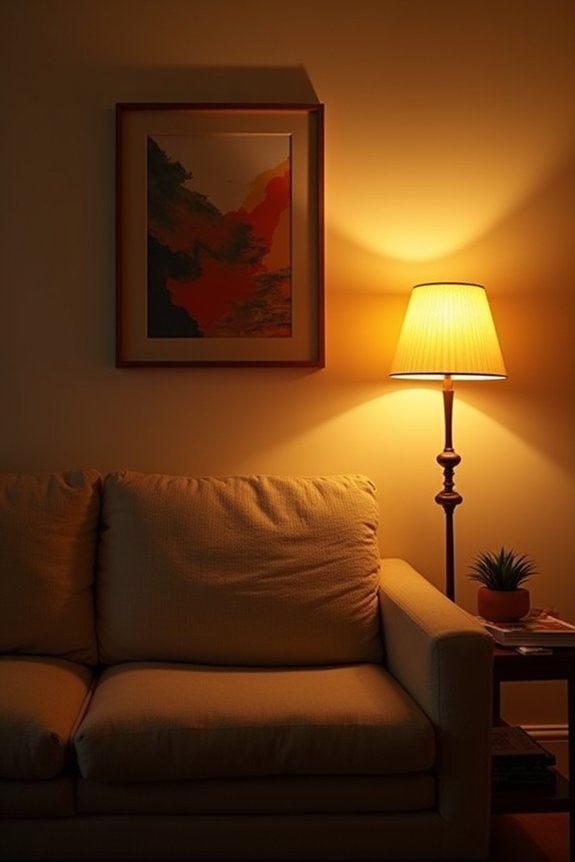
When you’re hunting for warm LED bulbs, I’d focus on three things that’ll actually make a difference in your space. First, aim for bulbs delivering 1500–3000 lumens (that’s your brightness), which typically requires just 15–30 watts—way less energy than old incandescent bulbs while giving you that cozy glow. Second, look for a color temperature around 2700K–3000K; this Kelvin range matches the warmth you remember from traditional bulbs, and pairing it with dimmable LEDs lets you dial in exactly the ambiance you want.
Lumens For Warm Ambiance
How do you know if your living room has enough light without feeling like you’re sitting in a showroom? The answer is lumens, not wattage. Target around 1,500–3,000 lumens total for warm ambiance that feels inviting.
Focus on these elements:
- LED bulbs delivering 78–130 lumens per watt for maximum energy efficiency
- Warm color temperature between 2700K–3000K to complement your space
- Multiple light sources (lamps, sconces, overhead fixtures) spreading light evenly
- Dimmable options giving you control over brightness and mood
With quality LEDs, 15–30 watts per fixture achieves this goal. The key is spreading those lumens across several fixtures rather than relying on one harsh overhead light. This approach creates the comfortable gathering spot you want in your living room.
Kelvin Temperature Selection Guide
You’ve got your lumen count figured out, and you’re thinking about spreading multiple fixtures around your living room—but there’s one more piece that’ll impact your ambiance: color temperature.
Here’s the thing: Kelvin measurements determine whether your light feels cozy or clinical. I’d target 2700K–3000K LED bulbs for that warm white glow that makes people want to hang out in your space. Higher values like 4000K give you daylight-mimicking light, but honestly, that cooler tone feels more like a doctor’s office than a comfortable retreat.
The benefit comes when you combine warm 2700K–3000K bulbs with dimmers. This combo lets you adjust brightness while keeping that welcoming warmth intact. You’re avoiding the hospital-like harshness while creating a genuinely relaxing environment. That’s how you nail living room lighting.
LED Efficiency And Savings
Why stick with energy-hungry incandescent bulbs when LEDs’ll slash your electricity bill by up to 80% while giving you that same warm glow?
I’ve learned that lumens—not wattage—actually measure brightness. You’ll want 800–1500 lumens for most living room tasks. Here’s what makes LEDs practical investments:
- Energy efficiency: LEDs use dramatically less power than traditional bulbs
- Longevity: They last 10,000–25,000 hours, cutting replacement costs
- ENERGY STAR certification: Guarantees quality and reliable performance
- Dimmers compatible: Pair them with controls for customized lighting
When comparing options, I prioritize higher lumens per watt (lpw) ratings. An ENERGY STAR-certified LED bulb delivers consistent warmth without draining your budget. You’re not just choosing a bulb; you’re making a practical choice for your home.
Adjust Brightness For Skin Tone and Fabric Reflection

When I’m setting up lighting in my living room, I’ve learned that brightness matters just as much as the color of the light itself. You’ll want to aim for 1,000–2,000 lumens, which feels comfortable without creating harsh reflections on anyone’s face. I’ve found that warmer color temperatures between 2,700K–3,000K render skin tones naturally and flatteringly.
| Lighting Scenario | Recommended Lumens | Color Temp | Why It Works |
|---|---|---|---|
| General living room | 1,500 lumens | 2,700K | Flatters skin, feels welcoming |
| Glossy fabric areas | 800–1,000 lumens | 3,000K | Reduces hotspots and glare |
| Makeup application | 2,000+ lumens | 3,000K | Minimizes shadows, accurate color |
| Evening relaxation | 1,000 lumens | 2,700K | Warm, reduces eye strain |
| Dimmable setup | Variable | 2,700–3,000K | Adjusts for time of day |
When you have glossy fabrics, I’d suggest using diffuse lighting or multiple sources to avoid uneven glare. Dimmable LEDs give you flexibility throughout the day, keeping everyone looking their best.