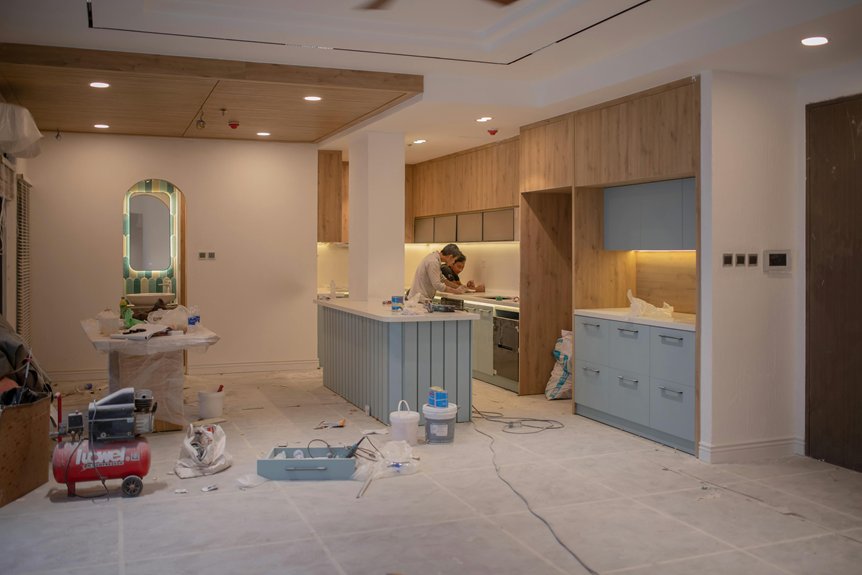
Waterborne alkyds like Benjamin Moore Advance and Sherwin-Williams Emerald Urethane dominate 2026 because they blend oil-based toughness with water cleanup and low VOCs. I’d choose semi-gloss for busy kitchens (it wipes clean) or satin if you want less maintenance. Proper prep is what matters—degrease thoroughly, sand with 120-150 grit, prime, and you’ll get a factory finish without brush marks. Green’s the color trend winning right now, especially soft sage or deep olive. There’s more to nail about sheen selection and application timing that’ll get your cabinets right.
Waterborne Alkyd and Hybrid Formulas: Why They Outperform Traditional Paint
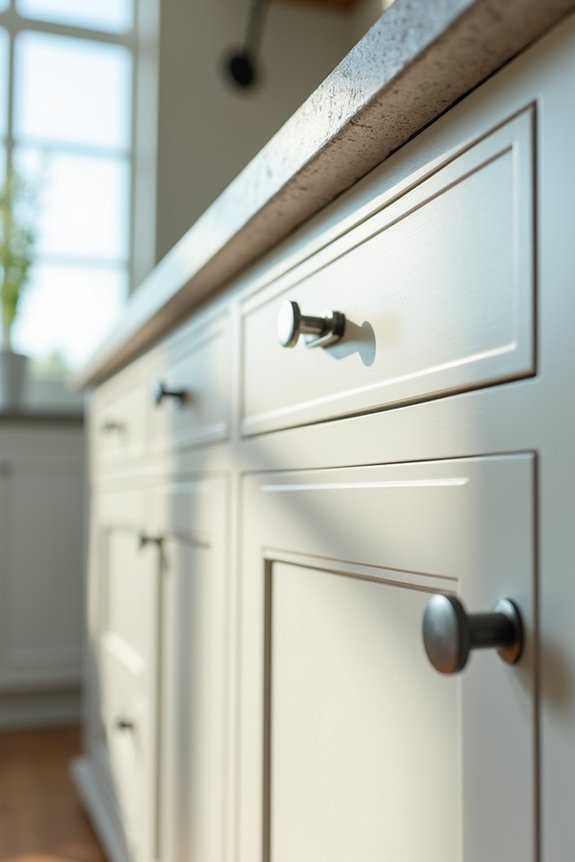
Why do so many cabinet refinishers skip right past traditional oil-based paints these days? Waterborne alkyd and hybrid paints offer distinct advantages. These formulas blend the hard, durable shell you’d get from oil-based alternatives with water cleanup and low VOC benefits. Benjamin Moore Advance and Sherwin-Williams Emerald Urethane represent the best of what’s available now.
What matters for your kitchen cabinets: these hybrid paints self-level beautifully, creating that factory-finish look without brush marks. They dry in 12–24 hours between coats and cure fully in five days. The key consideration? Prep and adhesion determine your results. Thorough degreasing, light sanding, and primer aren’t optional—they’re your foundation for results that last.
Satin vs. Semi-Gloss: Which Cabinet Paint Finish Works Best?
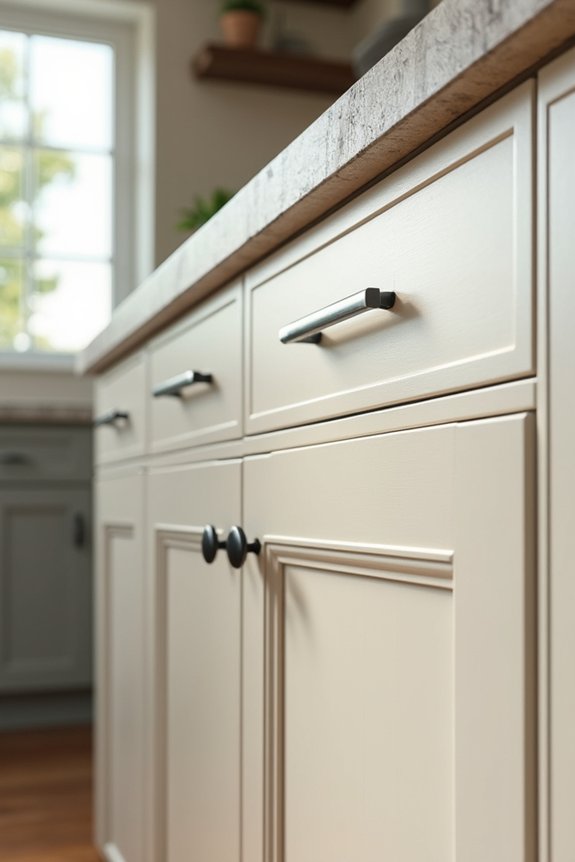
Choose between the brighter, modern gloss level of semi-gloss or the easier maintenance of satin’s gentler sheen. Consider your family’s lifestyle. Busy kitchens with kids? Semi-gloss offers superior durability. Prefer something requiring minimal upkeep? Satin is the practical choice.
How to Prep Cabinets So Paint Adheres and Lasts
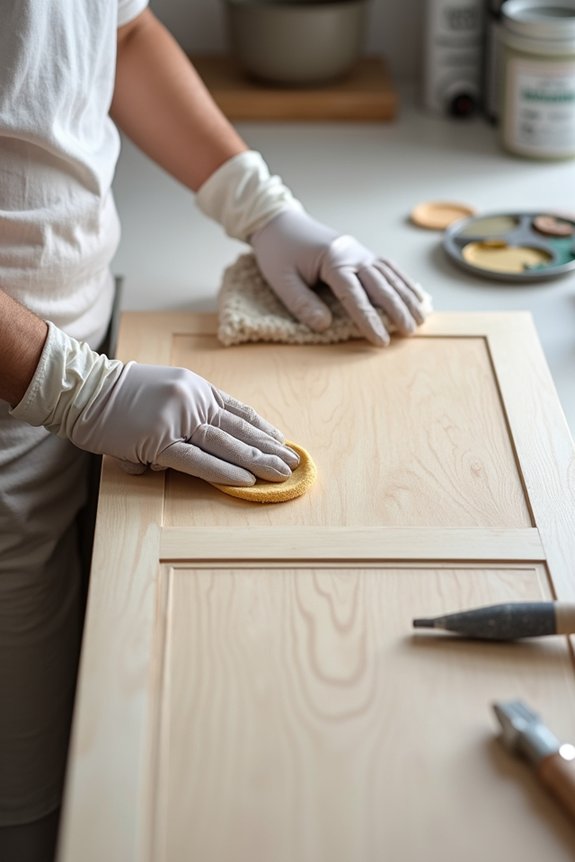
Since you’ve chosen your paint finish, the real work begins—and I’m not exaggerating when I say that prep determines everything. I’ve learned that skipping surface prep is basically throwing money away.
Start by degreasing your cabinets thoroughly with a quality cleaner. Kitchen grime loves hiding in crevices, so don’t rush this step. Next, sand everything with 120-150 grit sandpaper to dull the existing finish and improve adhesion.
Here’s where priming matters: alkyd-based paints and premium cabinet paint brands like Benjamin Moore Advance benefit tremendously from a quality primer. This creates a foundation for your durable finish and self-leveling properties to perform as intended.
Fill any gaps or imperfections, sand lightly again, then prime. This methodical approach will result in your cabinet paint adhering properly and lasting years longer than shortcuts ever could.
Top Cabinet Paint Colors for 2026: Why Green Wins and How to Apply It
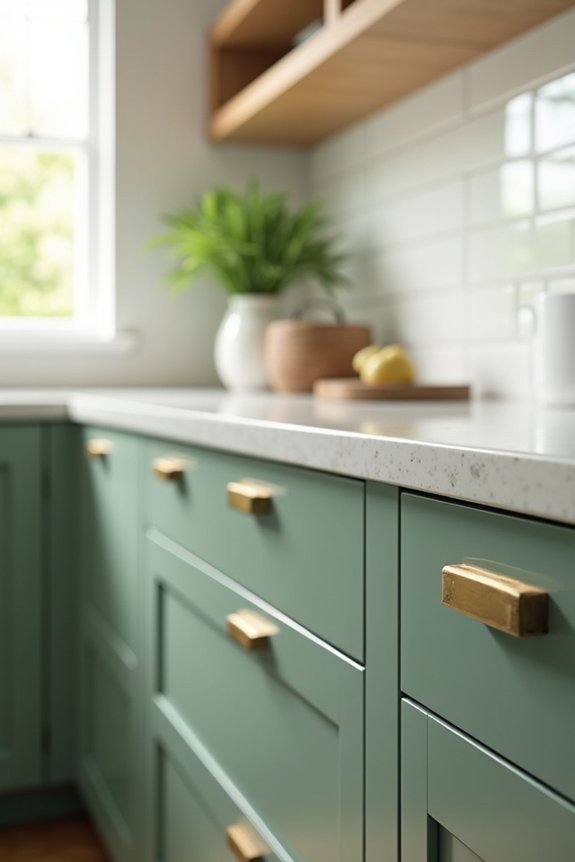
How’s this for a plot twist: the color dominating kitchen cabinets in 2026 isn’t white or gray, but green. I’m talking about warm, livable hues that replace sterile all-white kitchens with genuine character.
| Green Cabinet Style | Best Application |
|---|---|
| Soft sage | Upper cabinets with light walls |
| Deep olive | Lower cabinets or islands |
| Muted forest | Moody architectural statement |
| Earthy neutral-green | Paired with marble countertops |
Here’s what makes green cabinets work: pair them with warm neutrals like Soft Chamois, unlacquered brass hardware, and natural materials such as wood and stone. Benjamin Moore Advance offers durability and a low-VOC formula. Choose matte or semi-gloss finishes for easy maintenance. Apply green to lower cabinets with lighter walls, or try wall cabinets with quartz countertops for a polished appearance.
VOC, Curing Time, and Durability: What Actually Matters When You’re Painting
You’ve picked your green shade and found the perfect hardware—now comes the part that actually determines whether your cabinets’ll look gorgeous in five years or peeling in two. Here’s what matters: VOC levels, curing time, and durability work together to protect your investment.
Latex paints offer easy water-based cleanup and lower VOCs, but they stay softer longer. Oil paints deliver tougher cabinet finishes with excellent durability, though high VOCs and solvent cleanup are drawbacks. Hybrid alkyd paints split the difference—they cure in 5+ days while providing oil-based durability with water-based cleanup.
Your finish sheens matter too. Semi-gloss and gloss sheens wipe clean easily in kitchens, though they reveal surface flaws. Choose based on your lifestyle: durability wins over aesthetics when you’re cooking daily.