
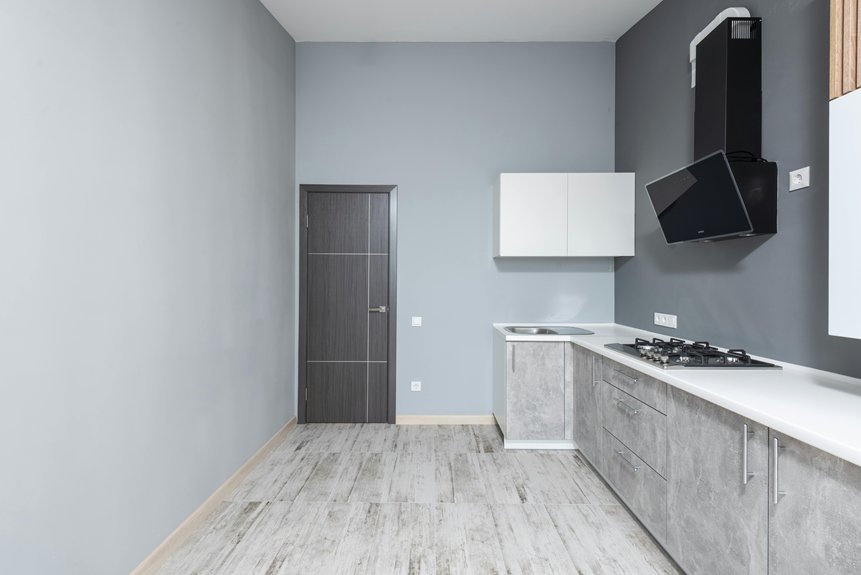
Your grey cabinets’ undertone—cool or warm—determines everything. Cool greys pair beautifully with crisp whites and soft blues, while warm greys work well with creams and taupes. Start with white walls for timeless brightness, then consider sage green for calming balance, navy for sophisticated contrast, or warm beige for comfort. Black accent walls work well with lighter greys if you layer in brass hardware and solid lighting. Test swatches under your actual kitchen light first—it’s the only way to know what’ll truly work. Read on to discover which specific colors solve your particular grey kitchen challenge.
Undertone Matching: The Foundation for Grey Pairings
When you’re standing in a paint aisle staring at what feels like a thousand shades of white, understanding undertones becomes your covert advantage.
Understanding undertones is your covert advantage when navigating endless shades of white in the paint aisle.
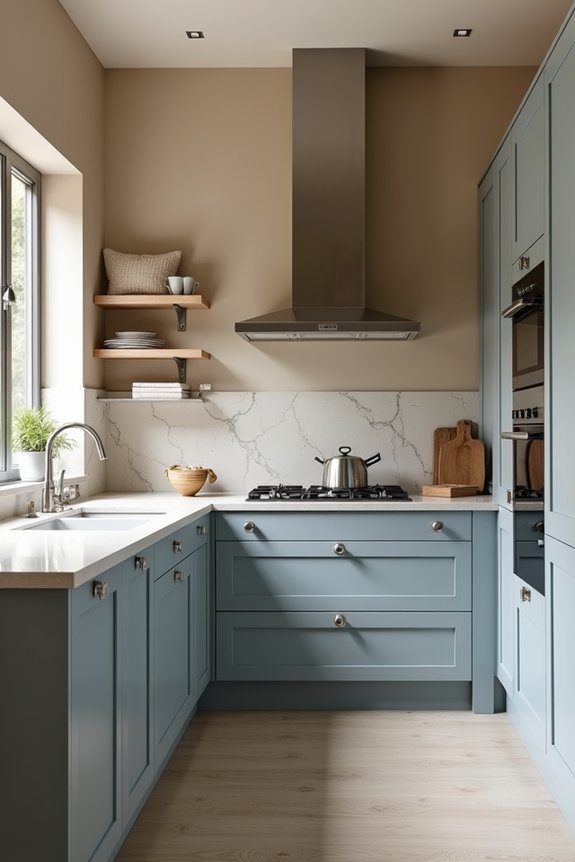
Here’s what I’ve learned: gray cabinets aren’t just gray. They’re either cool (leaning blue or green) or warm (leaning cream or yellow). Your wall color needs to match that personality, or you’ll end up with muddy, clashing results.
I always pair cool gray cabinets with cool whites and soft blues. Warm grays? I reach for creams, taupes, and beige undertones instead. This cool vs warm harmony keeps everything unified.
Testing swatches under your actual kitchen illumination is non-negotiable. That paint chip looks different under fluorescent lights than natural sunlight. Spend an afternoon observing how samples interact with your cabinets before committing to anything permanent.
White Walls: The Timeless Brightener
Now that you’ve matched your gray cabinet’s undertone to a complementary wall color, it’s time to contemplate the simplest, most reliable option: white. A true brightener for your gray kitchen.
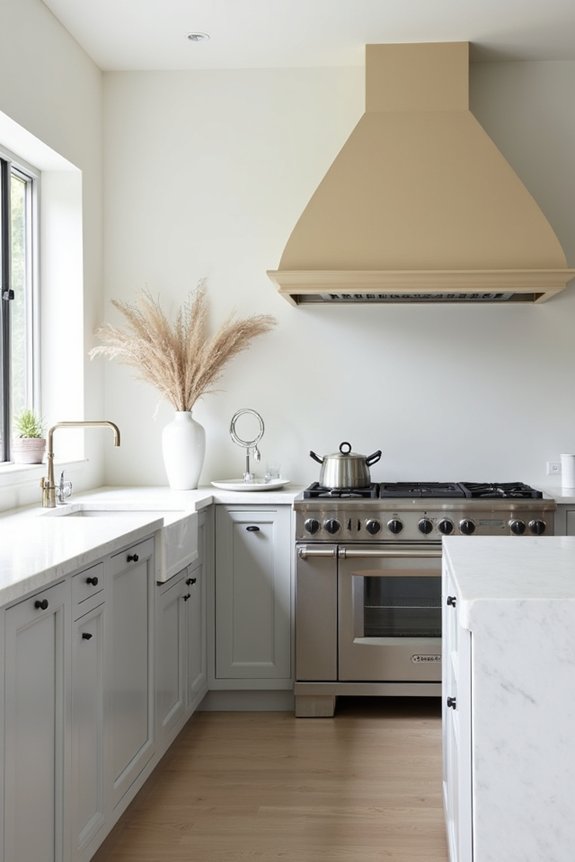
White walls create contrast that makes gray cabinets pop. You’ll notice how effectively white reflects both natural and artificial lighting, which expands your space visually and keeps everything feeling fresh. Choose warm whites like Benjamin Moore Simply White for coziness, or cool whites like Sherwin-Williams Extra White for contemporary sleekness.
Here’s what makes white brilliant: it pairs seamlessly with light and dark gray cabinets alike. You get flexibility without sacrificing style. Your gray kitchen becomes a neutral canvas supporting brass hardware, natural wood accents, and timeless design choices. That’s genuine freedom in your kitchen design.
Soft Cream: Warmth Without the Starkness
If you’re worried that gray cabinets might feel cold or sterile, soft cream walls are your answer—they’ll warm up the space while letting those subtle gray undertones really show through. I’ve found that cream avoids the harsh contrast you’d get with pure white, creating a kitchen that feels inviting rather than stark and modern. Pair these creamy walls with brass hardware or wood flooring, and you’ve tied your whole design together in a way that works well with your overall scheme.
Warmth And Coziness
Why does soft cream feel so different from stark white on your walls? The answer lies in warmth. Cream walls paired with grey kitchen cabinets create an inviting ambiance that pure white simply can’t match. I’ve noticed how softer-toned greys like greige or taupe-grey work well against cream, their warm undertones becoming more prominent and welcoming.
Here’s what makes this combination work: cream prevents that cold, sterile feeling white sometimes brings. When you add brass hardware to the mix, it pairs beautifully with cream walls, creating a unified look that appears deliberate and welcoming. The softness of cream balances darker grey elements well, especially when you pair everything with wood flooring or natural textures. Your kitchen stops feeling institutional and becomes a place where you actually want to spend time.
Complementary Grey Tones
Soft cream walls deserve their own spotlight when you’re thinking about grey kitchen cabinets, because they’re doing something white can’t quite pull off. You’re pairing warmth with sophistication here. When I choose soft cream with warm greys or taupe-toned grey cabinetry, I’m creating complementary tones that work well together and invite use. The cream softens the coolness of grey without competing for attention. This pairing works well with brass hardware—the warmth echoes each other. You’ll notice how soft cream reduces that sterile feeling stark white brings while keeping your kitchen bright and open. It’s the difference between a space that feels cold and one that functions as a livable home. Lighter greys especially benefit from this approach, giving you that balance of coziness and spaciousness that most people want.
Light Grey: Creating Cohesion and Airy Depth
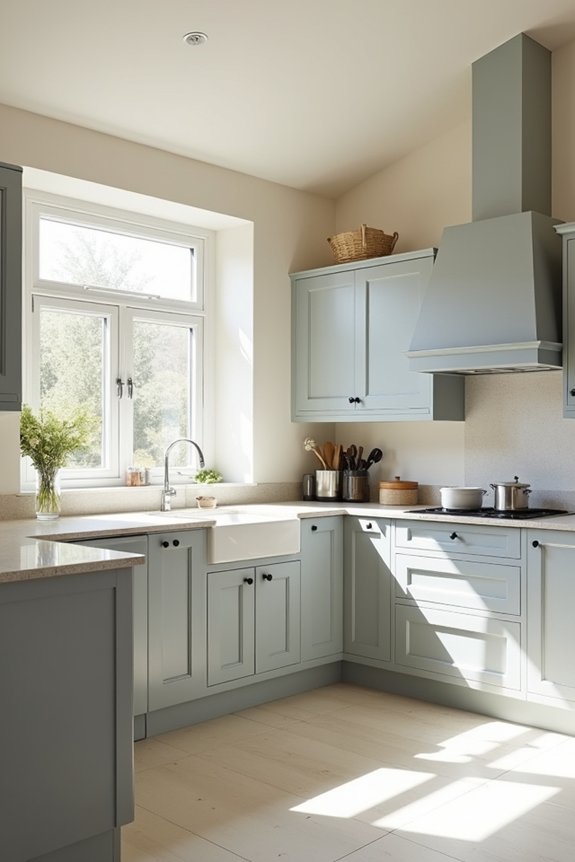
If you’re wondering how to make your grey kitchen feel bigger without relying on stark white, light grey walls work well—they’ll create a unified look that doesn’t feel boring because subtle shade variations add depth through texture rather than clashing colors. You’ll get that spacious, airy vibe that works whether you’re going for sleek modern or cozy traditional style, and the monochromatic approach keeps everything feeling calm and organized. The advantage here is that matching your walls to your cabinetry in different tones gives you a space that appears thoughtfully designed rather than accidentally matching.
Monochromatic Depth and Contrast
Pairing light grey cabinets with equally light wall tones creates a unified look that actually makes smaller kitchens feel bigger than they are. A monochromatic approach uses different shades of light grey throughout your space.
A grey-on-grey palette works when you layer it with intention. Try lighter walls with slightly darker cabinets, or vice versa. The subtle textural contrast matters too. Matte walls paired with satin-finish cabinetry prevent everything from looking flat and one-dimensional.
Consider warm neutrals as well. Pale greige or soft white walls alongside your grey cabinets provide enough warmth while maintaining that serene, modern vibe. You’re building depth without introducing jarring contrasts that interrupt the flow.
Spacious and Airy Aesthetic
While monochromatic grey schemes build visual harmony, there’s something particularly effective about amplifying that effect with lighter wall colors that make your kitchen feel bigger.
What works well:
- White walls paired with light grey cabinets create brightness and reflect natural light effectively
- Light gray walls themselves add depth when combined with grey cabinetry, giving you that airy quality
- Soft cream walls add warmth while keeping everything feeling open and spacious
You’re working with complementary wall colors that prevent your space from feeling confined. The spacious perception comes from how these lighter hues bounce light around your kitchen, making it appear more expansive than it actually is. This approach works particularly well if you have windows or good lighting already in place.
Minimalist Design Harmony
When you’re after a kitchen that feels purposefully designed rather than accidental, light grey walls with matching grey cabinetry deliver exactly that—a unified visual approach that’s both modern and calming.
I find that varying shades of grey create depth and balance without harsh contrast. Your gray kitchen cabinets become part of a connected visual story rather than standing alone. This minimalist design approach allows the space to function while keeping everything deliberate.
The advantage here? You’re not fighting your wall color against your cabinetry. Instead, they work together as teammates. You’ll notice how this strategy makes even modest kitchens feel refined and purposeful. Add simple hardware and natural wood accents, and you’ve built something distinctly your own—understated, balanced, and welcoming to anyone who enters.
Navy Blue: Rich Contrast With Grey Cabinets
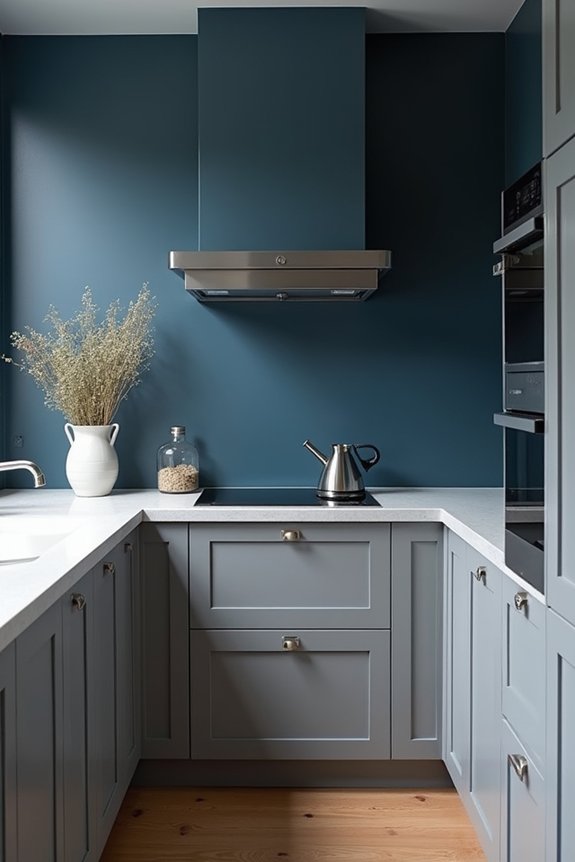
Ever notice how navy blue seems to make gray cabinets look more sophisticated? This pairing creates a designer-worthy look in kitchens.
Here’s what makes navy and grey work well together:
- High contrast appeal – Navy walls create dramatic visual interest against lighter gray cabinets without feeling overwhelming
- Warm accents matter – Gold or brass hardware balances the cool tones and prevents the space from feeling cold
- Wood integration – Adding warm wood elements ties everything together
The key is keeping your grey cabinets on the lighter side. This prevents your modern kitchen from turning too dark. You’ll also want plenty of natural or artificial lighting to make the combination work effectively. The result is a classic-meets-modern vibe that feels both timeless and current.
Sage Green: Calm, Natural Balance for Kitchens
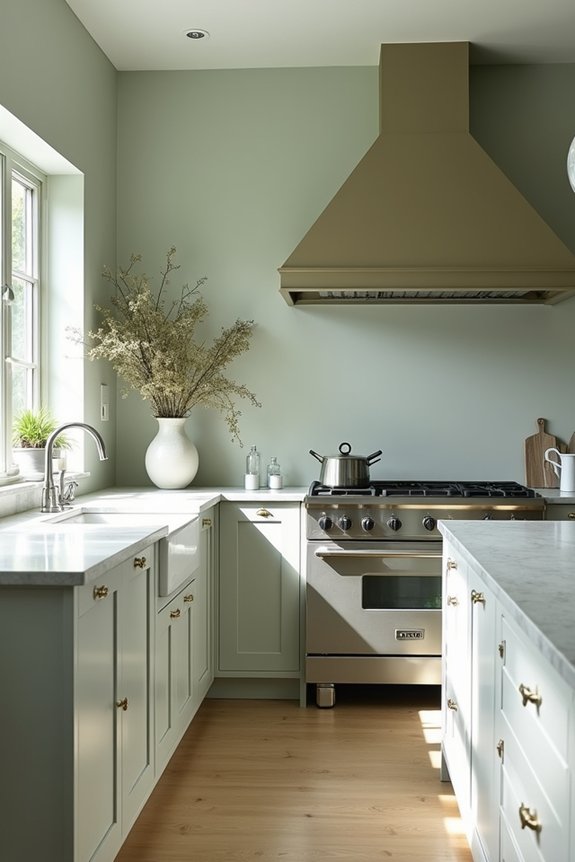
Looking for a wall color that softens grey without clashing? Sage green delivers exactly that. I’ve found this calming hue creates natural balance when paired with grey kitchen cabinets, especially warmer greys like greige or taupe. The sage takes the edge off grey’s coolness while maintaining sophistication.
Lighter sage greens work beautifully with light or mid-tone grey cabinets, keeping your space airy and fresh. If you’ve got dark grey cabinets, deeper sage creates serene contrast. Adding brass or warm wood hardware ties everything together.
Well-lit kitchens benefit most from this combination. You’ll get a backdrop that suits both modern and traditional styles. It’s a choice that holds up over time.
Warm Beige and Taupe: Neutral Comfort Without Coldness
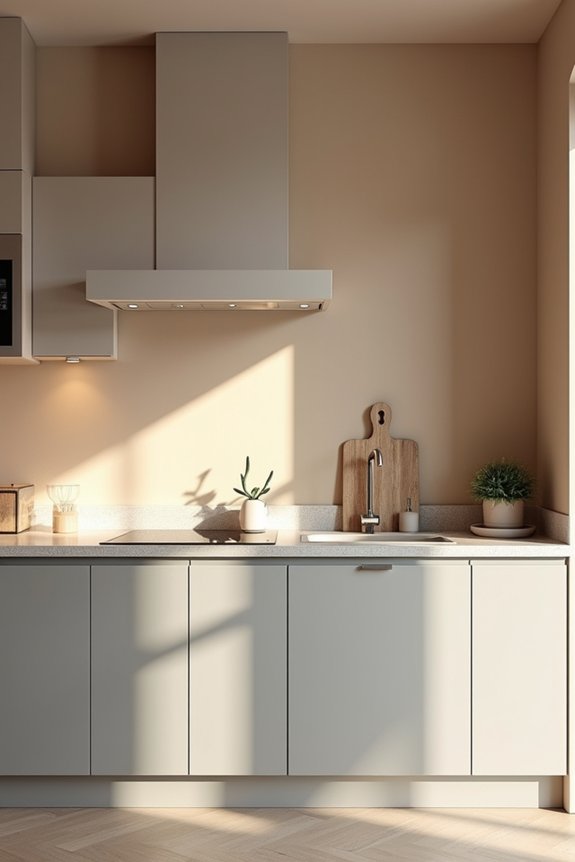
Why does grey sometimes feel a bit cold and uninviting in a kitchen? Warm beige and taupe walls solve this problem beautifully. These neutral comfort colors work well in grey kitchens, creating spaces that are pleasant to spend time in.
Here’s what makes this pairing work:
- Warm beige walls bring out undertones in greige or taupe-gray cabinets, creating cohesion
- Creamy beige softens stark white cabinets while keeping your kitchen bright and airy
- Lighter taupe provides forgiving backdrops that maintain contrast with medium to dark grey
The approach? Layer in brass or warm metal hardware plus wood flooring. These elements tie everything together. Taupe and warm beige complement your grey kitchen while contributing to a welcoming atmosphere.
Charcoal or Dark Grey: Drama When Paired With Light Cabinets
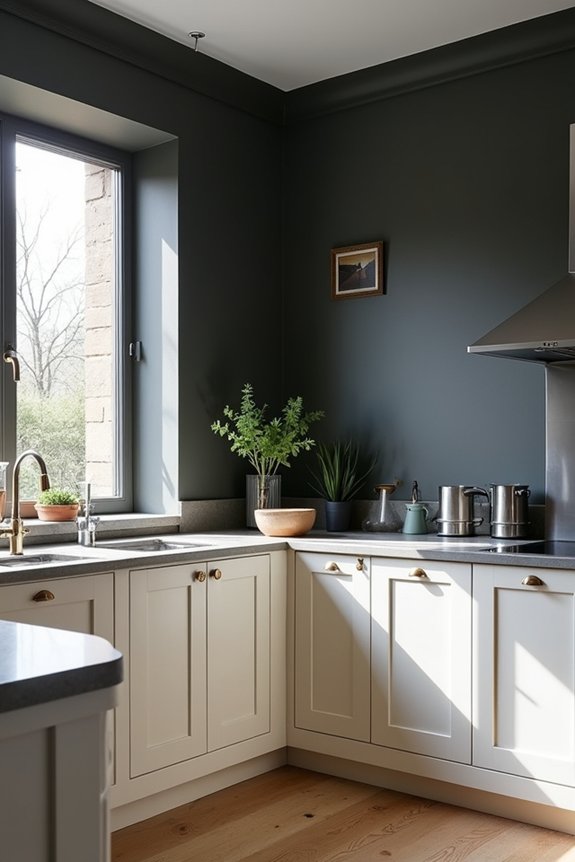
If you’re willing to go bold, charcoal or dark grey walls create that striking visual punch when you pair them with light grey cabinets—think of it as the kitchen equivalent of a tuxedo. The lighter cabinetry does the heavy lifting here, keeping your space from feeling like a cave while those dark walls make every architectural detail and metallic accent (brass knobs, chrome pulls) stand out prominently. You’ll need solid lighting, though—natural windows or layered artificial fixtures—because without it, you’re risking a room that feels more dungeon than polished.
Creating Dramatic Visual Contrast
Pair charcoal or dark grey walls with light grey cabinets for a striking contrast that highlights every detail. Here’s how to create this look:
- Install ample lighting – Task and ambient fixtures prevent the space from feeling cramped; think recessed lights plus under-cabinet strips.
- Add warm metallic accents – Brass or gold hardware and fixtures introduce warmth against those charcoal walls, creating depth.
- Vary textures throughout – A light marble backsplash, textured countertops, or patterned accessories break up the monochrome scheme.
Use a matte finish on charcoal walls to minimize glare and enhance that sophisticated mood. The high contrast naturally emphasizes your cabinet details and architectural features, giving the kitchen personality without feeling overwhelming.
Light Cabinet Amplification Strategy
Want to flip the script and let dark grey cabinets steal the show?
I’ve found that pairing dark grey cabinets with light walls creates visual drama. Your wall color becomes the perfect backdrop—think crisp white, soft cream, or pale neutrals. These lighter walls bounce light around and prevent your kitchen from feeling cramped or heavy.
Here’s what really matters: adequate lighting. I’m talking ambient fixtures plus task lighting under cabinets and above countertops. This keeps your light walls bright and your dark grey cabinets visible and defined.
Balance is key too. Keep your backsplash and countertops in light tones—white marble or pale quartz work well. Add warmth with brushed brass hardware and light wood accents. This softens the contrast between your dark cabinetry and bright walls, creating a sophisticated, inviting space that feels balanced rather than overwhelming.
Black Accent Walls: Bold Contrast for Modern Kitchens
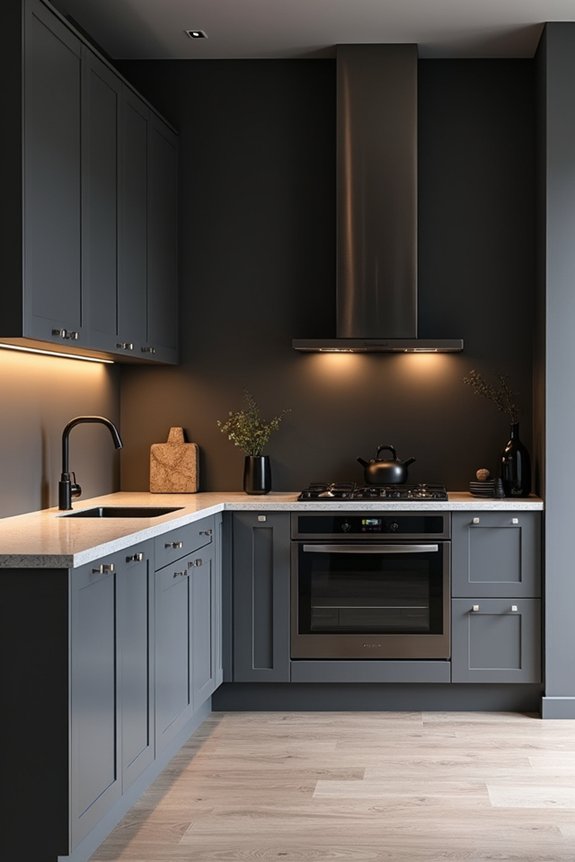
Black accent walls paired with grey kitchens create that striking, modern look you’ve probably seen in design magazines—and it’s straightforward to execute.
Black accent walls paired with grey kitchens deliver that striking, modern design look you’ve seen in magazines.
Here’s what makes this combo work:
- Pair matte black with light or mid-tone grey cabinets to prevent the space from feeling too heavy and overwhelming.
- Layer your lighting carefully since black walls absorb light; you’ll need ample natural or artificial lighting to avoid a dark, cave-like feel.
- Add warmth with brass hardware and light countertops to balance the contrast and keep things from looking sterile.
The key is balance. Your grey kitchen provides the breathing room that black walls need. Think of black as your dramatic punctuation mark, not your entire sentence.
Muted Red and Burgundy: Personality With Design Restraint
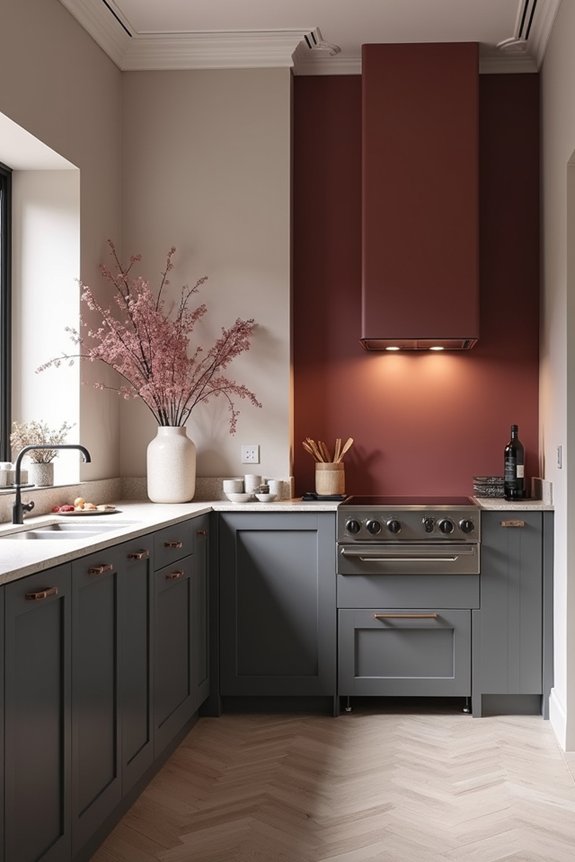
How do you add personality to a grey kitchen without overdoing it? Consider muted red or burgundy as your wall color—it’s an effective solution.
I’ve found that muted reds like burgundy and brick tones pair well with grey cabinets, delivering warmth without overwhelming your space. The key is choosing brushed or matte finishes, which prevent that too-bright clash with cool grey tones. You’ll maintain sophistication while gaining character.
Deep red hues create vibrant contrast against mid to light grey cabinets, enhancing depth throughout your kitchen. I recommend balancing these warmer walls with lighter or cooler grey cabinetry—this prevents the space from feeling visually heavy.
For cohesion, echo your wall color through burgundy hardware or trim accents. It ties everything together, creating a unified design that feels intentional and polished.