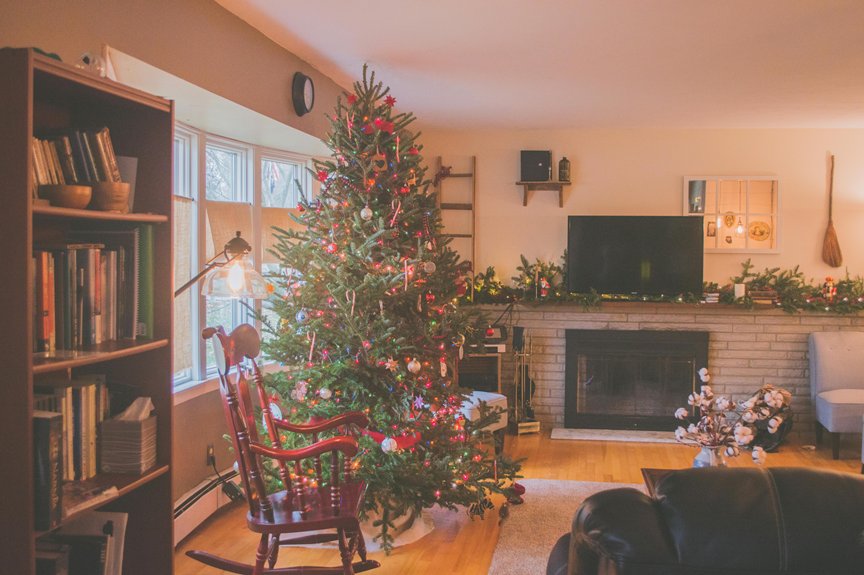
I’ve learned that small living rooms don’t need smaller trees—they need smarter placement.
Try corners to use wasted diagonal space, behind sofas to keep walking paths clear, or by windows for natural light and depth.
Wall-mounted trees free floor space entirely.
Tabletop versions on entry consoles make instant focal points.
Even beside recliners works if you maintain that 30–36 inch walking space.
The trick’s anchoring everything with weighted bases and routing cords along walls.
Each spot affects your room differently, and the details matter more than you’d think.
The Corner Nook: Maximize Unused Diagonal Space
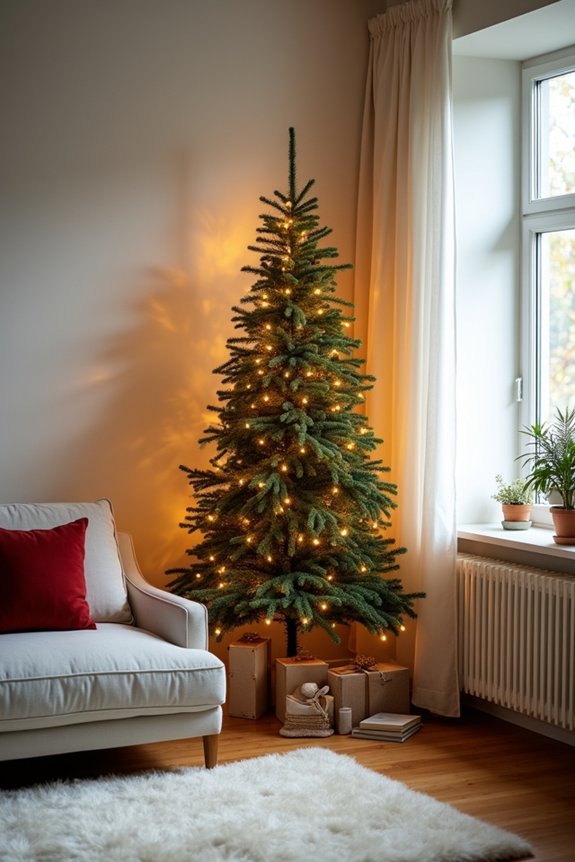
Where’s that awkward diagonal space in your living room that never seems to serve a purpose? That’s your sweet spot for a Christmas tree. Placing a slim tree in a corner nook puts wasted diagonal space to work. You’ll want a pencil tree with a base diameter around 20–22 inches—it gives you presence without eating up your floor space or blocking foot traffic. Ground it with a small rug or stand to anchor the display visually. Since these lightweight trees can tip easily, secure the stand firmly and consider wall anchors if you’ve got high-traffic areas nearby. This placement makes your tree feel like it belongs there, not squeezed in as an afterthought.
Behind the Sofa: Reclaim Walking Space
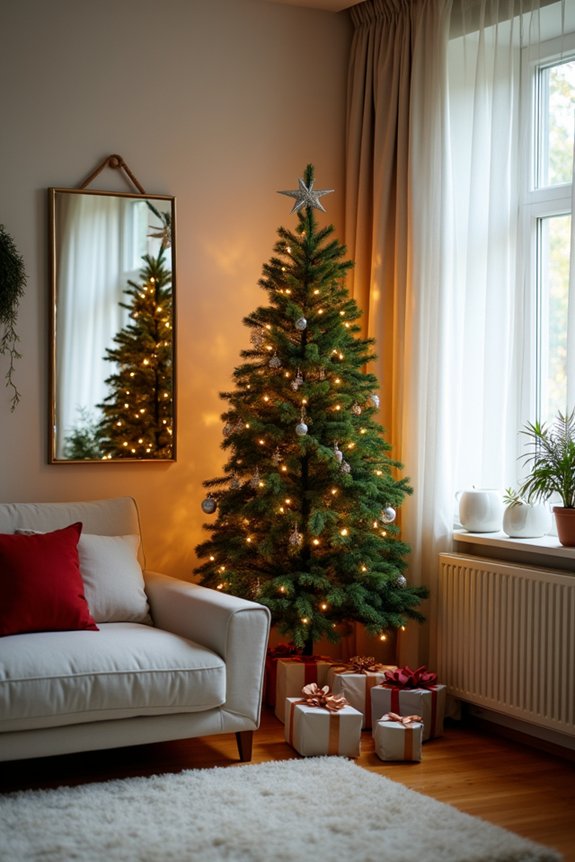
If you’ve got a sofa that’s not pushed flush against the wall, you’ve already got the bones of a practical tree spot. I’m talking about positioning a tall, slim tree behind the sofa to add height while keeping your TV views clear and conversation areas open.
| Consideration | Solution |
|---|---|
| Cord Management | Position a slim console behind sofa; route lights along back edge |
| Walking Space | Maintain 30–36 inches in main traffic flow lane |
| Stability | Use low-profile weighted base with furniture anchor |
| Renter-Friendly | Choose tabletop or wall-hung alternative |
This behind-the-sofa placement reclaims walking space efficiently. The tree becomes your storage solution for holiday décor without cluttering floor area. Push your sofa forward slightly, secure everything properly, and you’ve made better use of dead space while preserving traffic flow throughout your room.
By the Window: Add Depth and Natural Light
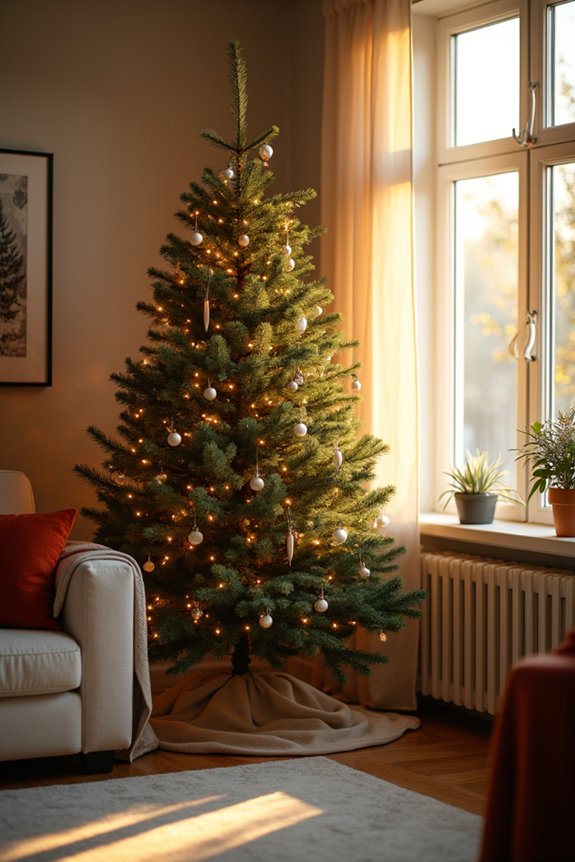
Placing your tree by the window creates visual depth that makes your small room feel bigger, especially when daylight bounces off the ornaments from outside. You’ll want to guarantee the tree doesn’t block the window from opening or prevent heat from your radiator or vents from circulating properly, and if it’s a real tree in direct sunlight, you’ll need to water it regularly to keep it fresh. Sheer curtains and subtle lighting help you maintain that natural glow without sacrificing your view from the street or losing the comfortable feel inside.
Window Placement Visual Impact
By positioning your tree near a window, you’ll create a striking visual that works well both inside and outside your home. This window placement makes your small living room more interesting.
When you place your tree where sunlight streams in during daylight hours, the ornaments catch and reflect that natural light beautifully. You won’t need extra lighting to make everything shimmer and sparkle. From outside, passersby see your decorated tree framed perfectly against the glass—providing visibility from the street.
Choose a slender or pencil-shaped tree if your space feels tight. These narrower trees won’t block daylight pouring through your window, keeping your room feeling open and airy. Bay windows work particularly well since they offer shallow sills that become natural display areas. Your tree becomes both decoration and window feature, maximizing every inch of your small living room.
Natural Light and Depth
How much brighter does your living room feel when sunlight streams through a window? Placing your tree by the window creates natural light that improves your whole space. The daylight filters through the branches, adding real depth to the room while making it visible from outside too.
Here’s how to make it work:
- Choose a slender or pencil-shaped tree to preserve floor space while maximizing that external view
- Use sheer curtains instead of heavy drapes so light still flows through without blocking the window
- Position the tree away from curtain rods and vents to keep everything functional
Real trees need consistent watering near windows since sun exposure dries them faster. The ambient light keeps your tree looking vibrant all season long.
Safety and Functional Access
When positioning your tree by the window, consider safety and practicality alongside aesthetics. Check that your tree doesn’t block the window from opening or closing smoothly. Keep radiators and heaters completely clear, since heat near glass isn’t ideal.
| Safety Concern | Solution | Why It Matters |
|---|---|---|
| Window operation | Use slender trees | Maintains functionality |
| Heat damage | Low-profile lights | Protects glass integrity |
| Water damage | Drip tray underneath | Prevents frame rot |
| Heater access | 12+ inches clearance | Maintains airflow safety |
| Electrical hazards | Outlet distance check | Reduces fire risk |
Position your drip tray so water never splashes onto the sill. Use low-profile LED lights to minimize heat concerns. These practical steps let you enjoy window placement without compromising your home’s safety or function.
The TV-Side Corner: Keep Sightlines Clear
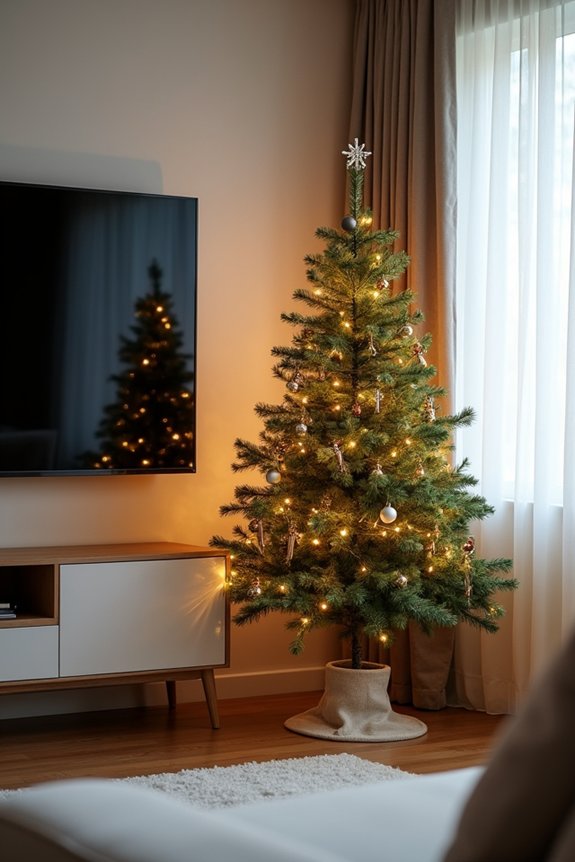
If you’ve got a TV as your living room’s centerpiece, placing a slim or pencil tree in that corner works well—it’ll take up minimal floor space while keeping your view of the screen completely unobstructed. Position your tree strategically behind the sofa or in the adjacent corner, and you’ll maintain clear sightlines to the TV while preserving that essential walking path for everyday traffic. This approach lets you display your tree without the awkward dance of dodging branches every time you reach for the remote.
Slim Trees Maximize Floor Space
Where exactly should you tuck a Christmas tree in a room that’s already bursting at the seams? I’d recommend choosing a slim tree with a base diameter around 20–22 inches—it’s a practical solution for reclaiming precious floor space in a small living room.
Here’s my approach:
- Position the tree diagonally in your TV-side corner where two walls meet, which maximizes visibility while keeping traffic patterns clear
- Select a low-profile, weighted base to prevent tipping near high-traffic zones and busy viewing areas
- Use cable clips to tuck cords and lights behind your TV stand, maintaining clean sightlines and reducing clutter
Ground everything with a small rug to anchor the tree visually without expanding its footprint. This setup preserves your room’s openness while celebrating the season.
Strategic Furniture Positioning Maintains Sightlines
How do you fit a Christmas tree without sacrificing your view of the screen? I’d place a slim tree in the TV-side corner—it’s a practical spot. This positioning uses vertical space efficiently while keeping your sightlines clear for holiday movies and shows.
Here’s my strategy: position the tree behind or beside your sofa with a slim console behind it. This setup conceals cords and stores gifts. Keep at least 30–36 inches of clear walking space from your door to the seating area so the tree doesn’t crowd your viewing zone.
If your TV stand sits nearby, choose a low-profile tree. Tuck cords along baseboards using a cable raceway. Ground everything with a small rug to define the display and prevent visual clutter near your screen.
Entry Console: Tabletop Trees That Make a Statement
Your entry console is one of the smartest places to put a Christmas tree in a tight living room. You’re using vertical space that’d otherwise sit empty, and guests notice the festive decoration immediately.
Here’s what makes a tabletop tree work:
- Built-in LED lights eliminate cord clutter and keep your entryway walkway clear and safe
- Slim or pencil designs fit perfectly on narrow consoles without blocking sightlines through your space
- Strategic positioning facing the entry creates an instant focal point that sets the tone
Pair your tabletop tree with a sturdy, low-profile console that has cable management built in. Stick to one or two colors with warm white lights, and you’ll maintain a clean, uncluttered aesthetic in your small living room.
Staircase Landing: A Vertical Placement That Draws Eyes Upward
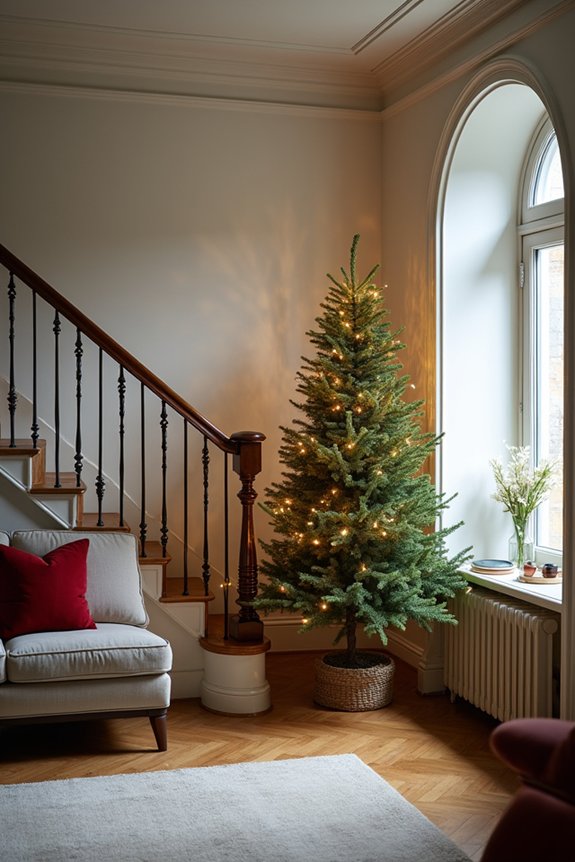
Staircase landings offer prime real estate for a slim, tall tree because they draw your eye upward without stealing the floor space you need below. Keep at least 30–36 inches clear on either side for safe passage, and anchor the tree securely to prevent it from tipping on that uneven surface. Position it away from doorways and any stairs leading to other levels, then use vertical lighting—like a string of lights running up the trunk—to emphasize that upward view and make your small space feel taller.
Maximizing Vertical Space
Where can you tuck a tree that doesn’t steal your living room real estate? Your stair landing offers the perfect answer. This vertical space draws the eye upward and keeps your main floor open for seating and movement.
I’d recommend using a slim or pencil tree with an 18–22 inch base. It fits narrow landings without blocking foot traffic or doorways. Here’s what makes this work:
- Secure the base on a heavy platform or with furniture anchors to prevent tipping in high-traffic areas
- Use battery-operated lights and cordless decorations to eliminate cord hazards on uneven surfaces
- Add upward-facing lights or garland along the railing to increase visual impact
This approach maximizes your vertical space while keeping your living room functional and welcoming for everyone.
Traffic Flow Considerations
A staircase landing works well for traffic flow because it positions your tree vertically without blocking the main pathways through your living room. Placing a slim or pencil tree on a sturdy, low-profile stand against the landing wall keeps walking routes completely clear for everyone moving between levels.
Placement safety matters here. Secure the base with a heavy weight or furniture anchor to counterbalance foot traffic and prevent tipping on uneven landing floors. Run lights and cords along the wall or baseboard using cable clips—this space-saving approach eliminates tripping hazards in your entry flow.
Double-check that adjacent doors and stair access remain unobstructed. You’ll want quick movement between levels without anyone colliding with branches. This setup gives you festive décor while maintaining the practical flow your home needs daily.
Storage Access Solutions
How do you keep your Christmas tree from blocking access to closets and storage areas tucked near your stairs?
A staircase landing offers a practical solution when you need both storage clearance and a focal point. Here’s what works:
- Choose a slim or pencil tree — these narrow designs maintain full clearance to closets without sacrificing the festive presence you want
- Position your tree at the landing’s edge — this placement keeps the stairs completely accessible while your decorations draw eyes upward
- Use a low, heavy platform — anchoring your base prevents tipping in high-traffic areas, protecting both your tree and anyone moving storage items nearby
Wall-Mounted Placement: Free Your Floor, Frame Your Tree
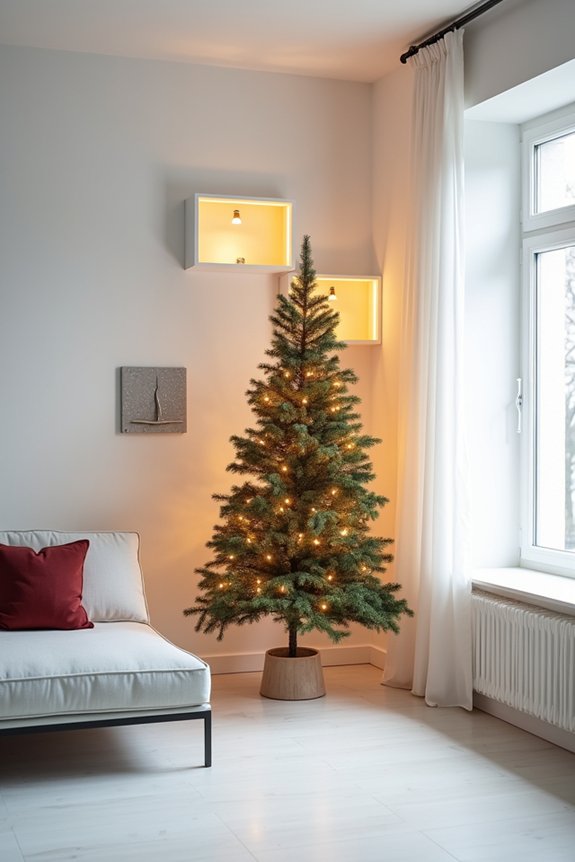
If you’re tight on floor space but don’t want to sacrifice having a real Christmas tree, wall-mounted options might be your answer. I’ve found that hanging trees free up valuable floor space while creating ceiling-height foliage that draws the eye upward. You’ll want to test your wall’s load limits first—start with a lightweight tree to verify stability. Use proper wall anchors or a low-profile console as your stabilizing base.
| Setup Type | Best For |
|---|---|
| Wall bracket system | Renters needing removable options |
| Low-profile console base | Extra stability without drilling |
| Slim vertical design | Preserving walkway clearance |
| Corner mounting | Maximizing sightlines to seating |
| Floating display | Modern aesthetic appeal |
Plan your sightlines carefully so your tree doesn’t obstruct TV viewing or conversations from multiple angles.
Beside Your Recliner: Anchor Your Tree With Seating
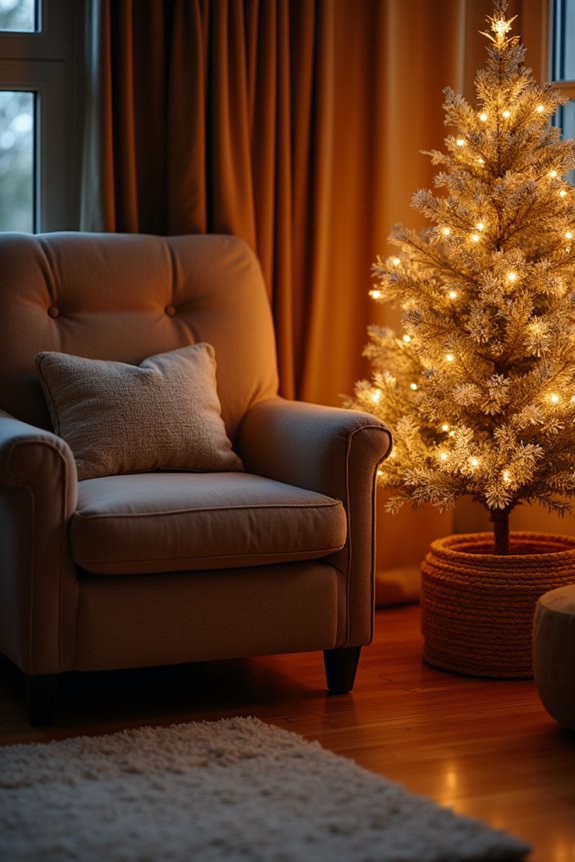
Beside Your Recliner: Anchor Your Tree With Seating
What if your favorite chair could do double duty as a tree anchor?
Placing a slim tree beside your recliner creates a space-saving solution that keeps the tree visible while you’re lounging. Here’s how to make it work:
A slim tree beside your recliner maximizes space while keeping holiday cheer visible during your favorite downtime moments.
- Position for comfort: Orient your recliner to maintain a clear 30–36 inch walking path around the tree, so you’re not blocked when standing up.
- Ground the setup: Use a lightweight, flat-backed console behind or beside the recliner to stabilize your slim tree and hide cords from view.
- Optimize lighting: Angle your lights to avoid glare on the TV screen or recliner, preserving your viewing comfort.
Coordinate ornaments with your recliner’s colors. Keep decorations minimal—you’re anchoring a tree, not overwhelming your cozy spot.
Media Console Placement: Elevate Your Tree Visually
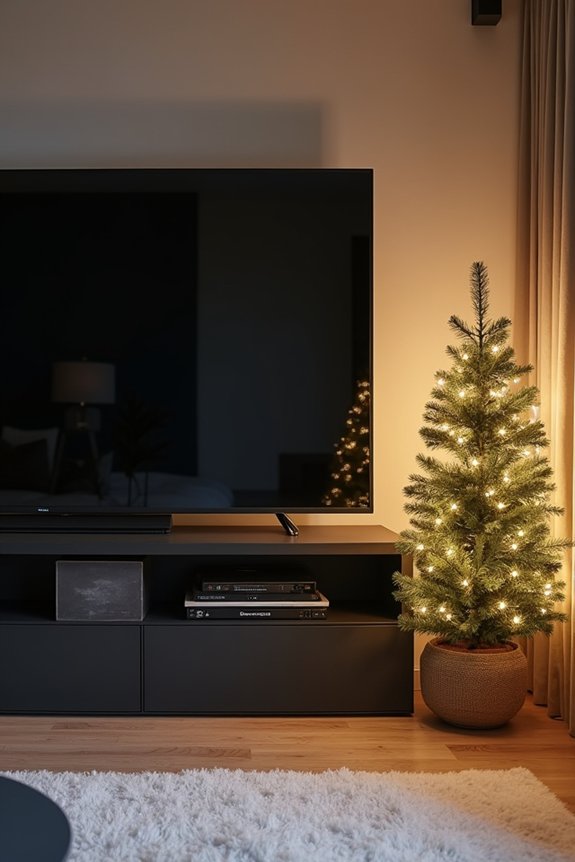
Ever wonder why your tree seems to disappear into a small living room? Try placing it on your media console. This elevation trick gains you precious vertical height while keeping your floor open for traffic flow.
I’d recommend a slim, pencil-style tree—about 6 feet tall with a 20–22 inch base—so it won’t crowd your TV or storage. Here’s the bonus: your console becomes a cable management solution. Route your lights and power plugs along the back edge or through existing cutouts, hiding that tangled mess completely.
Balance the setup with simple decor—a light garland, a few accent pieces, and warm-white lights that complement your electronics. Just verify the tree doesn’t block your screen sightlines or obstruct remote access. That’s smart placement.
Scattered Small Trees: Placing Multiple Smaller Trees for Impact
One approach that works well in tight spaces: instead of fighting for one perfect tree spot, you scatter several smaller trees throughout your living room. I cluster small-space trees—think 6-foot pencil trees or 18–22 inch diameter tabletop trees—on consoles, shelves, and window ledges to create layered heights without consuming floor space.
Here’s my strategy:
- Space trees 18–24 inches apart to maintain clear sightlines and prevent the room from feeling cramped
- Mix your tabletop trees with one taller specimen to guide your eye naturally through the space
- Position clusters near traffic corridors—behind sofas or along window walls—so they anchor focal points without blocking movement
I keep decorations cohesive across all trees using one or two colors plus warm white lights. This scattered approach creates a layered, thoughtful holiday space in your small living room.