
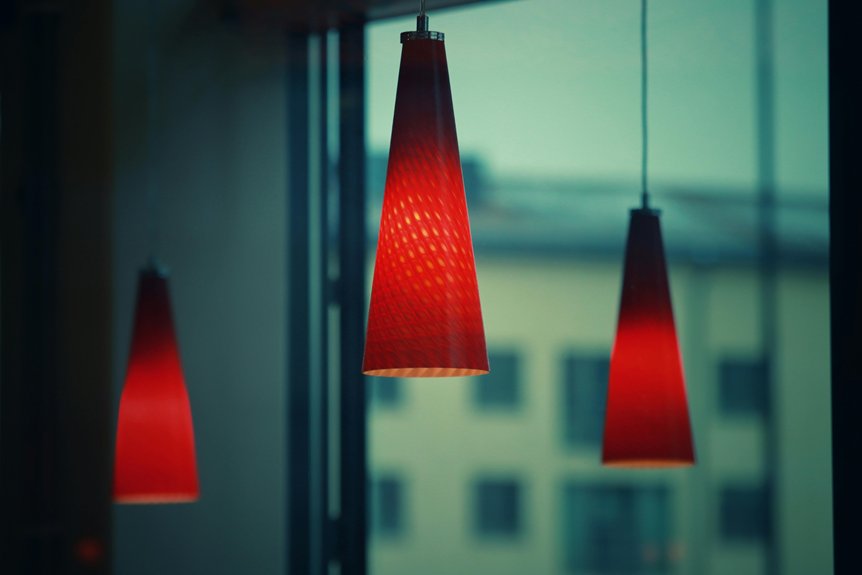
I’d focus on three things to nail your living room’s floor lamp placement.
First, decide what you actually need—task lighting for reading (65–80 inches high), ambient glow, or accent for artwork.
Next, position it strategically: near your reading chair angled toward material, or using a directional head for highlighting features.
Finally, match the lamp’s height and finish to your room’s style and furniture.
Getting these basics right makes a real difference in how your space functions and looks.
Identify What You Need: Task, Ambient, or Accent Light
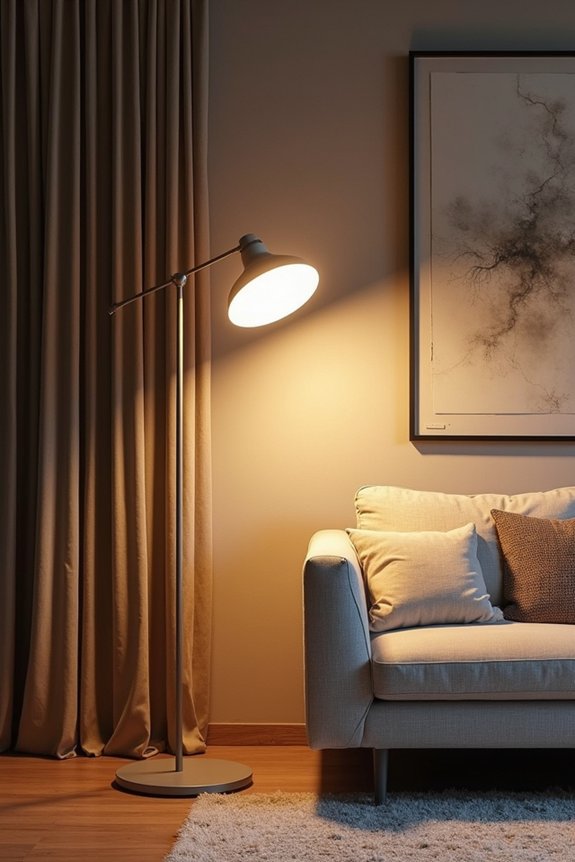
Why does your living room need a floor lamp in the first place? The answer depends on what you’re actually doing in that space. I’ll walk you through three main types so you can figure out which suits your lifestyle.
Task lighting helps you read or work comfortably. You’ll want an adjustable lamp positioned near your reading chair at roughly 65–80 inches high, keeping glare away from your eyes. Ambient lighting fills your room with soft, even glow using a translucent shade that eliminates harsh shadows. Accent lighting showcases artwork or architectural features through directional heads that highlight specific spots.
Here’s the thing: you don’t need to choose just one. A dimmer-equipped floor lamp gives you flexibility across all three modes, adapting to whatever you’re doing that evening.
Find the Right Spot for Your Lamp’s Function
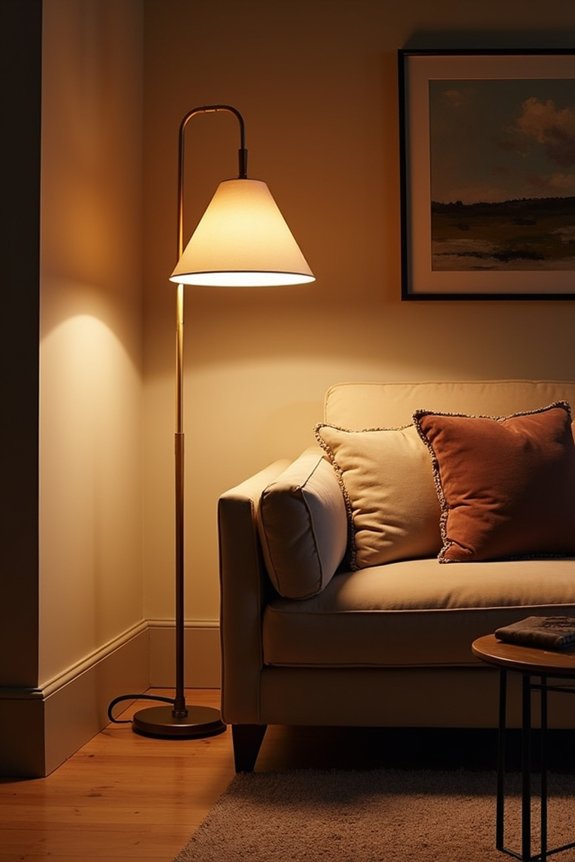
Once you’ve figured out what your floor lamp should do, the real work begins: finding where it actually belongs. Placement matters between a lamp that works well in your space and one that just takes up floor space.
For task lighting, I position my lamp beside the sofa where I read, angling the shade to focus light directly on my book without creating glare. Corner lamps with wider shades brighten those dark spots that ambient light misses. When I highlight artwork, I place the lamp at knee-to-eye level with an adjustable head for focused, shadow-free illumination.
Here’s what I always check: Is my lamp accessible for easy switching? Does its base obstruct walkways? These accessibility considerations matter more than you’d think. Finding the right spot means your lamp works harder and your room feels more deliberate.
Match Height and Style to Your Room and Furniture
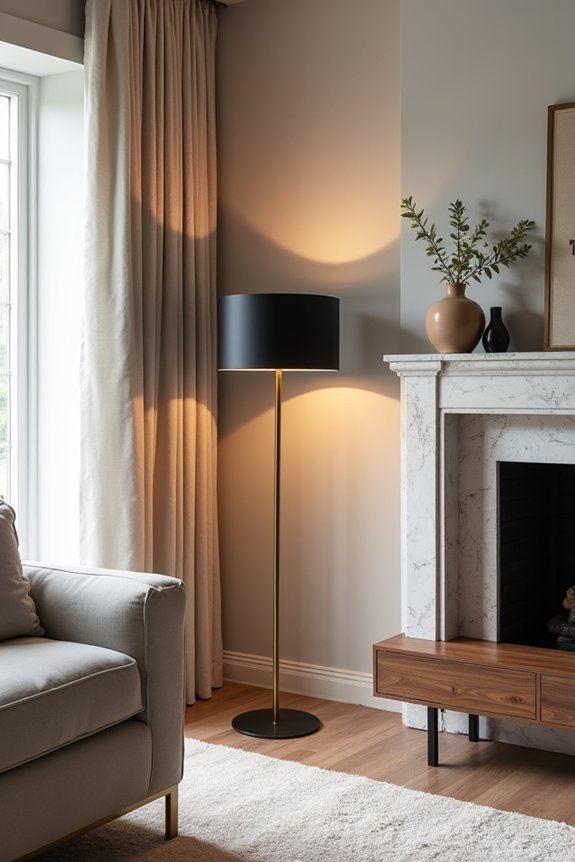
Now that you’ve found the right spot for your lamp to do its job, it’s time to make sure it actually fits your space—both functionally and visually.
| Consideration | What to Match |
|---|---|
| Floor lamp height | 60–66 inches for seated reading; 65–80 inches for tall ceilings |
| Lamp style | Arc lamps near sofas; tripod lamps in corners |
| Finishing touches | Chromed, brushed nickel, or antique brass metals |
Your floor lamp height directly affects proportional balance. A lamp placed at eye level prevents glare while providing comfortable task lighting. For ambient lighting, consider shade orientation—translucent shades diffuse light softly, while opaque ones direct it downward.
Match your lamp’s finish and design with existing furniture in your room. This creates visual consistency across your space. Taller ceilings demand taller lamps to avoid that awkward floating feeling. Think of it as giving your lamp adequate room to function within your room’s scale.