
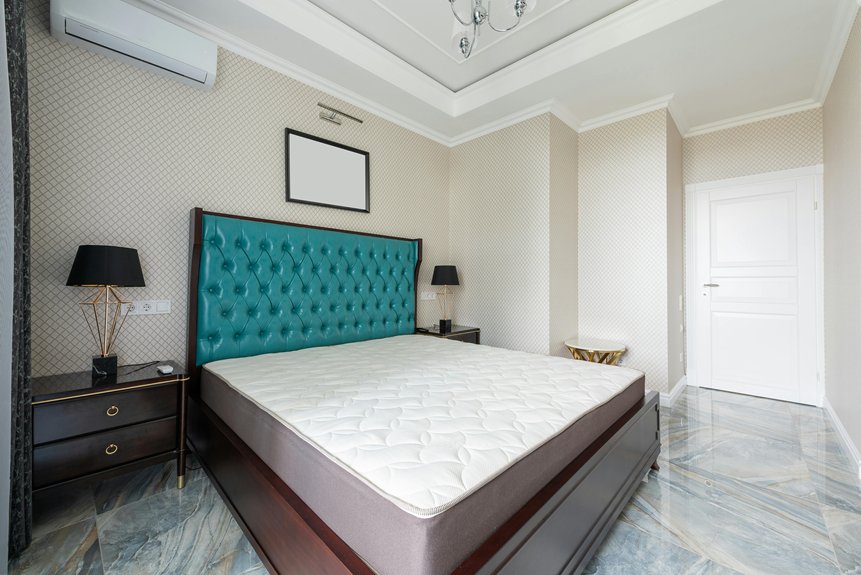
I’d start by measuring your actual room dimensions—doorways, windows, the whole deal—because furniture that doesn’t fit wastes money.
Your bed’s the centerpiece, so pick a curved frame in walnut or upholstered velvet that anchors everything visually.
Layer in a slimline headboard, floating nightstands with hidden storage, and a dresser with deep drawers (think 12–16 inches) for real organization.
These pieces work together because they’re minimal, functional, and built to last.
The specifics on spacing, materials, and styling that’ll tie it all together are coming up.
2026 Bedroom Trends: Why Modern Minimalism Starts With Your Bed
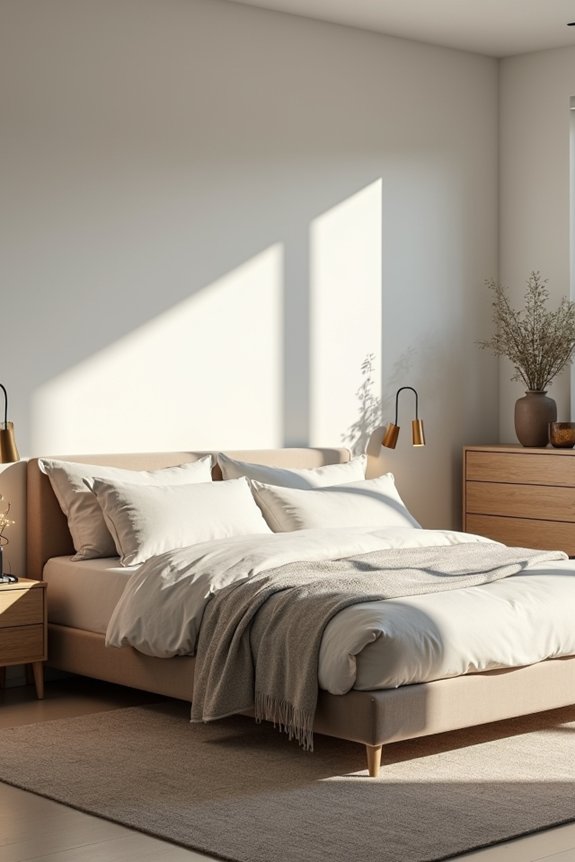
Your bed isn’t just where you sleep—it’s the foundation of a calm, clutter-free bedroom. I’ve learned that modern minimalism starts with choosing quality over quantity, and your bed frame is where it counts. Swap bulky traditional frames for sleeker designs with clean lines and natural materials. An upholstered headboard in velvet or linen becomes your bedroom’s centerpiece, creating visual softness without excess. Consider a platform bed with storage to maximize space while keeping things organized underneath. These strategic choices eliminate clutter naturally. Layer neutral textures and warm tones around your minimalist bedroom centerpiece, letting your bed stand out. When you prioritize fewer, higher-quality components, you’re not just decorating—you’re building a space that supports better rest and mental clarity.
How to Measure Your Room Before Choosing Any Furniture
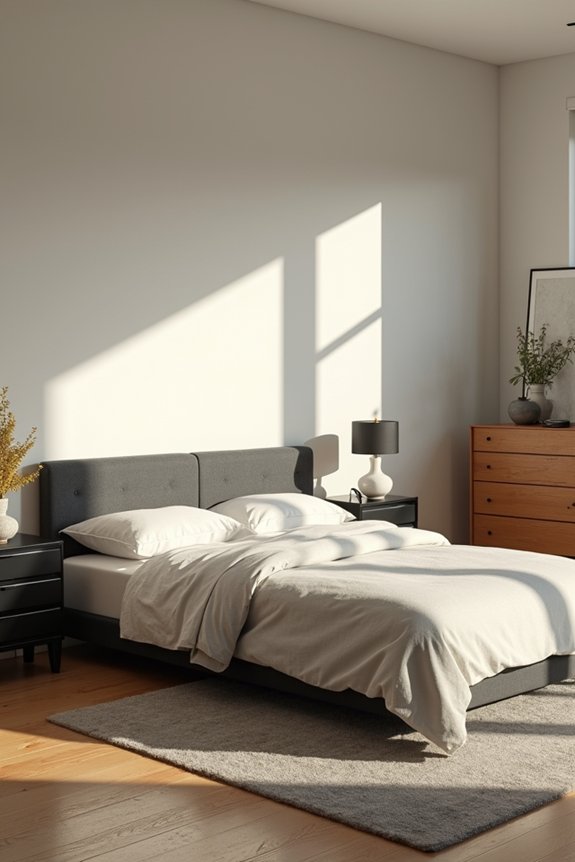
Before you buy a single piece of furniture, grab a tape measure and map out your room’s actual dimensions—floor space, door swings, and window placement all matter more than you’d think. I’d recommend sketching a to-scale layout diagram (even a quick notebook sketch works) so you can test furniture placements and spot potential walkway problems before they become expensive mistakes. This takes maybe 30 minutes, but it’ll save you from jamming a king bed into a room that really needs a queen or discovering your dresser blocks the closet door.
Measure Floor Space Accurately
How much space do you actually have to work with? I start by measuring my room’s length, width, and ceiling height—the foundation for any smart room layout. I grab a tape measure and document everything, noting alcoves or pillars that’ll affect my furniture placement. Then I sketch a scaled plan on graph paper or use a room layout app to visualize different configurations. This matters because I can test where my bed, dresser, and nightstands fit before spending money. I’m especially careful about floor space around walkways and doorways. These measurements become my blueprint, so I don’t buy pieces that’ll block pathways or waste the square footage I have.
Account for Door and Window Clearance
Why do so many people end up with furniture they can’t actually fit through their bedroom door? It’s because they’ve skipped the clearance check. I learned this the hard way, so let me save you the headache.
Before you buy that gorgeous dresser or bed frame, measure these critical areas:
- Entry doors – Width and height of your bedroom doorway
- Hallway widths – Space furniture must navigate through to reach your room
- Door swing radius – How far the door opens without hitting walls
- Pathways – Clear routes around beds and storage pieces
Check these measurements twice. A queen bed needs roughly 3 feet of clearance on each side for comfortable movement. King beds demand even more space. I’ve watched friends struggle moving furniture through tight spaces—don’t be that person. A few minutes of planning now prevents frustration later.
Plan Furniture Placement Pathways
Once you’ve confirmed your furniture can actually get through the door, it’s time to figure out where everything goes in your room. I’d recommend testing two or three different bedroom layout options before committing to anything. Sketch out a scaled floor plan—honestly, a simple graph paper drawing works fine—marking your bed, dresser, and nightstands. The key is maintaining clear pathways around your furniture placement so you’re not shuffling sideways past your bed every morning. Aim for 3–4 feet of walking space on both sides and the foot of your bed. This breathing room makes your bedroom layout feel more spacious and functional. When you’ve got good pathways established, your space feels bigger and functions better. You’ll appreciate that extra clearance daily.
Curved and Sculptural Bed Frames That Define Modern Bedrooms
As traditional boxy bed frames fade from style, curved and sculptural designs are becoming the centerpiece of modern bedrooms. These beds bring organic shapes that read as art pieces rather than basic furniture. They work particularly well in smaller spaces because they define your room without consuming it.
What makes curved bed frames effective:
- Tactile materials like bouclé and velvet provide warmth and comfort
- Slim profiles keep rooms feeling open and airy
- Organic shapes pair beautifully with rounded mirrors and circular rugs
- Neutral bedding allows the sculptural design to stand out
The approach? Make your curved bed frame the room’s anchor. Pair it with textured throws and pillows that echo its flowing lines. This creates a calm space with clear design intention that’s yours alone.
Upholstered Bed Frames for Warmth and Texture
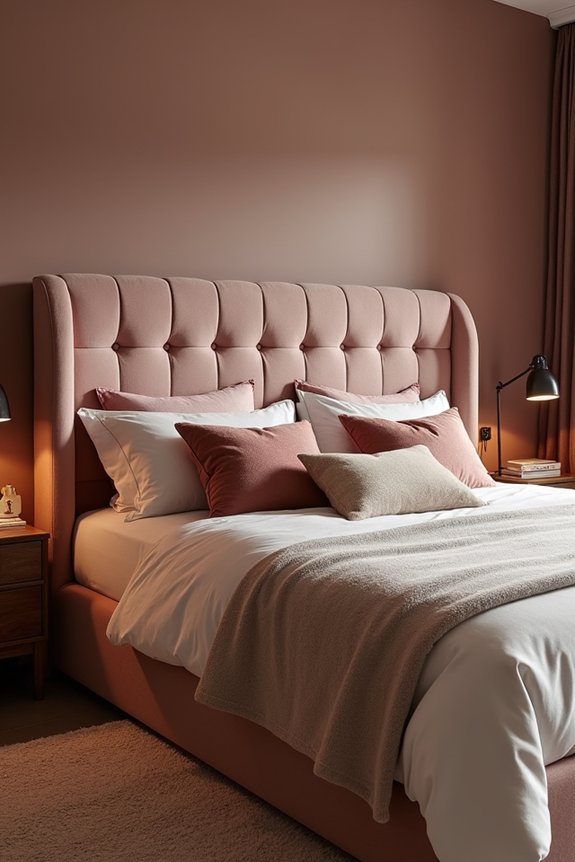
Upholstered bed frames strike a practical balance between comfort and contemporary style—you get that cozy, inviting feel without sacrificing the clean lines modern bedrooms need. Natural materials like linen and velvet in warm tones make your space feel more intimate, and they’re practical since you can swap out covers or cushions whenever you want a fresh look. Whether you’re furnishing a tight city apartment or a sprawling master bedroom, these frames adapt well to your space while maintaining durability through solid hardwood construction and reinforced support systems.
Comfort Meets Contemporary Style
Want to create a bedroom that feels both luxurious and livable? Start with a quality upholstered bed frame that matches your style. Here’s what makes this choice effective:
- An upholstered headboard in velvet or linen brings softness and texture to your room
- A platform bed with storage drawers maximizes space while keeping a streamlined look
- Slender bed frames with clean lines make your bedroom feel more spacious
- Pairing your frame with neutral bedding keeps everything refined and versatile for years
The key is choosing natural materials and soft textures that work with your existing décor. You’re not just buying furniture—you’re investing in a bedroom that feels both comfortable and well-designed.
Natural Materials and Warm Finishes
Why do natural materials feel so much better in a bedroom? They create that cozy atmosphere we’re all craving. Upholstered bed frames featuring linen or velvet in warm textures work well for your sleeping space. These natural materials paired with warm finishes bring comfort and style to your bedroom. Pine accents work beautifully alongside these frames, adding softness and eco-friendly appeal. The combination creates genuine warmth without feeling heavy or overwhelming. You’ll notice how pale tones and soft grain patterns establish a Scandinavian-inspired aesthetic that feels both modern and grounded. When you choose upholstered bed frames with natural fabrics, you’re investing in tactile comfort that makes your bedroom feel distinctly yours.
Space-Saving Urban Living Solutions
How do you fit comfort into a compact bedroom without sacrificing style? I’ve found that upholstered beds solve this puzzle effectively. They provide softness and texture while working efficiently with limited square footage.
What works well for urban living:
- Upholstered bed frames pair with low-profile footboards to keep floor space open
- Under-bed storage slides smoothly beneath, hiding seasonal items or extra bedding
- Curved headboards create visual interest without bulky traditional designs
- Velvet or linen upholstery coordinates easily with neutral bedding and soft textures
Choose neutral fabric colors that match your existing pieces. The acoustic softness of upholstered frames also quiets sound, making your bedroom feel more comfortable. Combined with space-saving built-in drawers, you’ll maximize every inch while maintaining the hotel-inspired aesthetic that appeals to many people right now.
Slimline Headboards That Create Space Instead of Stealing It
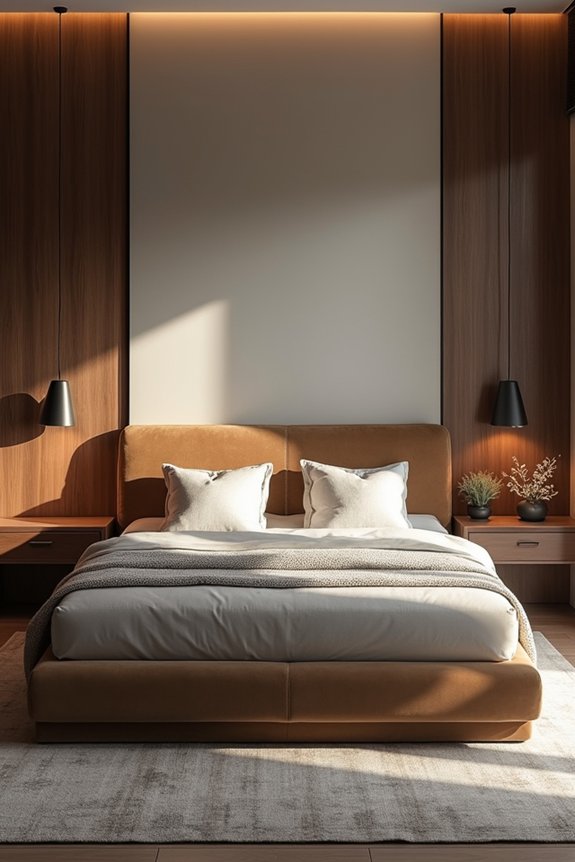
The bedroom headboard’s job is changing. Instead of demanding attention with bulk, today’s slimline headboards create breathing room. These space-saving designs work well in cramped Vancouver condos and Surrey townhomes by keeping sightlines open.
You’ll want lightweight materials like natural wood or upholstered boucle that provide warmth without visual weight. Curved or padded styles offer comfort while maintaining that airy feel. Pair your slimline headboard with neutral bedding in soft textures—think linen or cotton blends—to keep everything consistent and calm.
The benefit? You’re not sacrificing style for function. These headboards deliver both. They improve room flow, make spaces feel larger, and last longer because they’re engineered smarter. That’s the 2026 approach: minimal design with real results.
Storage-Focused Dressers With Smart Drawer Integration
When you’re furnishing a compact bedroom, you’ll want a dresser that works as hard as you do—and that’s where deep drawer organization systems come in, with adjustable dividers and compartments that let you corral everything from socks to tech cables. Smart drawers with electronic opening, built-in charging stations, and customizable sections make use of space that would otherwise go unused, keeping your essentials accessible without cluttering your room. Pairing these practical pieces with rounded-front designs in walnut or oak finishes gives you both the storage capacity you need and a soft, flowing aesthetic that helps a small space feel more spacious.
Deep Drawer Organization Systems
Why settle for a dresser that barely holds your stuff when you can get one that actually works with you? Deep drawer organization systems change how you store and find your belongings. I’ve discovered that these dressers with enhanced storage capacity make a real difference in keeping your space functional.
Here’s what makes them work:
- Drawers extending 12-16 inches deep maximize storage without taking up extra floor space
- Built-in dividers and compartments keep clothing sorted and accessible
- Smart features like LED lighting activate when you open drawers
- Soft-close mechanisms prevent slamming while protecting your items
Quality construction matters here. Look for solid wood frames and sturdy metal glides that’ll handle daily use. When your drawers work efficiently, your entire bedroom feels more organized and calm.
Space-Saving Storage Solutions
As your bedroom grows more crowded, smart drawer integration turns your dresser into an organizational powerhouse that adapts to what you need. I’ve found that configurable dividers and hidden compartments create manageable storage. App-controlled lighting lets you locate items without rummaging through everything.
| Feature | Benefit | Best For |
|---|---|---|
| Configurable dividers | Customizable sections | Socks, jewelry, scarves |
| Hidden compartments | Concealed valuables | Seasonal accessories |
| App-controlled lighting | Quick item location | Dark drawers |
| Modular systems | Future reconfiguration | Changing needs |
Pair your storage dresser with under-bed solutions for bulky winter coats. Modular drawer systems mean you’re not locked into one setup forever. As your life changes, your organization adapts without replacing furniture. That’s real flexibility.
Natural Wood Bedroom Furniture: Why Walnut and Oak Lead in 2026
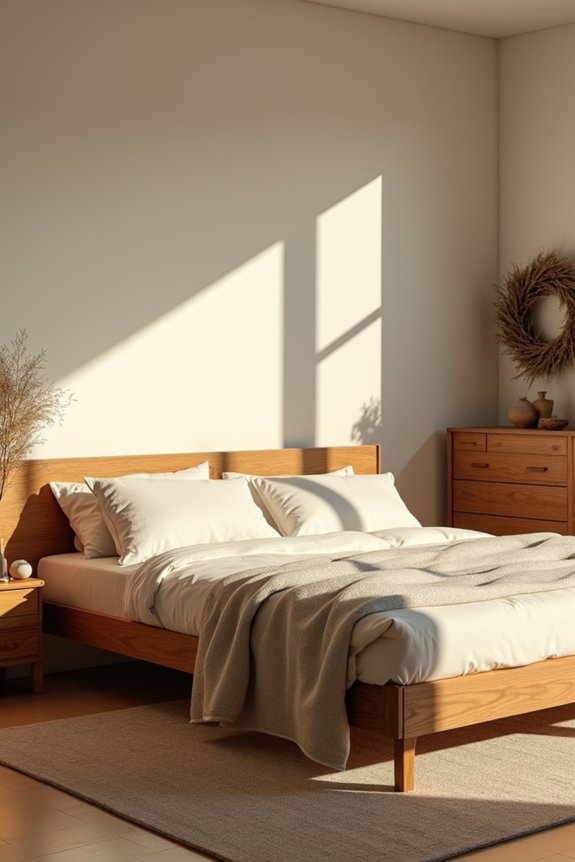
If you’re redesigning your bedroom this year, you’ve probably noticed natural wood furniture dominating design conversations—and for good reason. I’m drawn to walnut and oak because they deliver what we’re all craving: warmth, durability, and timeless appeal.
Walnut brings a rich, dark finish with pronounced grain that adds depth to any bedroom. Oak offers something lighter—soft grain tones that pair beautifully with Scandinavian and rustic styles. Here’s what makes them winners:
- Walnut: Creates luxe depth in modern and traditional spaces
- Oak: Provides pale tones perfect for airy, contemporary rooms
- Durability: Both woods withstand years of daily use without warping
- Natural warmth: They humanize urban spaces while keeping designs minimal
Pine works as an eco-friendly accent, complementing matte black metals and stone. I’d balance these woods with warm finishes to maintain that spacious, uncluttered feeling you’re after.
Upholstered Nightstands and Hidden Storage: Function Meets Comfort
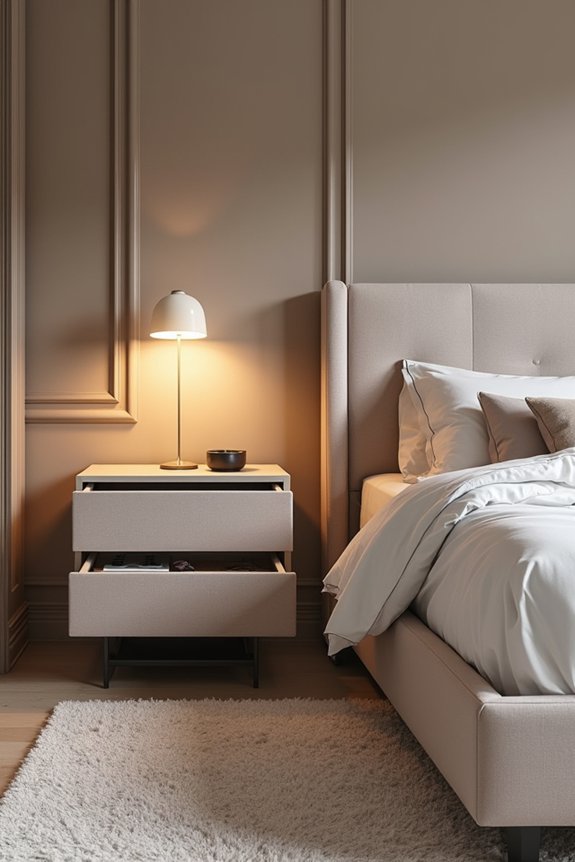
How many times have you reached for your nightstand and wished it offered more than a flat surface? Upholstered nightstands deliver both tactile comfort and practical hidden storage. Materials like velvet, linen, or bouclé provide softness while withstanding daily use. Built-in drawers and hidden compartments keep clutter out of sight, maintaining a streamlined look. When designing your bedroom, coordinate your upholstered nightstands with your headboard and dresser to create visual unity across the space. Combine them with curved bed frames and plush bedding for comfortable bedroom surroundings.
Floating Shelves and Wall-Mounted Units for Small Urban Bedrooms
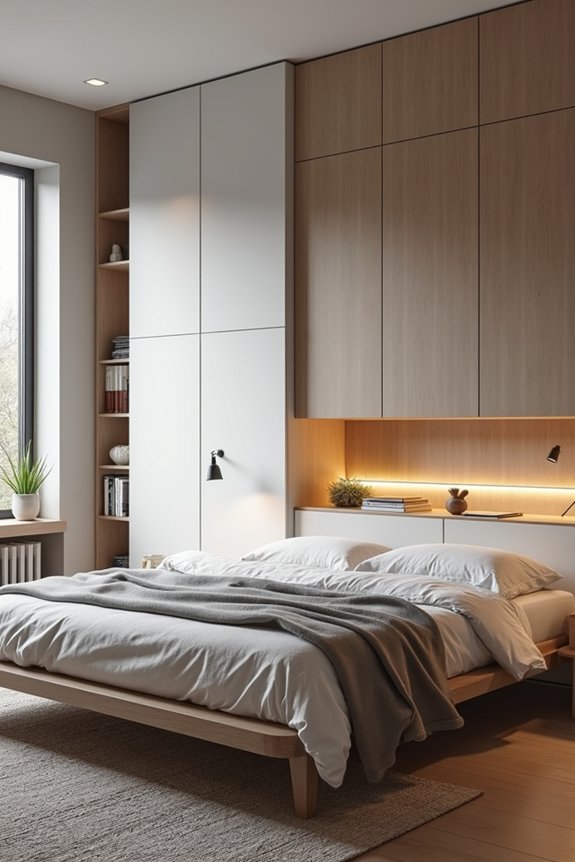
When you’ve got limited floor space, vertical storage becomes your best friend. I’ve found that floating shelves and wall-mounted units free up the floor in cramped bedrooms while keeping everything accessible. These space-saving furniture pieces pair well with 2026’s modular design trend, letting you customize exactly what you need.
Here’s what makes them work:
- Hidden drawers and adjustable shelving accommodate different belongings without visual clutter
- Durable engineered or solid wood faces withstand daily use in compact spaces
- Soft-close hardware prevents slamming in tight quarters
- Open sightlines make small bedrooms feel noticeably more spacious
Prioritize quality construction when selecting wall-mounted units for your Vancouver condo or Surrey townhouse. The right floating shelves create subtle zoning while maintaining that clean, airy aesthetic suitable for 2026.
What Makes Bedroom Furniture Actually Last
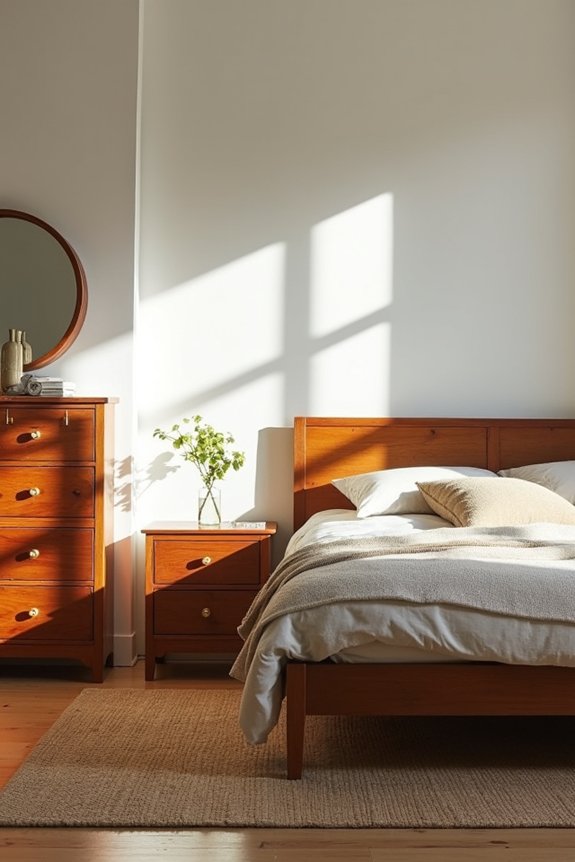
The difference between bedroom furniture that falls apart in three years and pieces you’ll actually use for decades comes down to a few key choices you make upfront. I’d start by choosing solid wood or quality engineered wood—these materials genuinely hold up. Check the joinery next; strong connections between pieces prevent wobbling and warping. Look closely at finish durability too—deeper stains resist scratches better than thin coatings. Built-in storage matters more than you’d think; drawers and hidden compartments keep clutter manageable, reducing wear on your furniture. Designs in natural materials like oak or walnut remain relevant longer. When you prioritize these details upfront, you’re investing in pieces that’ll actually stick around.