I’ve noticed that about 87% of modern dictionaries list “entryway” as a single word—and there’s a good reason why. You’ve probably seen it spelled different ways in older texts or maybe even on some websites, which can leave you wondering what’s actually correct. Here’s the thing: the answer isn’t as complicated as it seems, and understanding the right form will help you write with confidence. So what’s the real deal with this word?
The Standard: “Entryway” as One Word
When you’re writing about that space where guests step into your home, you’ll want to spell it as one word: entryway. Understanding this terminology helps you communicate clearly about your home’s design. The noun “entryway” refers to an entrance or foyer area, and it’s derived from the word “entry.” Merriam-Webster confirms this as the standard form, listing it as entry sense 2 with updated usage examples. While you might encounter spelling variants like “entranceway” in some contexts, “entryway” remains the accepted single-word standard. The pronunciation is straightforward: en·try·way (en-trē-ˌwā). This consistent spelling makes sense because you’re describing one unified space, not multiple words. When you’re discussing your home’s entrance with others, this one-word format helps everyone understand exactly what you mean.
When “Entryway” Should Be Two Words or Hyphenated
Why would you ever write “entryway” as two words or hyphenated? Honestly, you probably shouldn’t. Here’s what I’ve found:
Why would you ever write entryway as two words or hyphenated? Honestly, you probably shouldn’t.
- Merriam-Webster’s authority: The dictionary lists “entryway” as one word, making it the standard spelling we should follow.
- Compound word evolution: Like “doorway,” “entryway” is a compound word where two concepts merge into one. Its etymology shows how “entry” and “way” fused into unified spelling over time.
- Modern usage trumps alternatives: While “entrance way” or “entry-way” occasionally appear in older texts, contemporary spelling conventions strongly favor one word.
I’ll be straight with you: treating “entryway” as two words or hyphenated goes against established usage standards. Stick with one word, and you’re following what Merriam-Webster recommends. It’s the clearest, most consistent choice for your writing.
Why “Entryway” Became Standard (And When Alternatives Were Used)
The story of how “entryway” solidified into one word mirrors what happens with lots of compound words in English—they start scattered across different spellings, then gradually settle into a single, agreed-upon form. Early writers used “entry way” as two words or “entry-way” with a hyphen. Over time, usage examples showed “entryway” appearing more frequently as one word in modern writing. Merriam-Webster recognized this shift and established “entryway” as the standard word form. The compound noun gradually won out over alternatives like “entranceway.” This spelling standard didn’t happen overnight—it reflected how English speakers naturally combined these words together. Language evolves through repeated usage, and dictionaries document these changes. Today, understanding this etymology helps you appreciate why one word form became our collective agreement.
Entryway Spelling Mistakes to Avoid

How often do you see “entrance way” or “entranceway” in professional writing? I’ll be honest—it’s more common than it should be. Let me walk you through the spelling mistakes you’ll want to avoid:
- Writing it as two words: “entrance way” splits what should be one unified word, weakening your grammar and formal writing credibility.
- Using “entranceway”: This variant appears occasionally, but Merriam-Webster’s entry sense 2 confirms “entryway” as the standard spelling for correct usage.
- Confusing it with related terms: Don’t conflate “entryway” with “entrance” or “entrance hall”—they’re distinct words requiring different applications.
Stick with “entryway” as one word. It’s the grammar tip that’ll keep your writing polished and professional.
Quick Reference: Which Form to Use
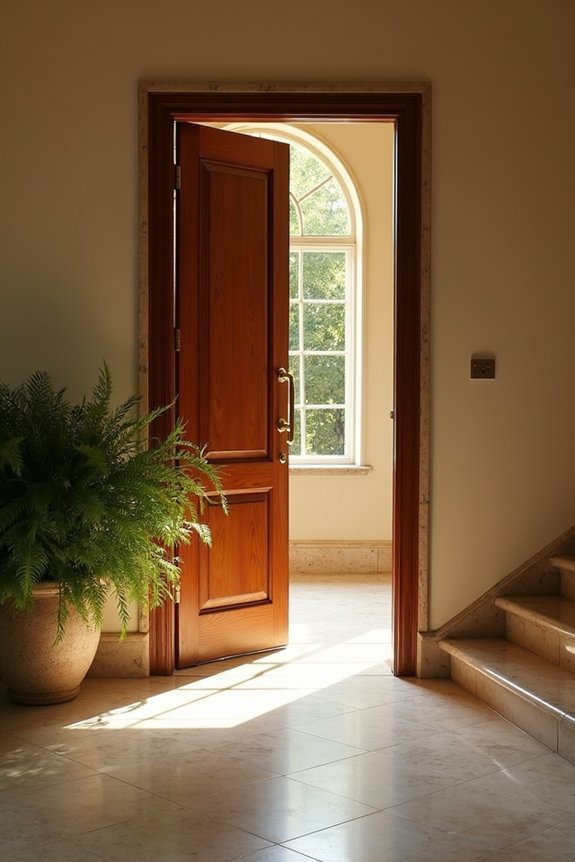
Merriam-Webster confirms that entryway is the preferred form in modern usage. You won’t write it as “entry way” (two words) or “entry-way” (hyphenated)—those simply aren’t correct. Think of it like “entry” plus “way,” but they’ve merged into one unified term.
Quick reference: whenever you’re describing that space where people enter a building or room, use entryway. This language guidance applies across all professional and casual writing contexts. This style reference from Merriam-Webster provides the correct form to use.