
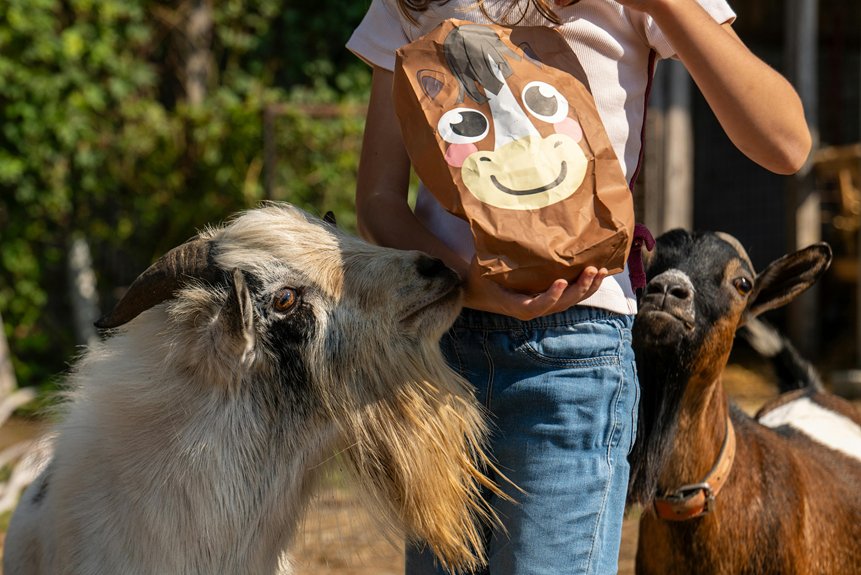
Whether you can keep a goat in your backyard depends entirely on your city’s zoning laws and local ordinances—not on what your neighbor’s doing. You’ll need to contact your animal control or planning department first to confirm breed restrictions (usually miniature or pygmy only), herd size limits, and shelter requirements. Most cities require neutered males, proper fencing, and licensing fees. Your HOA might impose stricter rules too. Get official confirmation before bringing one home to avoid fines or removal. The specifics vary by location, so you’ll need to research your particular situation.
Check Your Local City Ordinances First
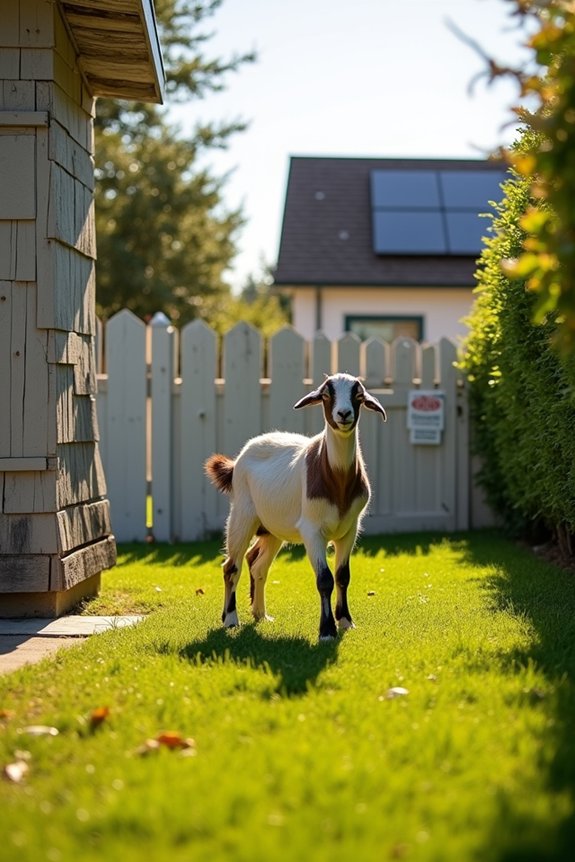
Before you bring home your first goat, you’ve got to check what your city actually allows—and that’s the non-negotiable first step. City ordinances vary wildly, meaning what’s perfectly legal in one neighborhood might be forbidden in another. Your local municipal code holds all the answers you need. I recommend contacting your city’s animal control or planning department directly—they’ll tell you exactly what breeds, how many goats, and what conditions apply to your specific address. Some cities embrace backyard goats enthusiastically. Others flat-out prohibit them. HOA covenants can further restrict what you’re allowed to keep. Don’t skip this step assuming you know the rules. Getting official confirmation protects you from fines, mandatory animal removal, or worse situations down the road.
Zoning Laws That Affect Backyard Goat Ownership
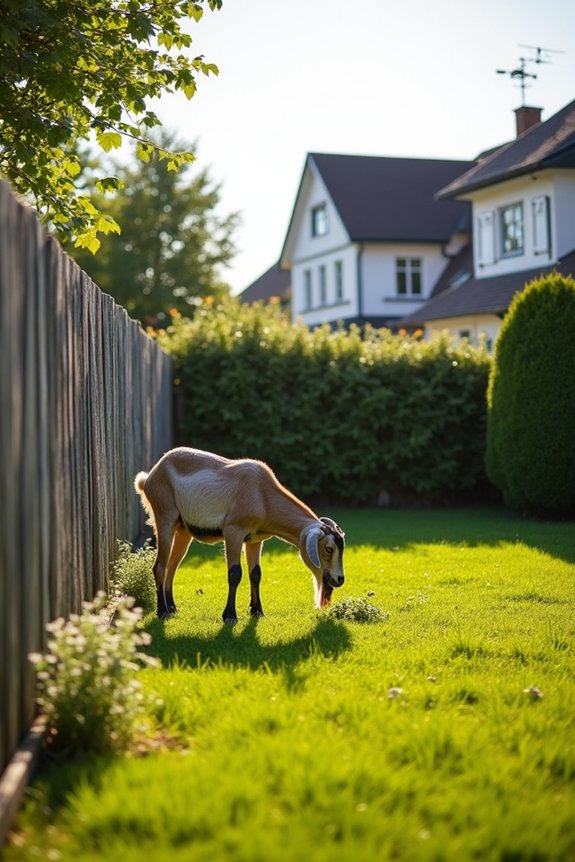
So in this regard—your city’s zoning laws, not state regulations, actually decide whether you can keep goats on your property. Your municipality controls backyard goat ownership through specific ordinances that vary wildly depending on where you live. Some cities welcome goats, while others ban them entirely. Here’s what typically matters: lot size requirements, setback distances from property lines, and whether your HOA has restrictions. Many jurisdictions specify herd size limits—you might be allowed two pygmy goats but not three. Others mandate neutered males only or require disbudding for safety. Some municipalities demand permits or licenses before you bring goats home. That’s why checking your exact city’s zoning code comes first. What’s legal in Seattle differs from unincorporated county rules.
Shelter Size and Design Requirements
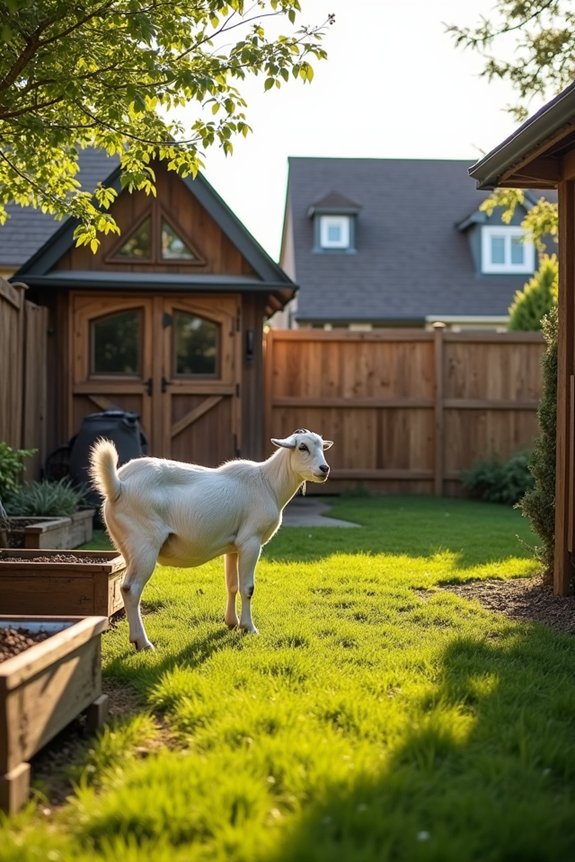
Once you’ve confirmed your city allows goats, you’ll need to build them a proper home—and I’m not talking about letting them crash in your garage. Your goat shelter must meet specific requirements to keep your animals safe and healthy. The shelter itself needs at least 10 square feet of space, while your outdoor enclosure size should reach a minimum of 400 square feet. You’ll want predator-proof construction with proper ventilation, waterproofing, and easy cleaning access.
| Requirement | Shelter | Outdoor Enclosure | Fence |
|---|---|---|---|
| Minimum Size | 10 sq ft | 400 sq ft | 5 feet tall |
| Protection | Predator-proof | Fenced perimeter | Outside-secured |
| Drainage | Well-drained area | Dry location | Trap-free design |
| Access | Direct connection | Easy entry/exit | Safe gates |
Position your shelter on high ground to avoid soggy conditions, maintaining direct access between your shelter and outdoor space.
Fencing and Enclosure Specifications for Goats
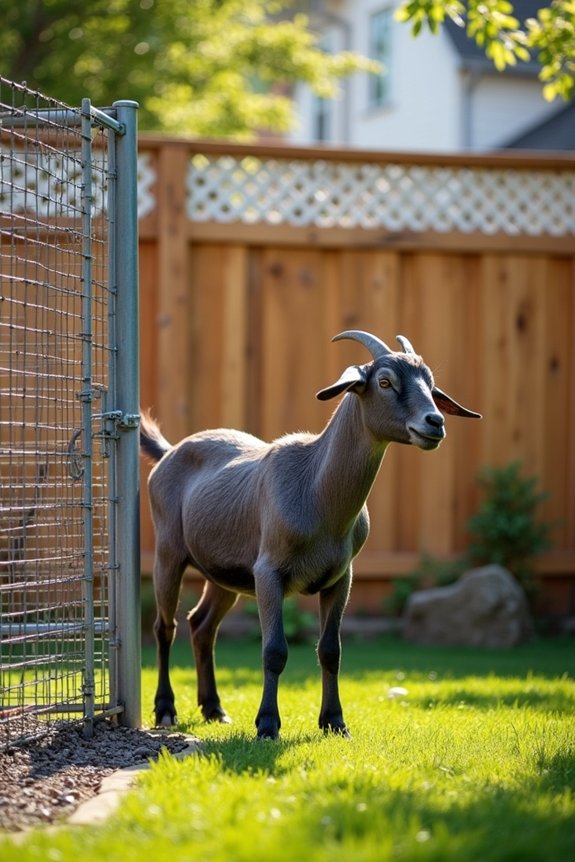
What’s the most common reason backyard goat owners end up chasing their animals down the street? Inadequate fencing. You’ll need a sturdy 5-foot-tall fence surrounding your entire enclosure—goats are athletic escape artists. I’d recommend cattle panels or similar heavy-duty materials that’ll withstand their constant testing.
Your enclosure itself needs at least 400 square feet of space for two goats. That’s roughly 20 by 20 feet, giving them room to move around comfortably. Don’t skimp here; cramped goats become problem goats.
Make sure your fence is trap-free and sits external to your shelter. I also suggest nighttime confinement inside your predator-proof shelter. Consider adding electric fencing or a guardian animal for extra protection. These practical steps keep your goats safe and your neighbors happy.
Breed Restrictions: Miniature, Pygmy, and Dwarf Goats Only
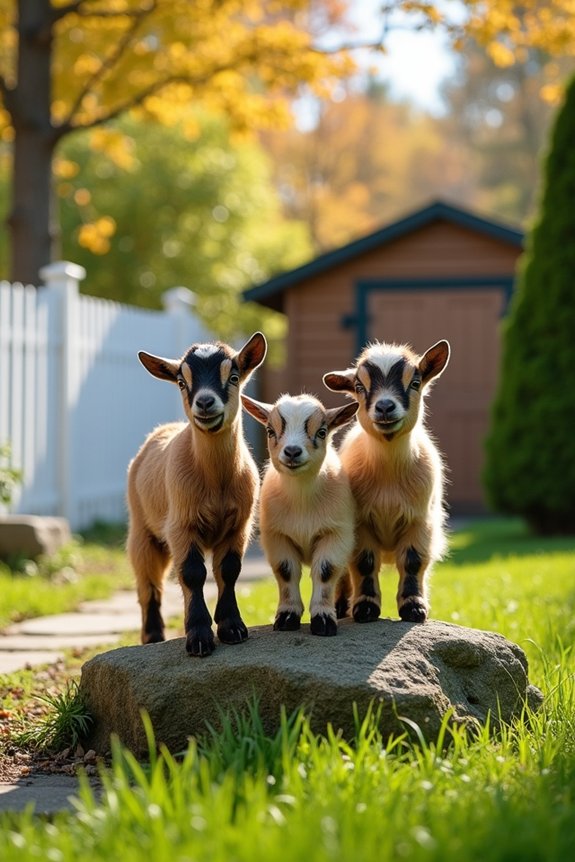
Now that you’ve got your fencing and shelter sorted, here’s something to note: not every goat breed qualifies for backyard living. Seattle enforces strict breed restrictions that limit you to miniature goats, pygmy varieties, or dwarf breeds only. These smaller goats fit naturally into residential spaces without overwhelming your property.
Why the breed restrictions? Standard dairy and meat goats grow too large for suburban backyards and require significantly more space and resources. Miniature goats, by contrast, consume less feed, produce manageable waste, and integrate better into neighborhood settings.
Before committing to any breed, verify your specific location’s regulations. If you’re outside Seattle, check with your local city office since unincorporated King County and neighboring areas follow different rules. Getting this detail right prevents costly mistakes down the road.
Goat Licensing, Neutering, and Dehorning Requirements
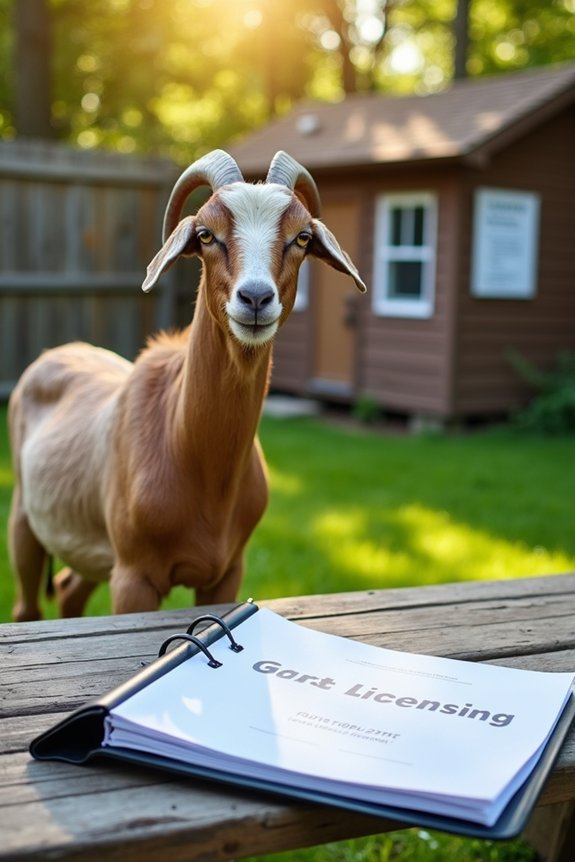
Before you bring home your first goat, you’ll need to handle some bureaucratic basics—and they’re non-negotiable in Seattle.
Here’s what you’re actually looking at:
- Annual licensing through the Seattle Animal Shelter (yes, every single year)
- Neutering all male goats without exception
- Dehorning requirements for safety and compliance
- Licensing costs vary, so check with Animal Shelter for current fees
- Environmental Health Services handles additional regulatory questions
You can’t skip these steps. The licensing keeps your goats legal and on record. Neutering males prevents behavioral problems and unwanted breeding. Dehorning protects both your animals and neighbors.
Contact the Seattle Animal Shelter directly for exact licensing fees and Environmental Health Services for additional details. Getting these requirements handled upfront means you can proceed with goat ownership without legal complications down the road.
Keeping Your Family Safe: Handwashing and Sanitation for Goat Owners
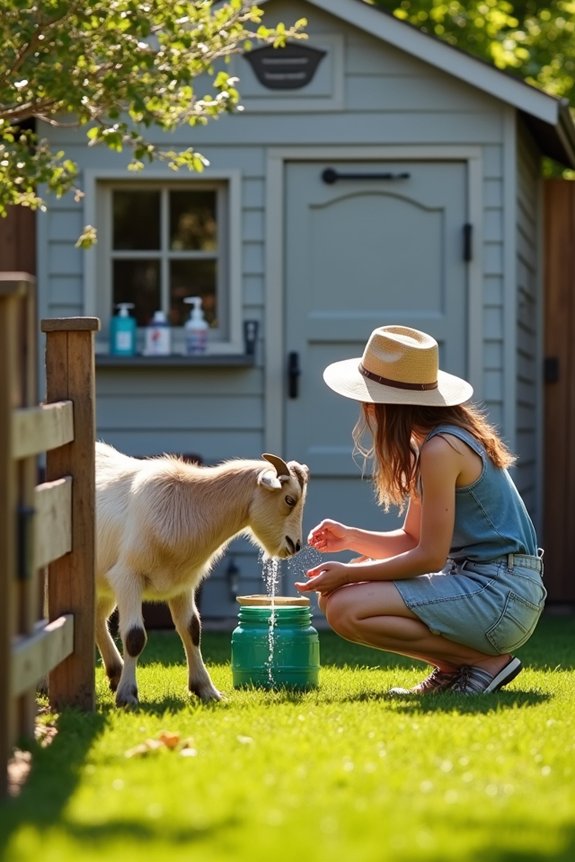
Keeping goats means keeping your family safe, and that starts with understanding how easily bacteria can spread from your animals to your home. Handwashing and sanitation aren’t optional—they’re necessary defenses against illness.
| When | Action | Why |
|---|---|---|
| After handling goats | Wash hands with soap and water | Removes bacteria from direct contact |
| Before eating or drinking | Thorough handwashing | Prevents ingestion of pathogens |
| After manure contact | Immediate washing | Stops disease transmission |
| Before food prep | Complete sanitation | Protects your family’s meals |
| Daily | Housing inspection | Maintains clean environment |
Keep goats away from your kitchen and food prep areas completely. Their housing should be clean and separate from where you cook. Don’t eat or drink anywhere near your goat space—it’s simply not worth the risk. Your family’s health depends on these simple, consistent habits.
Herd Size Limits and Male Goat Restrictions in Your City
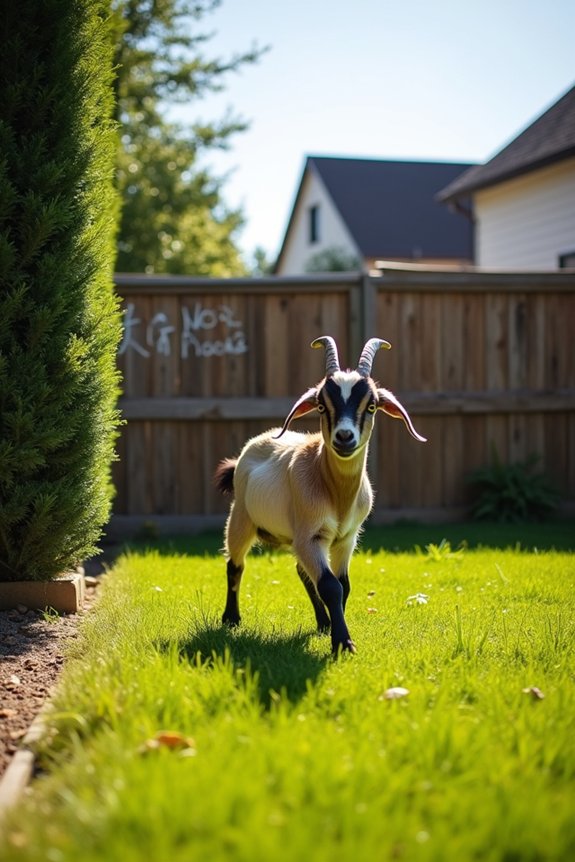
Before you bring home your first goat, you’ll need to check your city’s herd size limits—many require at least two goats so they’ve got a buddy and don’t get stressed out alone. Most ordinances also mandate that you neuter any male goats you keep, which prevents behavioral problems and makes them better neighbors (your neighbors will thank you). Finally, some cities restrict you to smaller breeds like pygmy or dwarf goats, so confirming what’s actually allowed in your area saves you from heartbreak later.
City-Specific Herd Limits
How many goats can you actually keep? That depends entirely on where you live. I’d recommend checking your local ordinances first because herd size limits vary dramatically by city and zone.
Here’s what you’ll typically encounter:
- Many cities allow two goats minimum for companionship purposes
- Some municipalities cap total herd size at three to five goats
- Male goats often must be neutered to reduce aggression and odor
- Certain zones prohibit goats entirely regardless of herd size
- Your goat shed and enclosure must meet specific setback requirements
Before building that goat shed, contact your local animal control office directly. They’ll confirm exact herd size limits, required permits, and whether bucks need neutering. Even if your city allows goats, check your HOA rules and property covenants—they might be stricter than municipal codes.
Neutering Requirements for Males
Do you really need to neuter your male goats? In Seattle, the answer’s yes—it’s required. All male goats must be neutered, regardless of breed size. This requirement exists for good reasons beyond just following rules.
Neutering male goats reduces aggression and makes them safer to handle around your family and neighbors. Unneutered males develop strong odors during breeding season, which honestly isn’t pleasant. The procedure also prevents unwanted breeding, helping you manage your herd responsibly.
If you’re outside Seattle, check your local city ordinances first. Requirements vary substantially by location. Contact your city office directly to understand what applies to you.
Neutering is considered standard health and safety practice for backyard goat owners. It’s an investment in a calmer, healthier herd.
Breed Size Restrictions Apply
Your city’s rules about neutering males are just one part of the larger picture—breed size restrictions and herd limits come into play too. Most municipalities won’t let you keep just any goat. Here’s what typically applies:
- Miniature or pygmy breeds only in residential zones
- Herd size caps ranging from one to four goats per lot
- Minimum requirements of two goats for companionship in some areas
- Setback distances from property lines (often 10-25 feet)
- License and permit fees before you bring home your first goat
A miniature goat might seem like a practical backyard solution, but your specific lot size and local codes determine what’s actually allowed. You’ll need to contact your city’s animal control office directly—they’ll give you exact breed specifications, size restrictions, and whether that single goat is realistic for your situation.
Verifying Your Property Is Zoned for Backyard Goats
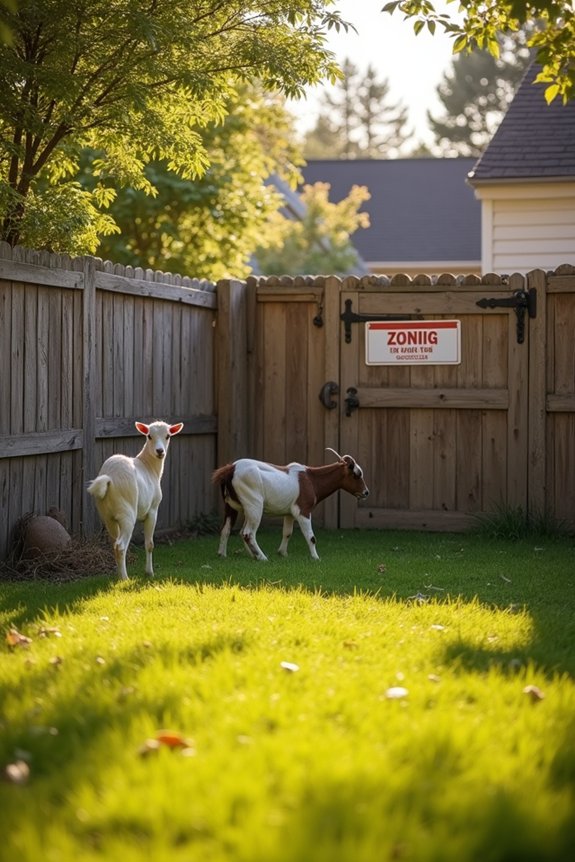
Before you bring goats home, you’ll need to check whether your property’s zoning actually allows them—and this is where things get specific because setback requirements (that’s the distance your shelter must sit from property lines) vary widely between neighborhoods. I’d recommend pulling up your local municipal code or zoning map to see exactly what distance you need and whether your lot is even big enough to meet those standards. Once you’ve got those ordinance requirements locked down, you can figure out if your backyard setup will work.
Local Ordinance Requirements
Even if your state says goats are fine, your city or county might have other ideas. Local laws and zoning restrictions vary widely, so you’ll need to research your specific area’s requirements.
Before you bring home any goats, check these important details:
- Contact your city or county planning department about zoning restrictions
- Request a copy of municipal codes regarding livestock and animals
- Ask animal control about herd size limits for your property
- Inquire about licensing, enclosure, and setback requirements
- Confirm breed restrictions (some areas only allow miniature varieties)
Your neighbor’s goats might be legal while yours aren’t, depending on location. Seattle permits only pygmy, dwarf, or miniature goats. San Diego allows two miniature goats for single-family homes. Verify everything with officials before committing.
Zoning Setback Specifications
Once you’ve confirmed your area allows backyard goats, there’s another layer to check—setback requirements.
Goat setbacks determine how far your shelter must sit from property lines. These distances protect your neighbors’ privacy and safety. Here’s what you’re typically looking at:
| Setback Type | Standard Distance | Purpose |
|---|---|---|
| Side yard | 5 feet | Neighbor separation |
| Rear yard | 13 feet | Buffer zone |
| Front yard | Varies | Community appearance |
| Corner lot | Check locally | Additional restrictions |
| Subdivision | Often stricter | HOA rules apply |
Your goat shelter can’t encroach on these minimum distances. Contact your Development Services Department to confirm exact measurements for your address. Many cities offer online Zoning Map applications where you’ll find your specific district’s requirements. Skip this step and you may face costly relocations later.
Optional: Milk Production Rules and Pasteurization Requirements
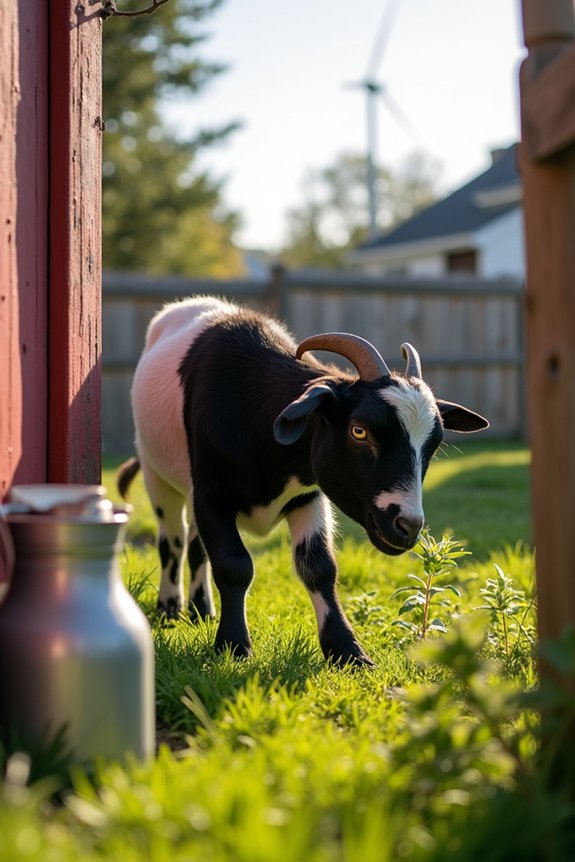
So you’re thinking about milking your backyard goats—what rules should you actually know?
If you’re planning to produce goat milk, pasteurization isn’t optional in most places. Here’s what matters:
- Pasteurization is required for any goat milk you’ll consume or use for cheese
- Raw milk poses serious risks, especially for young children and immunocompromised people
- Two goats yield roughly half a gallon daily, enough for personal needs
- Selling is prohibited in most areas—this milk stays for you and your family
- Hand washing and sanitation prevent illness when handling goats and milk
The rules exist because unpasteurized milk can carry life-threatening pathogens. You’ll need proper equipment and knowledge to pasteurize safely at home. Check your local regulations first—they vary significantly. Think of pasteurization as your insurance policy for keeping your household healthy.