
Cutter Backyard Bug Control contains lambda-cyhalothrin, a synthetic pyrethroid that kills pests fast but can poison your dog if ingested or absorbed through wet skin. Keep your dog indoors during application and the full 48-hour drying window. Monitor daily for vomiting, diarrhea, drooling, or lethargy. Water the treated lawn lightly after spraying to reduce surface residue. Store the bottle securely away from your dog. Contact your vet immediately if symptoms appear. Additional precautions will help protect your pet.
What’s in Cutter Spray (And Why It Matters for Dogs)?
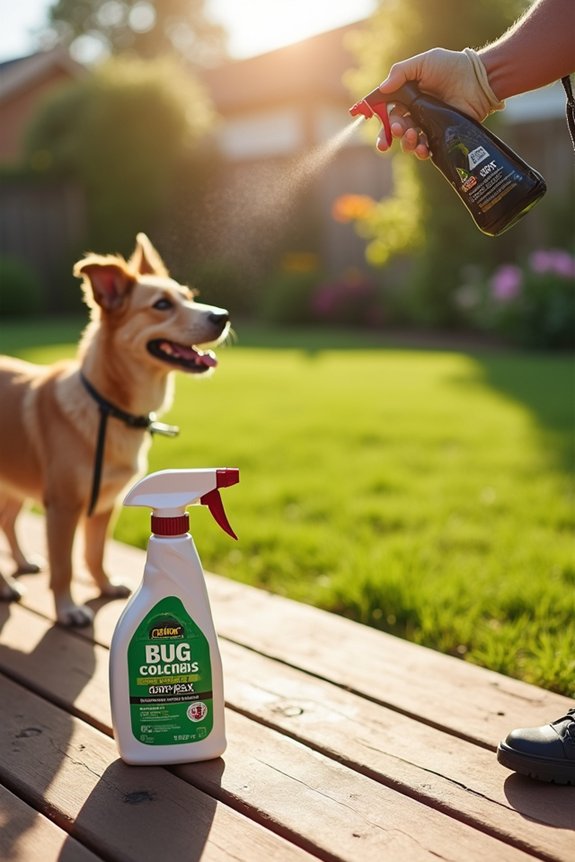
Why does understanding what’s actually in Cutter Backyard Bug Control matter so much when you’ve got dogs at home? The spray contains lambda-cyhalothrin, a synthetic pyrethroid at 0.16% concentration. This ingredient works by blocking sodium channels in insect nervous systems, which causes rapid pest knockdown. Here’s the thing: dogs can tolerate low doses of pyrethroids when you use the product as directed and minimize exposure. However, direct contact with wet spray or accidental ingestion creates real risks—vomiting, diarrhea, and neurological signs can develop. That’s why safe use around pets isn’t optional; it’s necessary. Knowing what you’re spraying helps you respect the product’s power while protecting your furry friends. It’s honestly just responsible pet ownership.
Why Your Dog Could Get Sick (And When)?
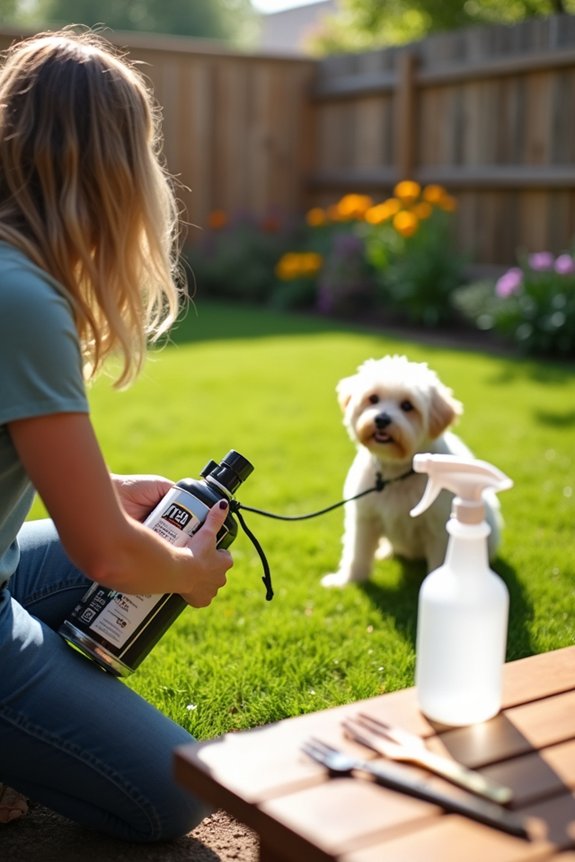
I want you to understand how lambda-cyhalothrin, the active ingredient in Cutter Backyard Bug Control, can harm your dog through ingestion or skin contact. Your dog gets sick when it walks across wet-treated grass, licks its paws afterward, or directly contacts the spray—triggering vomiting, diarrhea, drooling, and potentially serious neurological signs like tremors or seizures. The timing matters: symptoms can appear within hours of exposure, which is why keeping your dog indoors for the full 24–48 hours until the lawn dries completely is your best defense.
Pyrethroid Toxicity In Dogs
How exactly can your dog get sick from Cutter Backyard Bug Control? The product contains lambda-cyhalothrin, a synthetic pyrethroid that causes toxicity when dogs ingest it or contact treated surfaces. Your pup’s biggest risk happens right after you spray—when the product’s still wet. If your dog licks their paws or chews treated grass before everything dries completely, they’re absorbing the pyrethroid directly. Symptoms show up fairly quickly: vomiting, diarrhea, drooling, tremors, and lethargy are common signs. In serious cases, you’ll notice neurologic issues like stumbling or confusion. The severity depends on how much exposure happened and your individual dog’s sensitivity. That’s why keeping them off treated areas until drying finishes completely isn’t optional—it’s your best defense.
Exposure Routes And Symptoms
When you’re spraying Cutter Backyard Bug Control across your lawn, you’re creating multiple ways your dog can encounter the lambda-cyhalothrin inside it.
Here’s what I mean by exposure routes and the symptoms that follow:
- Ingestion through treated grass – Your dog licks paws after walking on wet spray, introducing the pyrethroid directly into their system
- Direct contact with spray – Wet application touches their fur or skin before drying completely
- Cumulative exposure – Repeated contact builds toxicity over time, especially in small or sensitive dogs
Watch for drooling, lethargy, vomiting, or diarrhea within hours to two days. These symptoms tell you something’s wrong. I’d recommend calling your vet promptly even without visible signs—subclinical effects might be developing. It’s better to be cautious when lambda-cyhalothrin’s involved.
The 48-Hour Drying Window: When Your Lawn Is Safe Again
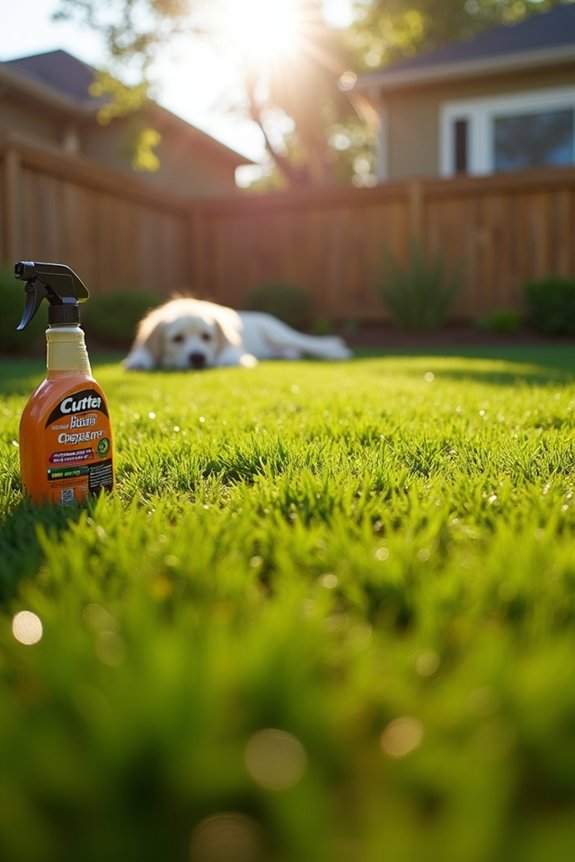
Since Cutter Backyard Bug Control needs time to dry completely, you’ll want to keep your dog off the treated lawn for a full 48 hours after application. During this drying time, your pup’s safety depends on patience. The treated area won’t be safe until moisture has completely evaporated from the grass and soil.
Here’s the thing: rain or sprinkler systems mess with your timeline. If water hits the lawn during those 48 hours, you’re restarting the clock. Avoid watering your yard or letting your dog out during this window.
Once that drying period ends, your treated area becomes dog-friendly again. I’d still watch your companion for any signs of sensitivity, but you can resume normal outdoor activities. Pet safety starts with respecting these drying requirements.
Pre-Spray Safety: Confining Your Dog Before Cutter Application
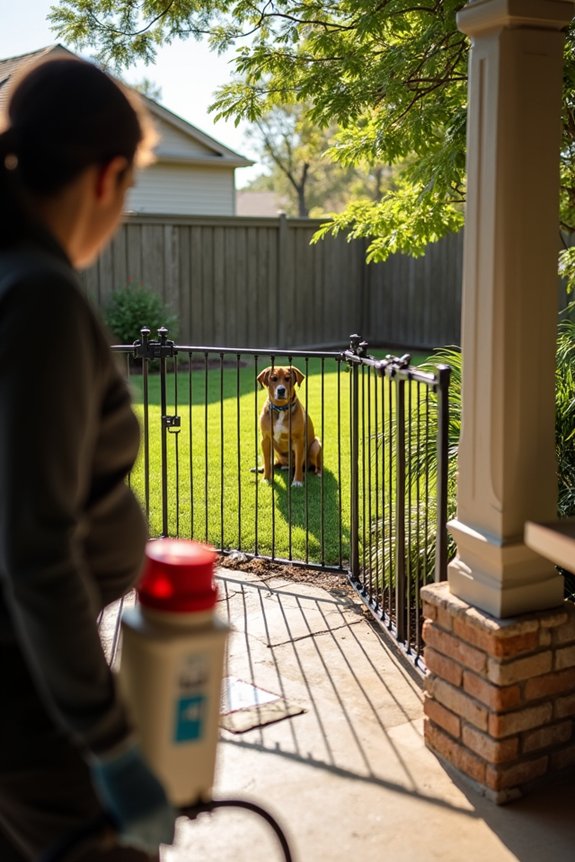
Before you spray, confine your dog indoors or in a separate fenced area away from the treatment zone to prevent accidental inhalation or contact with the wet product. Timing matters—pick an application window when your dog is already settled inside or occupied elsewhere, so you’re not rushing to wrangle them mid-spray. This setup also gives you room to work without worrying about your pup wandering into wet pesticide, which can cause vomiting or irritation if they ingest it.
Indoor Confinement Strategies
How do you keep your dog safe while you’re spraying your yard? Indoor confinement is your best defense during application. Here’s what I recommend:
- Move your dog inside at least 15 minutes before spraying begins
- Close all doors and windows to prevent accidental escape
- Set up a comfortable space with water, toys, and a bathroom area
I keep my pup in a designated room away from exterior doors. This prevents any curious nose from wandering outside. The treated area drying time typically ranges from 30 minutes to several hours, depending on weather conditions. Check your Cutter Backyard Bug Control label for exact timing.
Your pet safety depends on this simple step. Don’t skip it.
Timing Your Application Window
Once you’ve got your dog safely tucked inside, you need to pick the right moment to actually spray. Check your weather forecast first—rain’s your enemy here. You’ll want to avoid spraying if rain’s expected the same day or during your product’s rainfast period. That’s the window when the treatment needs to stay dry to work properly.
| Timing Factor | What to Check | Why It Matters |
|---|---|---|
| Weather forecast | Rain predictions | Prevents washoff of product |
| Rainfast period | Product label | Maintains effectiveness |
| Outdoor drying time | Label instructions | Keeps your dog safe |
| Your schedule | Free afternoon block | Allows proper application |
I always pick a dry afternoon when I can monitor conditions. Once you’ve sprayed, check that outdoor drying time on your label before letting your pup back outside. You’re protecting both your yard and your best friend.
Keep Your Dog Inside: Here’s Why and How Long
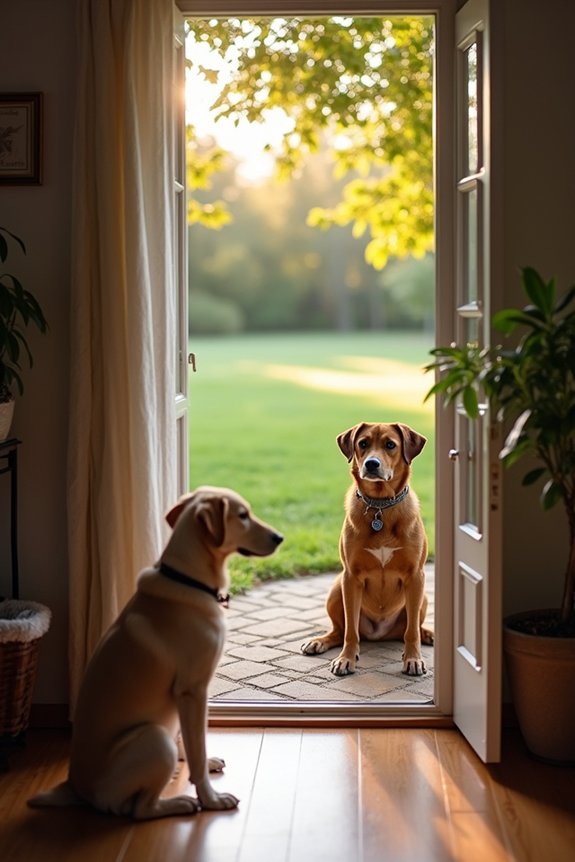
Why’d you need to keep your dog inside after spraying Cutter Backyard Bug Control? Simple—your pup needs protection during the drying period when the product’s still active on your lawn.
Here’s what matters for dog safety:
- Keep indoor rest time consistent: Your dog stays inside for 24 to 48 hours while the product fully dries
- Monitor your pup closely: Watch for vomiting, diarrhea, drooling, or lethargy that signals sensitivity
- Prevent sneaky exposure: Don’t let your dog drink from treated soil or water runoff
It feels restrictive, but this drying period protects your best friend from unnecessary contact with the spray. Once everything’s completely dry, you can let your dog back outside with confidence. The wait is worth it.
What Happens If Your Dog Eats Grass After Spraying?
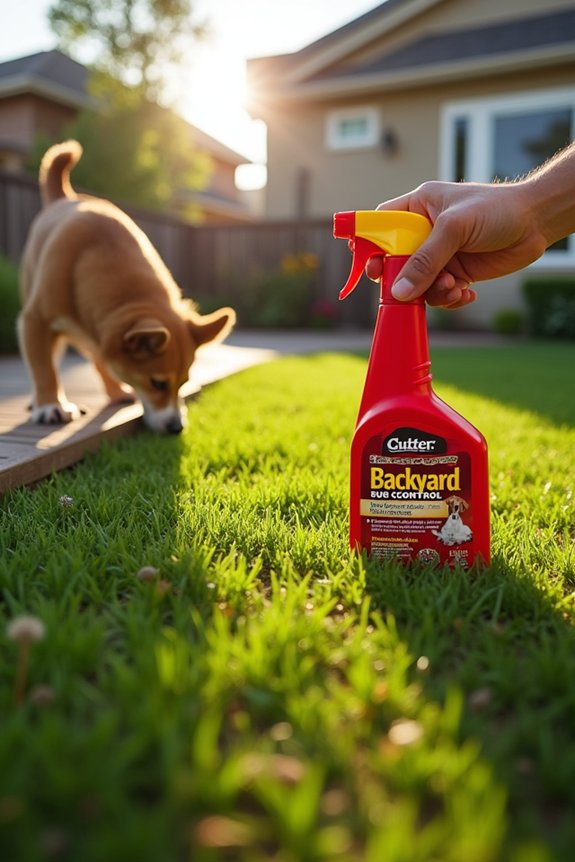
Even with your best efforts to keep your dog indoors, accidents happen—your pup might slip outside during those first 24 to 48 hours and nibble on treated grass before you can stop them. If grass ingestion occurs, the surface insecticide residues could irritate their stomach, potentially causing vomiting or diarrhea.
Monitor your dog closely for vomiting, diarrhea, drooling, or lethargy over the next few hours. Pyrethroid exposure from compounds like lambda-cyhalothrin typically triggers gastrointestinal upset rather than serious neurological issues unless ingestion was substantial.
Wash your dog’s paws thoroughly and offer fresh water to help mitigate exposure. Contact your vet immediately if any symptoms develop. They’ll provide case-specific guidance tailored to your dog’s situation. Most grass ingestion incidents resolve without major complications.
What Symptoms Indicate Pyrethroid Poisoning?
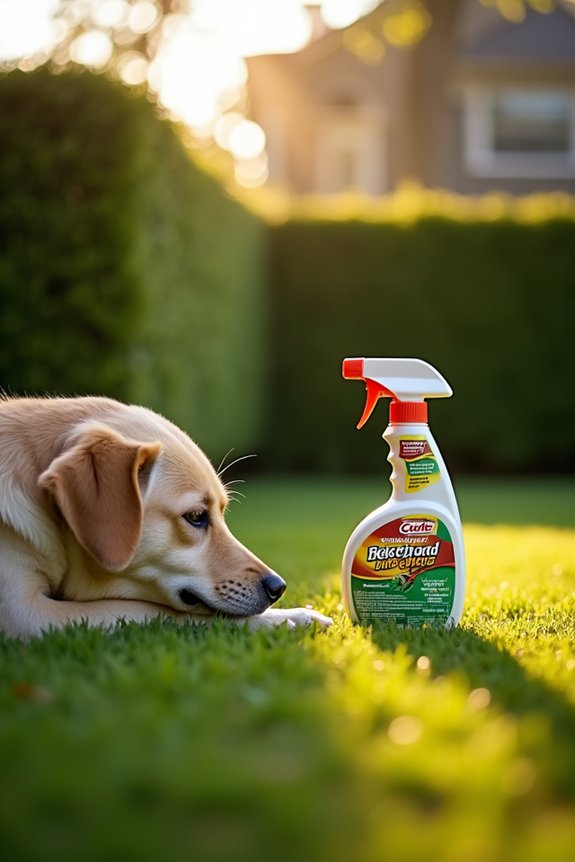
How quickly does pyrethroid poisoning show up in dogs? Signs can appear within hours of exposure to products like Cutter Backyard Bug Control containing lambda-cyhalothrin or permethrin.
Watch for these symptoms indicating pyrethroid toxicity:
- Gastrointestinal distress — vomiting and diarrhea after ingestion
- Neurological signs — trembling, ataxia (loss of coordination), or seizures
- Excessive drooling — hypersalivation from ingestion or skin contact
You’ll also notice lethargy or weakness, especially with higher doses. Some dogs drool noticeably after contact with treated areas.
I recommend monitoring your dog closely after any exposure. If you spot any distress symptoms—whether mild or severe—contact your vet immediately. Don’t wait to see if symptoms worsen. Quick action protects your dog and gives your veterinarian important information about what happened and when.
Water Treated Lawns to Reduce Residue?
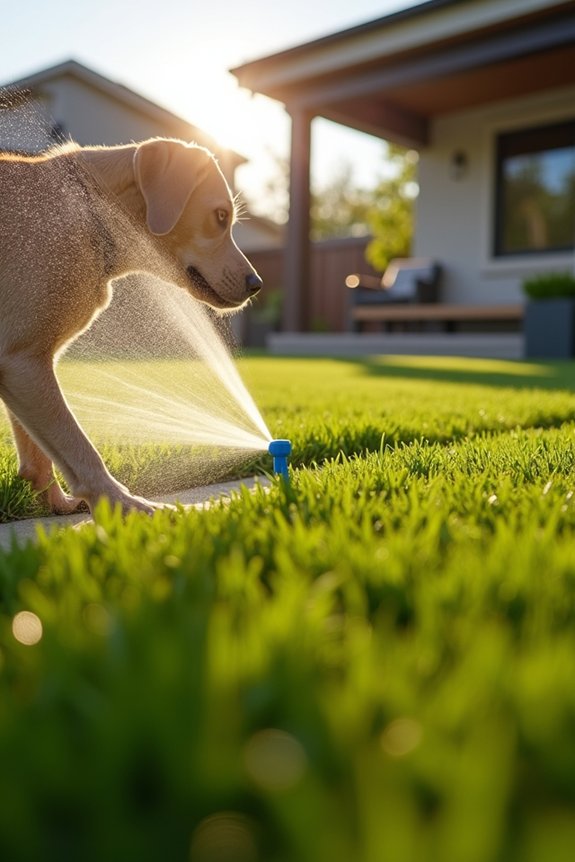
Should you water your lawn after applying Cutter Backyard Bug Control? Yes, I recommend it—but carefully. Adding 1/4 to 1/2 inch of water helps move the product into the soil, especially for subsurface pests like mole crickets and grubs. This watering technique supports residue reduction on your treated lawns.
Here’s what matters: don’t water to runoff, and skip application if rain’s forecasted that day. Neighborhood water practices vary, so check your local guidelines too.
After watering, let everything dry completely before your dog returns outside. Minimizing that residual surface moisture protects your pup’s paws and belly. Follow label instructions precisely—they’re your best resource here. This approach balances effective pest control with your dog’s safety.
Should You Test Your Dog’s Sensitivity First?
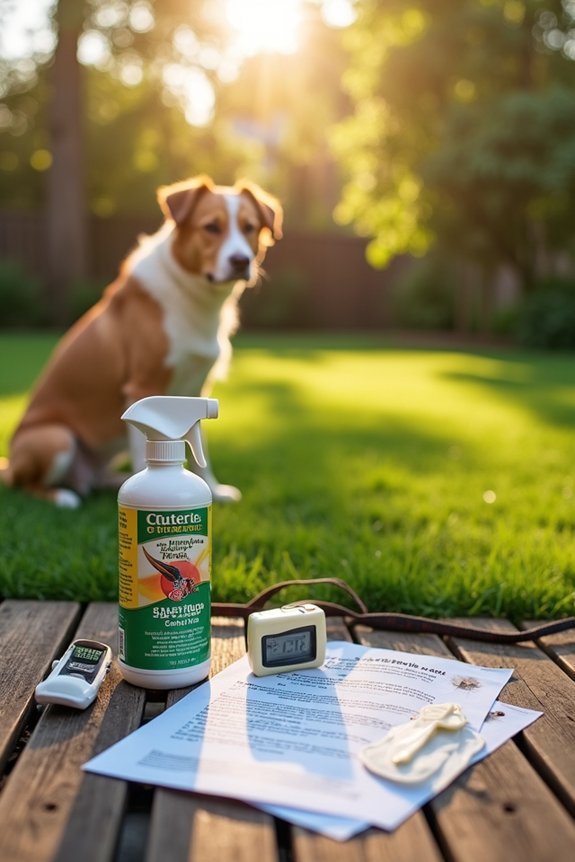
Before you treat your whole yard with Cutter Backyard Bug Control, I’d recommend running a small patch test first—it’s a practical precaution.
Here’s why a dog sensitivity test matters:
- Early detection of reactions – Watch for vomiting, drooling, or skin irritation within 24–48 hours
- Wet residue exposure prevention – Keep your dog off treated areas until everything dries completely
- Confidence before full application – You’ll know your pup can handle it safely
Test a small lawn section and observe your dog closely during this period. Dogs can show acute reactions to permethrin, especially if they contact wet residues. If you notice any distress signs, contact your vet immediately. This safety testing approach protects your furry friend while letting you enjoy a bug-free yard with confidence.
Track Your Dog’s Health: What to Look For Each Day
After you spray Cutter Backyard Bug Control, I’d recommend checking your dog daily for vomiting, diarrhea, drooling, lethargy, or any unusual behavior—these are warning signs that something’s off. You’ll want to notice behavioral shifts too, like whether your pup seems less playful than usual or avoids certain areas of the yard where you sprayed. If you spot any concerning signs, contact your vet right away with details about the product concentration and how long the area’s been dry (typically 24–48 hours).
Daily Symptom Monitoring Checklist
How’d you know if your dog’s having a bad reaction to the bug spray you just used? I’ll walk you through creating your own safety checklist for pets after exposure monitoring.
- Digestive changes: Watch for vomiting, diarrhea, or shifts in appetite and water intake.
- Behavioral signs: Note lethargy, restlessness, or unusual discomfort that seems off.
- Physical reactions: Check for skin irritation, itching, or swelling around the lips and tongue.
I track symptoms by noting exactly when I sprayed and how long the drying took. This timing matters because it helps pinpoint whether your dog actually contacted the product. I document everything—dates, what I observed, how long it lasted—so I’ve got solid information if I need to call my vet. You’re protecting your friend this way.
Behavioral Changes To Notice
What changes in your dog’s behavior should trigger your attention after you’ve sprayed Cutter Backyard Bug Control around your yard? Lethargy—basically your dog acting sluggish or less interested in play—often signals systemic pesticide toxicity from exposure. Watch closely for decreased activity levels, which can indicate your pup’s absorbed chemicals through skin or ingestion.
You’ll also want to monitor eating habits. If your dog suddenly refuses meals or seems disinterested in treats, that’s worth noting. Drooling or excessive panting can signal mouth irritation or stress from dog symptoms linked to exposure monitoring.
You know your dog’s normal personality best. Any personality shift—whether increased anxiety, unusual aggression, or withdrawn behavior—warrants a quick call to your vet with details about application timing and product specifics.
When To Contact Veterinarian
When you’re keeping tabs on your dog after spraying Cutter Backyard Bug Control, you’ll want to stay vigilant for the first 24 to 72 hours—that’s your critical window.
Here’s when to reach out for veterinary care:
- Immediately contact your vet if your dog shows vomiting, diarrhea, drooling, lethargy, or behavioral changes after exposure
- Seek urgent care if your dog had direct contact with wet spray or ingested treated material, since acute pyrethroid exposure can happen quickly
- Call for advice if symptoms appear beyond 72 hours or if you’re uncertain about late-onset signs
When you call, have ready: the product name, concentration, application date, and whether the area was wet or dry. This information helps your vet assess exposure risks accurately and recommend the right treatment plan quickly.
Call the Vet Immediately If Your Dog Shows These Cutter Poisoning Signs
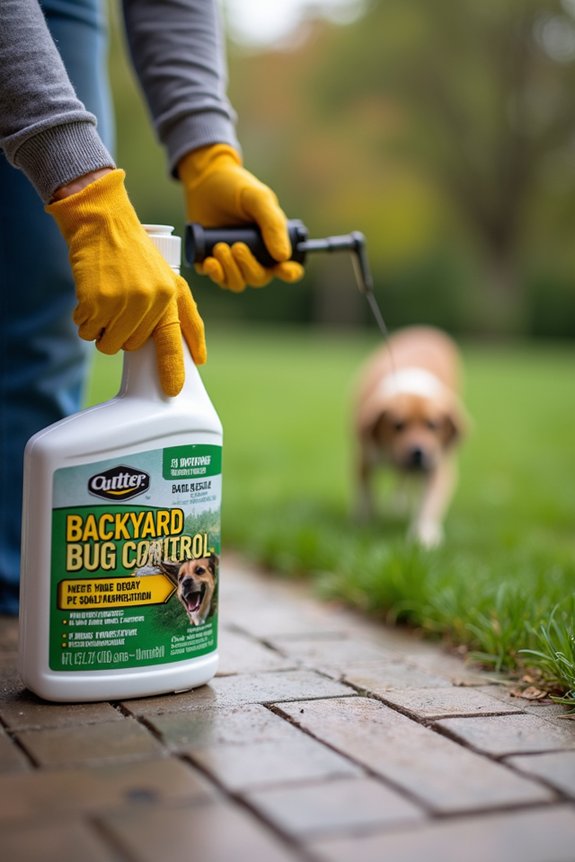
Why shouldn’t you wait if your dog starts acting weird after you’ve sprayed Cutter Backyard Bug Control? Because lambda-cyhalothrin, the active ingredient, can cause serious problems fast. Don’t delay—call your vet immediately.
| Warning Sign | What It Means | Action |
|---|---|---|
| Vomiting or drooling | Gastrointestinal distress | Call vet now |
| Diarrhea | Digestive upset | Seek care urgently |
| Lethargy | Weakness or depression | Emergency clinic |
| Tremors | Neurologic symptoms | Don’t wait |
| Stumbling | Loss of coordination | Get help fast |
Acute exposure from wet spray or ingestion demands urgent attention. Provide your vet with specifics—the exact product name, active ingredient, suspected amount, and exposure time. If symptoms are present, skip the regular appointment and head straight to an emergency clinic. Your quick response matters for your dog’s recovery.
Comparing Cutter to Pet-Safe Bug Control Alternatives
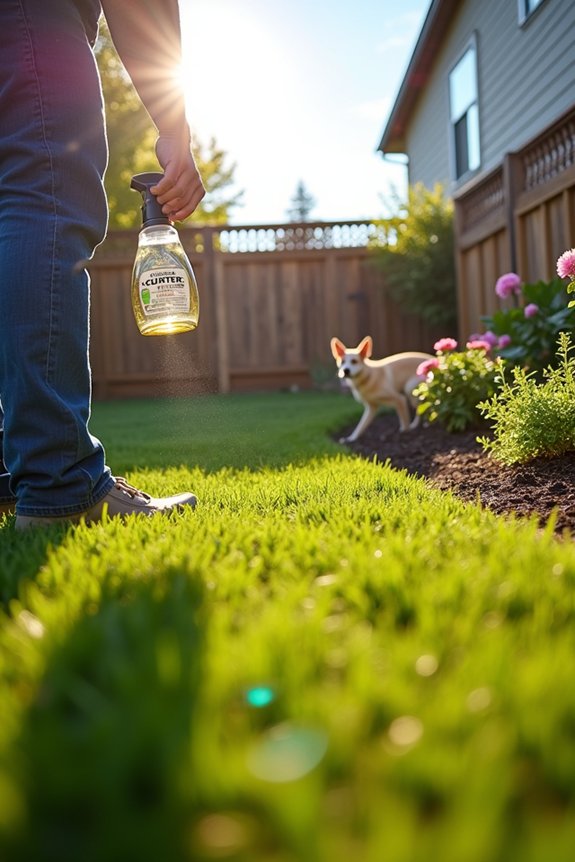
If you’re trying to decide between regular Cutter Backyard Bug Control and pet-safe alternatives, here’s the straightforward difference: Cutter contains lambda-cyhalothrin, a synthetic pyrethroid that poses real risks to dogs if they’re exposed to wet spray or ingest treated areas, while pet-safe options like Cutter Essentials use natural oils such as peppermint and cinnamon instead.
Here’s what sets them apart:
- Chemical risk: Lambda-cyhalothrin carries higher acute toxicity concerns for dogs than natural oil formulations.
- Application drying time: Standard Cutter needs 24–48 hours before dogs can safely access the yard; Essentials just requires areas to dry completely before pet contact.
- Frequency trade-off: Pet-safe alternatives demand more frequent reapplication but minimize ingestion and contact dangers.
Both require following label directions carefully. I’d recommend choosing based on your situation—how much time you’ll spend monitoring and your dog’s habits around treated spaces.
Lock It Up: Keeping the Spray Bottle Away From Your Dog
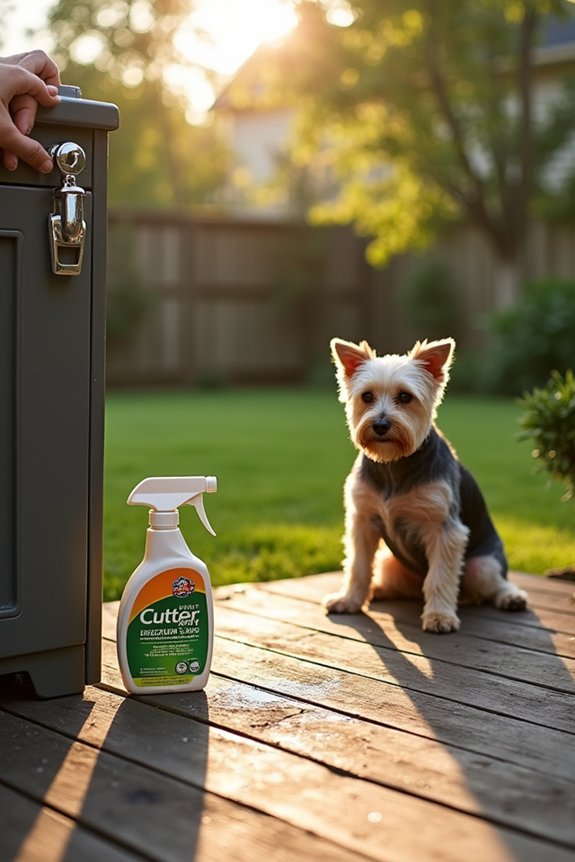
Your Cutter Backyard Bug Control bottle needs a secure home—and I mean one your dog can’t reach, chew, or knock over. Locked cabinets or high shelves work best for storage. Keep the bottle upright and tightly closed when you’re not using it, which prevents leaks and accidental spraying in areas your pup frequents.
Never leave it unattended where your dog could access the nozzle or tip it over. Label your storage area clearly so everyone in your household knows what’s stored there and why it matters for pet safety.
Store the bottle away from food bowls, bedding, and toys. This distance minimizes ingestion risk if your dog investigates. Good security practices protect the pack you care about.