
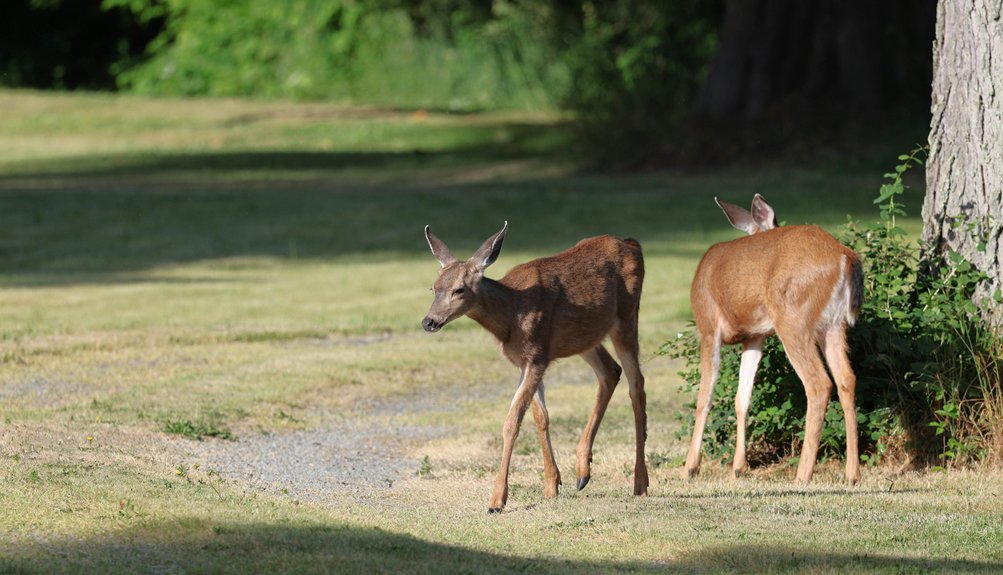
I’ll feed deer acorns, hickory nuts, and pecans—nature’s preferred protein sources. Unseasoned peanuts from feed stores are affordable and effective. Come fall, I scatter apples and offer hay mixed with seeds for winter months. I skip corn and processed foods entirely since they harm their digestion. Fresh greens like kale suit spring and summer. The trick? Small portions at designated stations prevent dependency and digestive trouble. There’s much more to know about timing each food perfectly throughout the year.
Acorns and Hard Mast: Top Nutritious Foods to Feed Deer
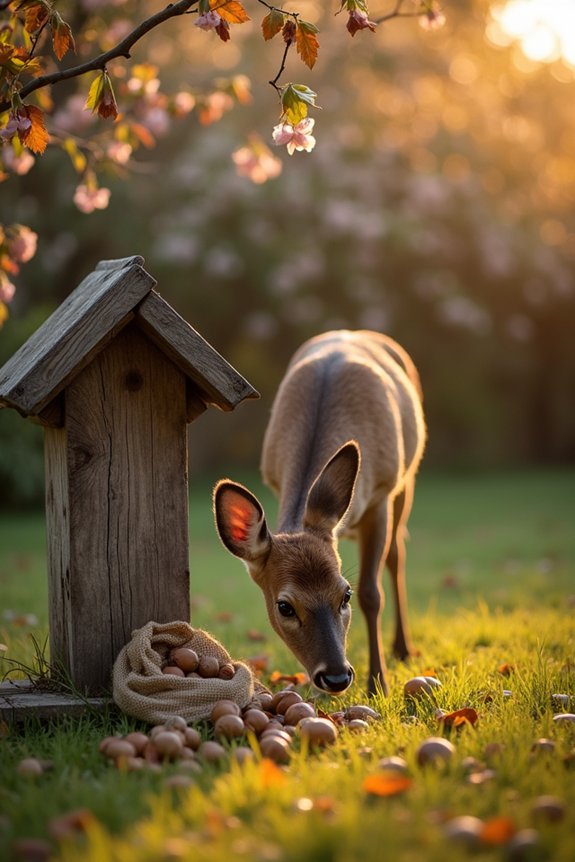
Ever wonder why deer seem to disappear into the woods come fall? They’re hunting for acorns and hard mast—nature’s energy jackpot. When you scatter acorns and hickory nuts around your property, you’re offering deer exactly what they need: dense calories and fats that fuel their bodies through cold months.
Hard mast provides serious nutritional value. These nuts deliver protein and minerals that support antler growth and overall health. Here’s the thing though: stick with natural, unsalted nuts rather than processed snack mixes. Your deer’s digestion will thank you.
I’d recommend offering a variety of nuts alongside natural browse and forage. This prevents deer from depending on just one food source and mimics what they’d find naturally. Think of it as building a balanced seasonal menu.
Nuts: Hickory, Pecans, and Safe Protein Sources
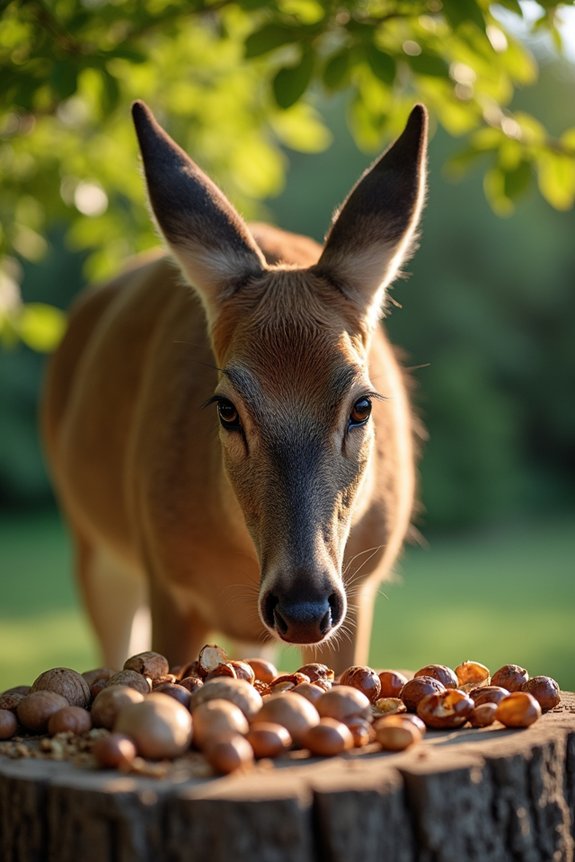
When you’re looking to boost your deer’s nutrition, nuts like hickory and pecans pack serious protein that’ll support them through winter months when food gets scarce. I’d recommend grabbing unseasoned peanuts from your local feed store—they’re affordable, shelf-stable, and deer’ll eat them up without the sugar overload that processed snacks bring. Just remember to scatter them in moderation at a designated feeding spot, since too much of any single food can mess with a deer’s digestive system (and your budget).
Protein-Rich Nut Benefits
Many folks don’t realize that nuts like hickory and pecans can be catalysts for deer nutrition, especially when winter food sources get scarce. These natural protein sources support muscle development and overall health when deer need it most.
Here’s what matters: aim for feed that contributes 12–16% protein to support antler growth and body condition. I recommend Peanut Pickouts over shelled human-grade nuts, which offer safer, deer-friendly nutrition without processing risks.
You can also consider organic options like cashews and almonds in moderation. However, avoid processed human foods and sweetened or spiced nuts entirely—they’ll disrupt digestion and cause real problems.
When you’re feeding nuts, you’re basically giving deer nature’s own supplement pack, supporting their health through tough seasons.
Safe Nuts For Deer
Which nuts actually work best for backyard deer feeding? I’ve found that hickory nuts and pecans are your safest bets—they’re naturally packed with protein and energy. Here’s what I stick with when feeding my local herd.
| Nut Type | Best Features |
|---|---|
| Hickory nuts | Natural, protein-rich, minimal processing |
| Pecans | High energy content, deer-preferred taste |
| Peanut Pickouts | Feed-store quality, safer than human snacks |
| Raw almonds | Acceptable alternative, no salt added |
| Walnuts | Nutritious but offer less preference |
Skip sweetened or heavily salted varieties—they’ll damage deer health faster than you’d expect. I scatter nuts at designated feeding stations to prevent gut problems from overconcentration. Moderation matters here. You’re supplementing their natural diet, not replacing it. Check your local regulations before starting, since feeding can create dependency and nuisance behavior. Keep portions reasonable.
Seasonal Nut Feeding Strategies
How do you know if your backyard deer actually need supplemental nuts? Watch them during fall—if they’re actively foraging natural sources, you’re probably fine. But when acorns disappear and forage gets scarce, that’s your cue to help out.
I’ve found hickory and pecan nuts work well because they’re packed with protein and energy. Scatter them at designated feeding stations rather than leaving piles everywhere. This approach prevents dependency while respecting how deer naturally forage.
Start supplementing in late October when temperatures drop. Provide consistent access through winter months, but check local regulations first—some areas restrict feeding entirely.
The key? Think of nuts as winter backup, not year-round treats. Your deer will stay healthier when they rely primarily on natural forage, with your nuts filling genuine nutritional gaps during harsh months.
Garden Vegetables and Produce: Safe Foods to Feed Deer by Season
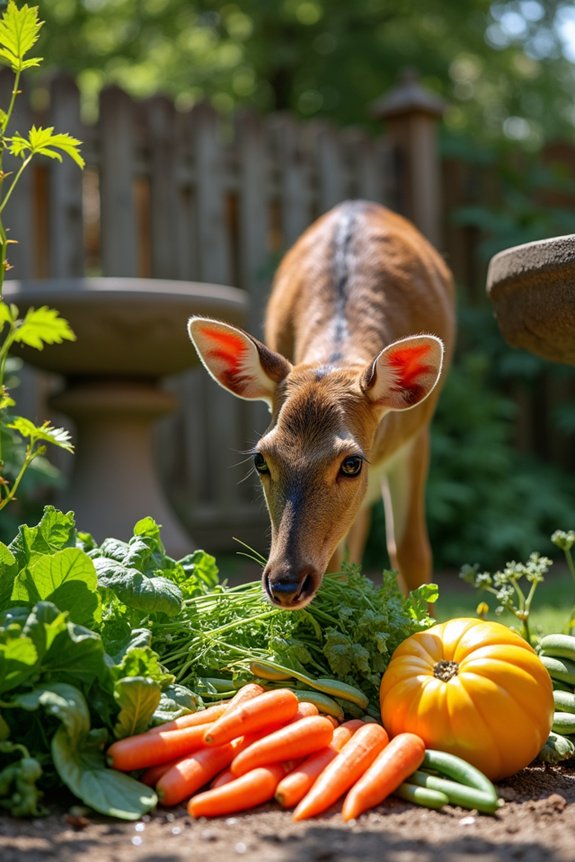
I’ll feed deer vegetables that match what’s growing in each season—spring lettuce, summer squash, fall apples, and winter root vegetables—since timing matters for both availability and freshness. You’ll want to plan ahead because soft produce like tomatoes spoil quickly, so I feed those right away rather than letting them sit around and waste. Storage is your real challenge; I keep harder vegetables like carrots in a cool spot but put out softer items same-day to avoid mold and fermentation that’d upset a deer’s stomach.
Seasonal Vegetable Availability
When you’re thinking about feeding deer throughout the year, you’ve got to match what you’re offering to what they’d innately find in each season—and what’s safe in spring isn’t necessarily what works in winter.
| Season | Safe Vegetables | Key Considerations |
|---|---|---|
| Spring/Summer | Lettuce, spinach, kale, fresh grasses | Avoid corn and high-sugar produce |
| Fall | Hay, energy-rich plants | Mast and grasses take priority |
| Winter | Limited greens from sheltered patches | Stored vegetables risk spoilage |
Your deer feed strategy shifts dramatically across the year. Spring offers leafy greens that support growth. Fall demands energy-rich options as deer prepare for winter. Winter presents more challenges—fresh garden forage becomes scarce, so avoid storing vegetables. Soft fruits and vegetables need rapid rotation to prevent digestive upset. Following local regulations keeps your backyard sustainable and prevents deer dependency on your property.
Spoilage And Storage Concerns
Because you’re dealing with fresh produce in outdoor conditions, spoilage becomes your biggest enemy when feeding deer. I’ve learned that soft fruits like berries and peaches need feeding within a day or two—they ferment fast and attract unwanted pests. Chopped produce spoils quicker than whole items, so I keep portions small and remove leftovers immediately after feeding. Here’s what matters: store your vegetables in cool, dry places beforehand to slow deer feeding spoilage and prevent mold growth that could sicken the animals. During warm weather especially, I check feeders daily because spoilage accelerates rapidly. Remove any moldy or rotten items immediately—deer shouldn’t ingest harmful toxins. I’ve found that quick-replacement feeder plans minimize standing waste and keep everything fresh.
Browse and Shrubs: Natural Foods Deer Forage Year-Round
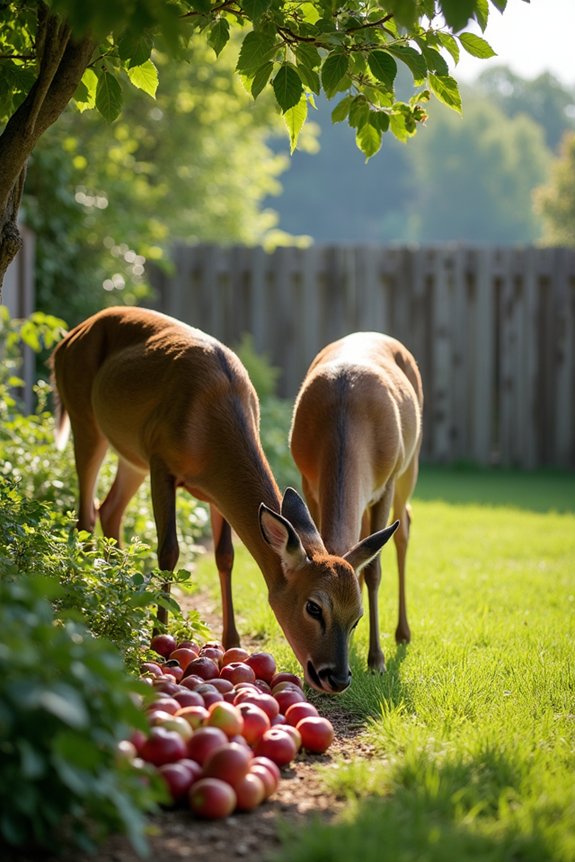
Have you noticed deer nibbling on twigs and leaves around your property? That’s browse—the natural diet they’ve relied on for centuries. I’ve found that understanding this helps me support their foraging habits naturally.
Browse includes leaves, buds, bark, and branches from woody plants. Deer don’t need supplemental feeding when diverse shrubs and trees flourish on your land. These plants offer consistent nutrition across all seasons, reducing deer pressure on gardens and crops.
You can encourage natural foraging by planting deer-resistant shrubs and maintaining varied woody vegetation. This approach works with nature rather than against it. When browse stays available year-round, deer satisfy their nutritional needs independently. Your land becomes a self-sustaining habitat where deer thrive without your intervention—which honestly beats dealing with spoilage concerns.
Fruits Deer Can Safely Digest
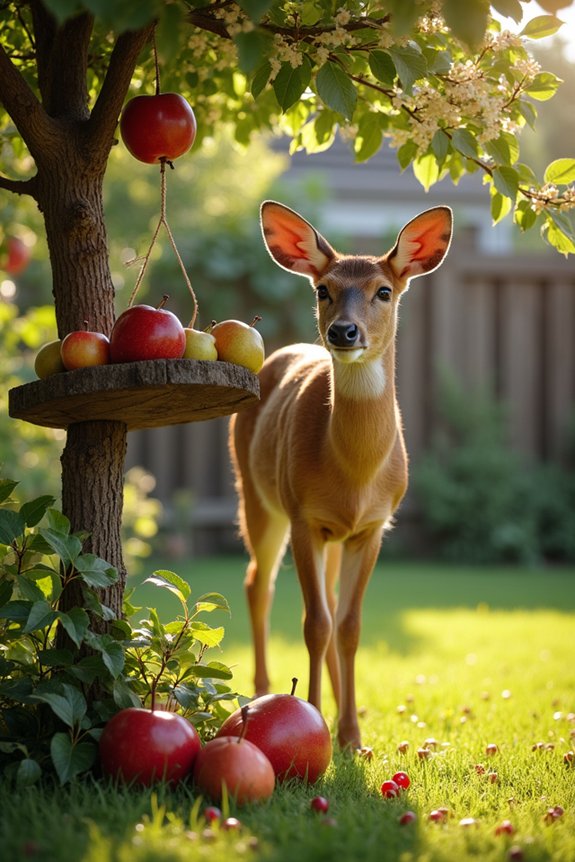
I’ve found that offering deer seasonal fruits like blackberries, blueberries, apples, and pears gives them natural nutrition they’d normally forage for themselves throughout the year. These soft, whole fruits digest better than processed or sugary alternatives because they’re closer to what deer encounter in the wild. I recommend small, occasional portions—think a handful or two per feeding—so you’re supplementing their natural diet rather than creating dependency or digestive problems.
Seasonal Fruit Availability
When’s the best time to offer fruits to your backyard deer?
Timing matters when you’re feeding deer fruits. Nature gives us clues about what works best:
- Spring and summer: Offer soft fruits like berries (blackberries, blueberries) when they’re ripe and abundant
- Fall: Apples become your go-to option as they drop naturally from trees
- Winter: Limit fruits since deer rely more on stored energy and browse
Seasonal fruits support their energy needs without forcing you to become a year-round fruit supplier. Ripe berries pack nutrients when deer need them most. Apples work well in autumn when they’re plentiful and affordable.
Keep it simple: follow nature’s calendar. When fruits are naturally available in your area, that’s your signal to supplement their diet. This approach respects their natural feeding patterns and keeps things manageable for you.
Nutritional Benefits For Deer
Why do fruits matter so much for backyard deer? I’ve found that offering blackberries, blueberries, apples, and pears gives visiting deer quick energy and valuable fiber without overloading them with protein. These fruits work best as supplements during tough seasons when natural forage gets scarce.
Here’s what I’ve learned: moderation is everything. I offer small portions to prevent digestive upset and spoilage issues. Rotten or moldy fruit? That’s a no-go—it’ll make deer sick.
Think of fruits as your deer’s dessert, not their main meal. I pair them with the browse, mast, and high-fiber forage they naturally seek. This balanced approach keeps their gut healthy and their visits regular to your yard.
Foods to Never Feed Deer: Corn, Bread, and Why They’re Dangerous
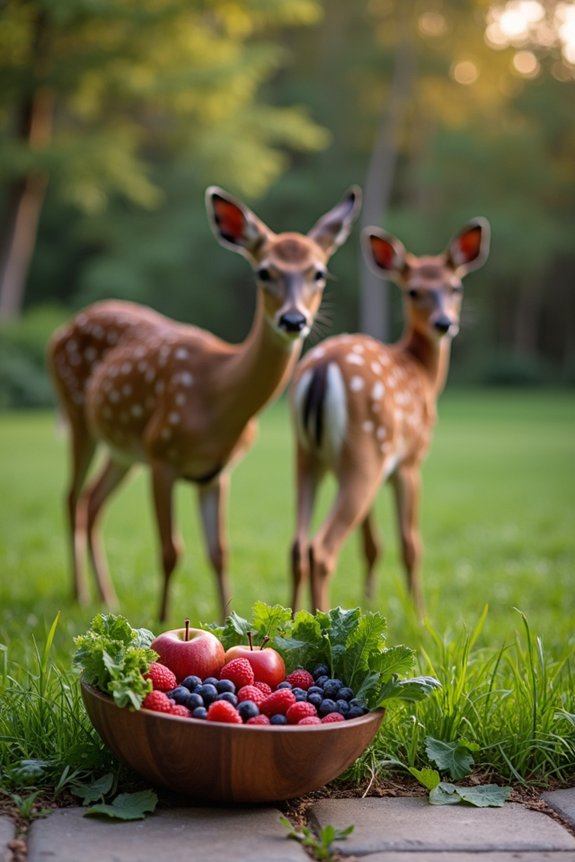
Most of us mean well when we toss corn or bread to deer, but here’s the thing—these foods can actually harm them more than help.
Here’s why you’ll want to skip these tempting options:
- Corn disrupts their rumen: It’s high in energy but low in fiber, throwing off the delicate balance of microbes in their stomachs
- Bread and starches cause digestive trouble: Barley, wheat, and similar foods lack proper nutrition and create serious gut problems
- Dehydration and malnutrition follow: These foods can’t sustain deer long-term, potentially leading to starvation despite appearing full
Deer need different nutrition entirely. Their digestive systems evolved for plants, not processed human foods. When you skip corn and bread, you’re showing genuine care for the deer visiting your yard.
Hay and Dried Grasses for Winter Supplementation
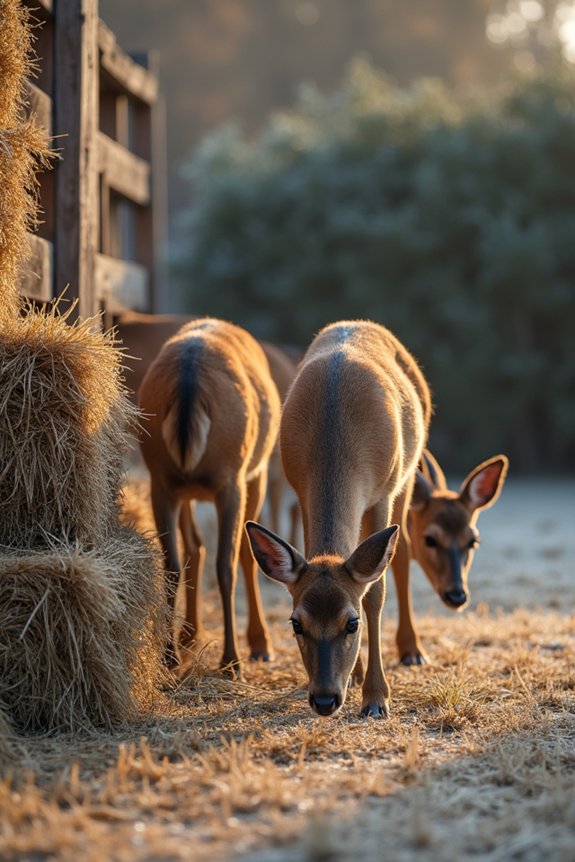
Hay and dried grasses can help when fresh plants disappear under snow and ice. High-fiber, low-moisture hay works best—it keeps their digestive systems running smoothly without causing upset. Set up a designated feeding station where you provide hay in moderate amounts. This prevents waste and keeps deer coming back consistently during winter’s toughest weeks. Check your hay carefully, tossing out anything moldy, dusty, or treated with salt and preservatives (those additives harm them). Balance hay with natural browse they find themselves. This combination maintains their rumen health and overall nutrition through the entire cold season.
Seeds and Legumes: Winter Protein for Deer
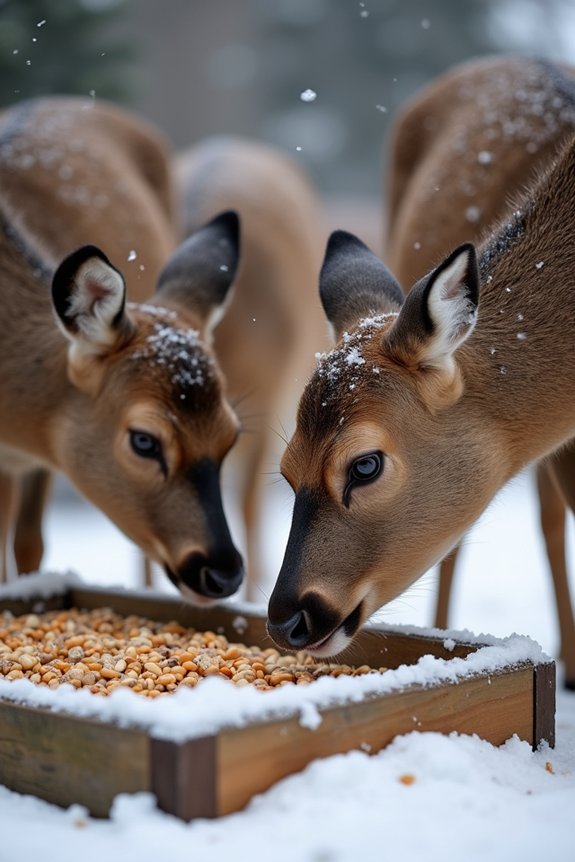
When winter strips the scenery bare, seeds and legumes become your deer’s best friends for staying strong and healthy. I’ve found that these protein powerhouses complement the hay you’re already offering, creating a balanced diet that supports rumen function and overall wellness.
Here’s what works well:
- Black oil sunflower seeds – high in energy and packed with nutrients deer crave
- Alfalfa pellets – legumes that boost protein without digestive upset
- Clover seed – mimics natural forage diversity they’d find year-round
I keep portions modest—about a pound per deer daily—and always make fresh water available. You’re not replacing forage; you’re supplementing it strategically. Check local regulations first, and avoid processed products. This approach respects both your deer’s digestive system and your neighborhood guidelines.
Commercial Nutrient Blocks: Winter-Only Emergency Supplementation
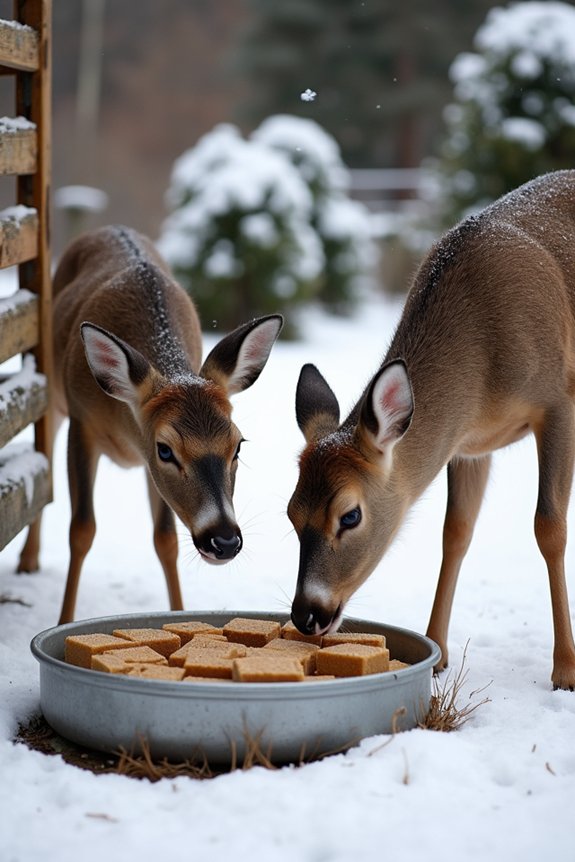
Ever wondered what to do when your deer can’t find enough natural food during a brutal winter?
Winter-only blocks are your answer. These concentrated nutrient blocks deliver essential energy and minerals when snow blankets the ground and natural forage disappears. I’ve found them valuable for supporting deer through harsh months.
Winter-only blocks deliver essential energy and minerals when snow blankets the ground and natural forage disappears.
Here’s the key: use them as supplements, never replacements. Overrelying on blocks can mess with deer digestion and create dependency. You’ll want to check your local regulations first—some areas restrict feeding altogether.
Set up designated feeding stations and monitor how much deer consume. Place blocks strategically away from your home to maintain healthy distance. Watch product labels carefully to verify they meet nutritional standards. Done right, winter-only blocks bridge that critical gap between autumn’s abundance and spring’s return, keeping your deer herd healthy and strong.
How to Build a Year-Round Feeding Strategy Without Creating Dependency
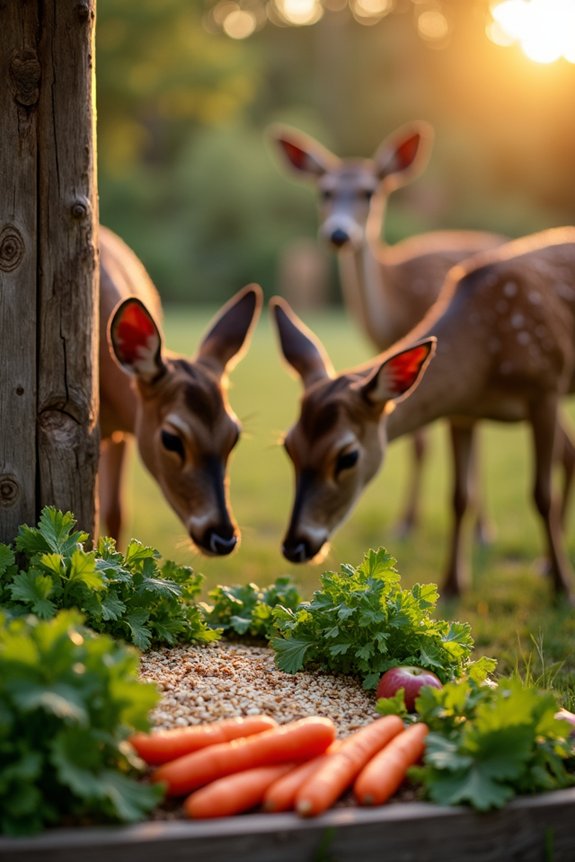
The trick to keeping backyard deer healthy isn’t feeding them more—it’s feeding them smarter.
I’ve learned that year-round feeding deer successfully means rotating what you offer seasonally while keeping portions modest. Think of yourself as nature’s assistant, not their primary food source.
Here’s what I do:
- Spring and summer: Focus on browse and natural forage; skip supplemental feeding entirely
- Fall: Introduce nutrient blocks and scattered nuts as antler development peaks
- Winter: Offer 6-7% crude protein feeds only during scarce periods, never daily
The real benefit comes when I prioritize habitat improvements first. Native plants, natural mast, and diverse browse do the heavy lifting. I use supplements strategically—not habitually. This approach keeps deer healthy, prevents dependency, and respects local wildlife regulations. You’re building resilience, not reliance.