
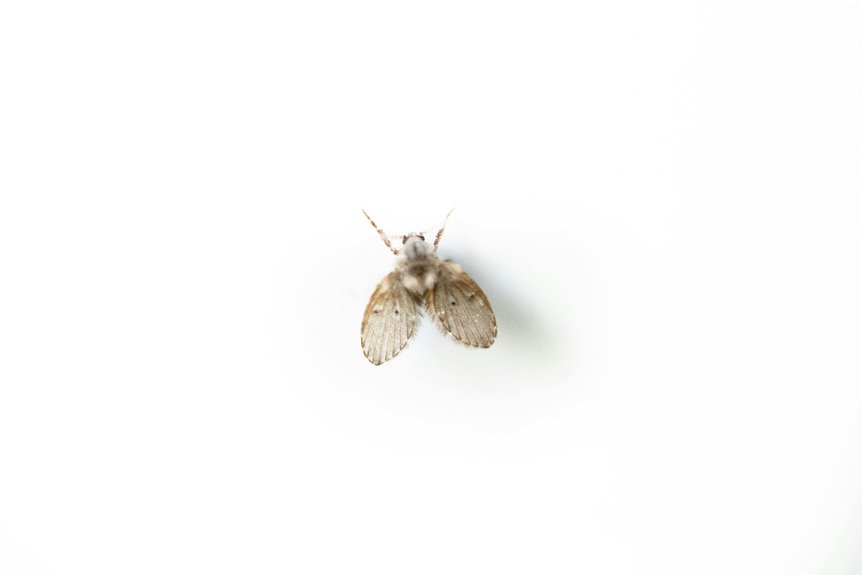
Your bathroom’s basically a five-star gnat resort. They’re drawn to the moisture, warmth, and organic buildup hiding in your drains, under your sink, and around wet surfaces. Drain flies breed in biofilm coating your pipes, while fungus gnats love damp plant soil. Standing water in your shower tray, P-traps, and leaky pipes creates perfect nurseries. Your bathroom’s humidity accelerates their entire life cycle, turning a small problem into an infestation fast. But there’s good news—once you know where they’re hiding, you can take them out strategically.
Clean Your Drains to Stop Gnats Now
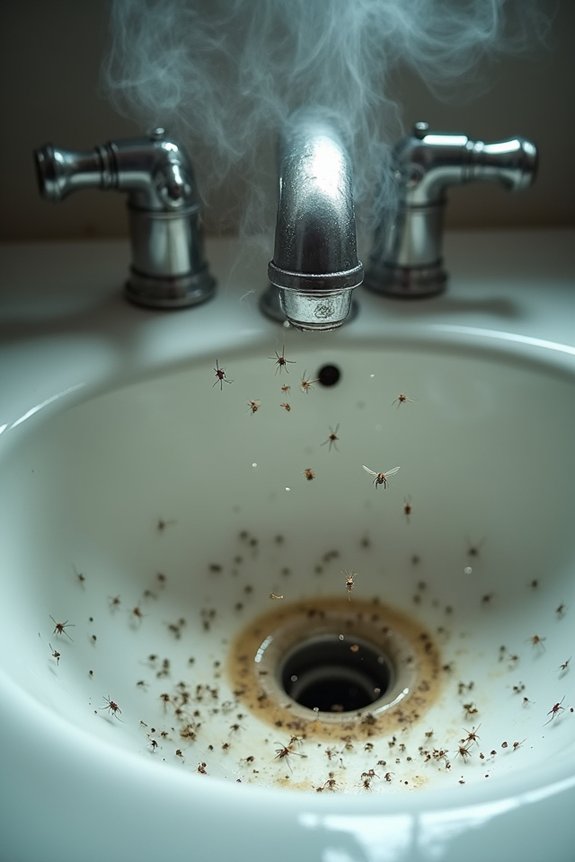
Why’re your bathroom drains basically gnat factories? They’re breeding grounds where organic buildup and biofilm accumulate, feeding larvae and creating the perfect habitat. Here’s how I tackle this: pour boiling water down drains daily for several days to flush away gunk and disrupt their lifecycle. Next, I use a baking soda and vinegar sequence—sprinkle baking soda, follow with vinegar, then flush with hot water. This combo loosens mineral buildup and organic residue effectively. If natural methods fail, an enzyme cleaner breaks down organic matter without harsh chemicals. The key is consistency. After drain cleaning, I dry surfaces thoroughly, fix any leaks, and improve ventilation. These steps prevent breeding grounds from reforming and keep gnats from returning.
Boil Water and Vinegar to Clean Drains Deep
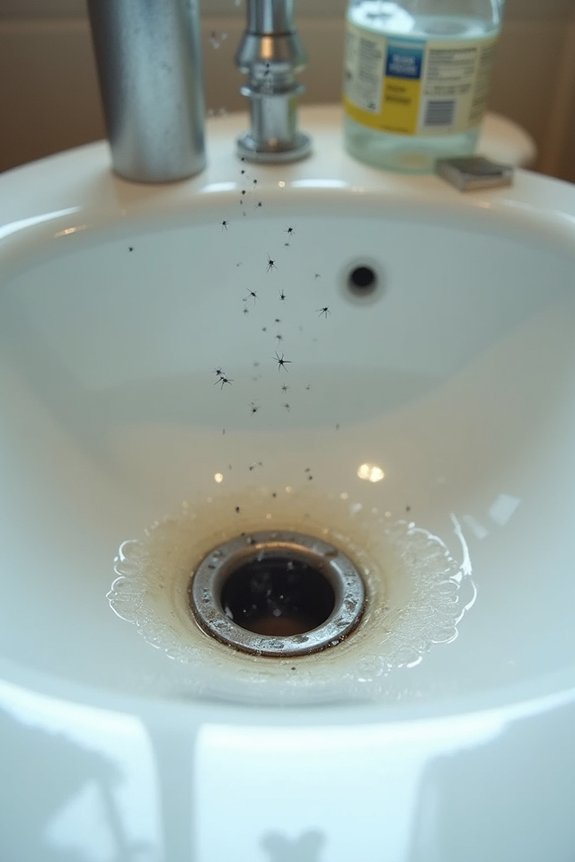
Boiling water is your first weapon against drain-dwelling gnats, and it’s the simplest step you can take. Pour a kettle of boiling water down your drain once or twice daily for several days to loosen organic buildup where gnats breed. Here’s where vinegar joins the fight: after the boiling water, pour half a cup of vinegar down the drain, then add baking soda. You’ll see fizzing (that’s the chemical reaction happening). Let it sit for thirty minutes, then flush everything with more hot water to sweep away loosened debris. This combo works because it breaks down the organic material gnats need to survive. If you’re dealing with stubborn clogs, enzymatic drain cleaners offer a gentler follow-up option than harsh chemicals.
Set Up DIY Traps to Catch Adult Gnats
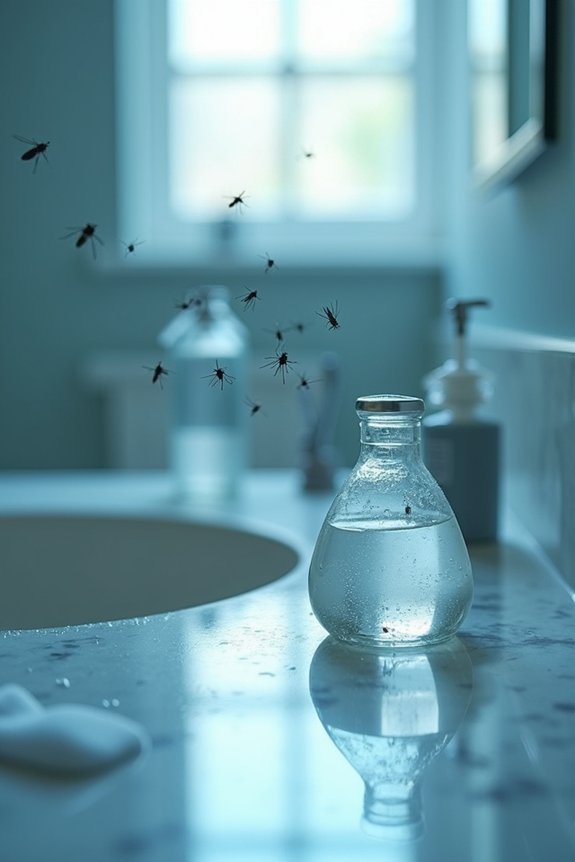
While you’re working on cleaning those drains, adult gnats are still flying around your bathroom looking for mates—which means you’ve got to catch them before they lay more eggs. Here’s what I do: combine apple cider vinegar with a few drops of dish soap in a small container. The gnats get attracted to the vinegar, then sink or can’t escape. I place these traps near sinks, showers, and drains where gnats hang out most. You’ll want to replace them when they’re full or lose effectiveness, depending on how bad your infestation is. Sticky yellow traps also work well on walls. Remember, traps only catch adults—combine them with drain cleaning and moisture reduction for effective, lasting control.
Dry Out Wet Surfaces to Kill Breeding Sites
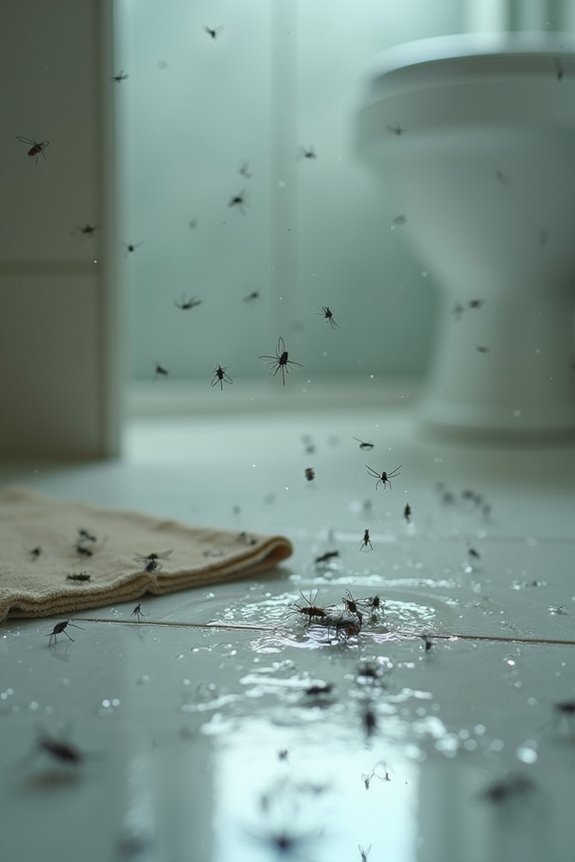
You’ll want to tackle three key strategies that work together: eliminating standing water that collects in shower trays and under sinks, boosting airflow with exhaust fans or open windows to prevent moisture buildup, and establishing a daily habit of wiping down wet surfaces before they become gnat nurseries. Gnats can’t complete their life cycle without that persistent dampness, so breaking the moisture cycle is your most powerful move. When you combine quick water removal with better ventilation, you’re basically pulling the plug on their entire breeding operation.
Eliminate Standing Water Quickly
How quickly can moisture disappear when we actually pay attention to it? Standing water and damp surfaces are gnat nurseries. After you shower, don’t let moisture linger on your bathroom drains, counters, or tub edges. Wipe everything down within minutes—it makes a difference.
Check under your sink regularly for leaks that create breeding sites. Even small puddles sustain entire gnat populations. Keep towels dry and hung properly so they’re not breeding grounds. If you notice moisture accumulating anywhere, address it immediately rather than letting it sit.
The key is consistency. Staying vigilant about wet spots prevents gnats from establishing themselves. You’re removing their home before they multiply.
Improve Airflow and Ventilation
Moisture elimination doesn’t stop with wiping things down—it continues when you actively push that dampness out of your bathroom. Here’s where bathroom ventilation matters. Running your exhaust fan after every shower is necessary—it pulls humid air directly outside, breaking the cycle gnats need to breed. Open a window if you’ve got one; fresh airflow works well for humidity reduction. If your bathroom stays stuffy, consider a dehumidifier to maintain damp surfaces at inhospitable levels. Consistent airflow creates an environment where fungus gnats simply can’t thrive. The goal here is straightforward: eliminate the moisture signature that attracts them. You’re not just drying surfaces anymore—you’re redesigning your bathroom’s entire microclimate into something hostile to gnat life.
Daily Drying Maintenance Habits
The real work happens after you’ve gotten your ventilation running—and it’s simpler than you’d think. I wipe down my bathroom surfaces daily, hitting the sink, tub, and shower with a dry cloth. This moisture control habit removes standing water where gnats breed. I also dry my towels and mats thoroughly, preventing those damp microenvironments gnats love. Quick drain maintenance matters too—I guarantee nothing sits wet near drains. My humidity reduction routine takes maybe five minutes: dry everything, squeegee the shower, wring out washcloths. Dampness prevention isn’t complicated; it’s just consistent. When I miss a day, I notice the difference. This daily ritual disrupts the gnat lifecycle before it starts, making your bathroom an unwelcoming place for these pests.
What Types of Gnats Infest Bathrooms?
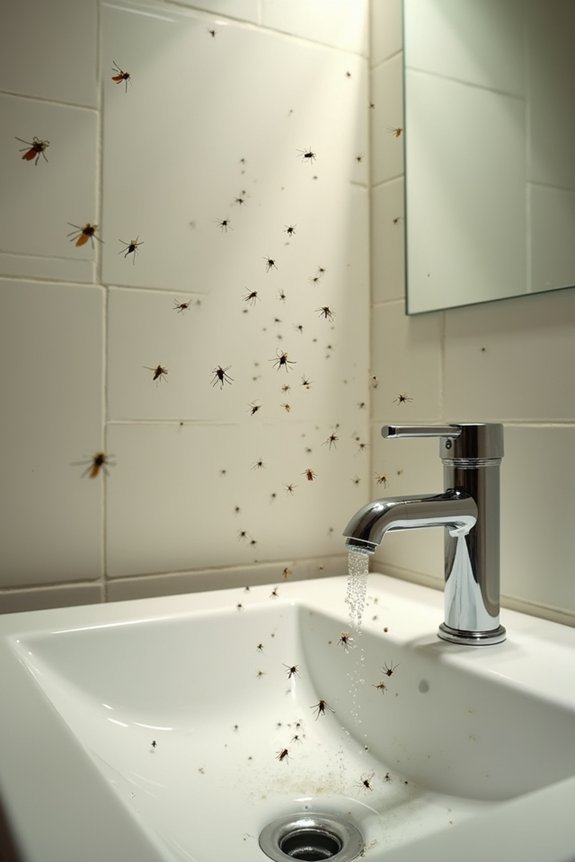
Two main gnat varieties love making your bathroom their home: drain flies and fungus gnats.
Drain flies are fuzzy, slow flyers that hang around your sink, shower, or tub drains. They’re breeding in the slimy biofilm coating your pipes—basically, organic buildup that’s invisible to the naked eye. You’ll spot them near standing moisture.
Fungus gnats are slender with long legs, and they’re attracted to your bathroom plants. They thrive in damp, overwatered soil where larvae feast on organic matter in the top layer.
Both types adore warm, humid bathrooms with moisture sources like leaky faucets or damp towels. The frustrating part? They can indicate hidden moisture or buildup even when your surfaces look spotless. Knowing which gnat you’re dealing with helps you target the right solution.
Why Your Bathroom Attracts Gnats
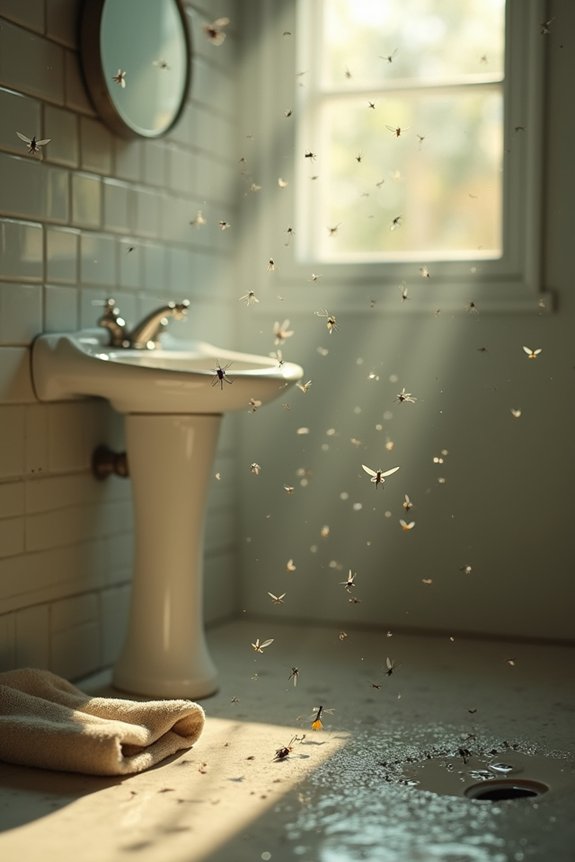
Your bathroom’s basically a five-star resort for gnats, and here’s why they’re checking in. The constant moisture from showers and sinks creates perfect breeding grounds. Standing water in your drain trap? That’s gnat paradise. The biofilm and drain buildup coating your pipes offer ideal egg-laying sites and food sources for developing larvae.
Here’s the thing: organic residue like soap scum and toothpaste bits accumulates on surfaces and in pipes, feeding gnat populations. Damp towels and corners trap moisture that gnats need to survive. Even that overwatered bathroom plant can introduce fungus gnats into your space.
Your bathroom checks every box on a gnat’s wishlist: consistent moisture, food sources, and safe breeding zones. Understanding these attractions helps you fight back effectively.
How Organic Film in Drains Breeds Gnats
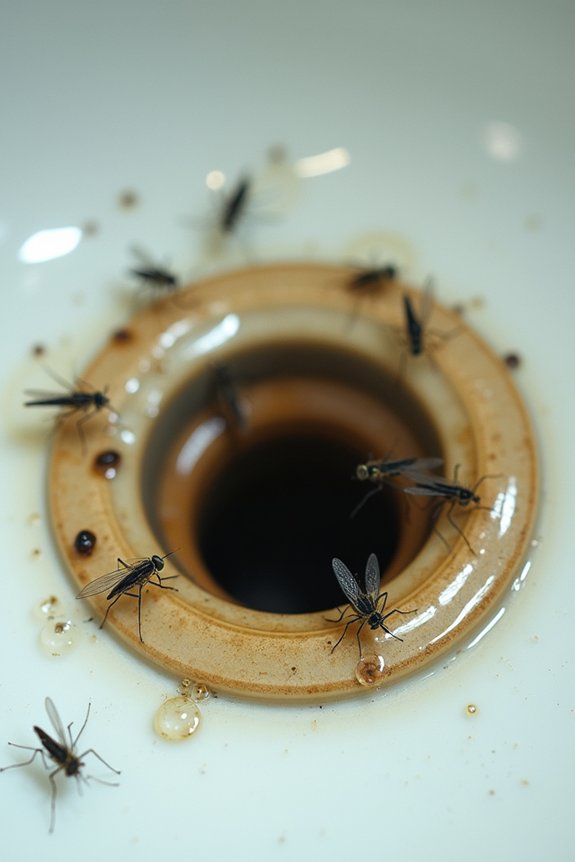
Your drain’s organic film—that soapy, grimy buildup from toothpaste, soap scum, and hair—is a five-star restaurant for gnat larvae. Drain flies and phorid flies lay their eggs right in this biofilm, and once those larvae hatch, they’ve got an endless food source that keeps their life cycle spinning continuously. The slower your drain flows, the thicker this film gets, which means you’re building a bigger, more stable breeding ground for these pests.
Biofilm Buildup And Breeding
When you look inside your bathroom drain, what you can’t see is often the real problem. That slimy biofilm buildup—made from soap scum, hair, and food residues—creates the perfect breeding ground for gnats. Drain flies lay eggs directly in this organic film, and their larvae hatch within days, feeding on the biofilm and multiplying rapidly in warm bathroom conditions.
Here’s what happens: slower drains trap more water, allowing thicker biofilm to accumulate. This gives gnats everything they need—steady food and protected nurseries for their eggs and larvae.
The good news? You can disrupt this cycle. Hot water flushes, enzymatic cleaners, and mechanical scrubbing break down biofilm buildup effectively. Even though surfaces look clean, hidden biofilm behind tiles and inside P-traps sustains infestations. Regular drain maintenance stops the breeding before it starts.
Organic Matter Lifecycle Cycle
Because drains collect everything that goes down them—soap, hair, toothpaste, skin cells—they become gnat nurseries almost by accident. This organic matter sticks to your pipe walls, forming a slimy biofilm layer. Here’s where the biology matters: drain gnats don’t actually need much to thrive. They lay eggs directly in this film, and their larvae feed on it while developing into adults. The moist environment your bathroom provides keeps everything wet and ideal for reproduction. Slow-draining water means the biofilm persists longer, giving gnats more time to complete their lifecycle. Think of it as an all-you-can-eat buffet for gnat larvae. That breeding substrate—the organic gunk—is fundamentally their entire world. Without it, they can’t reproduce. Regular drain cleaning disrupts this cycle and starves the population before it explodes.
Standing Water and Hidden Moisture Sources
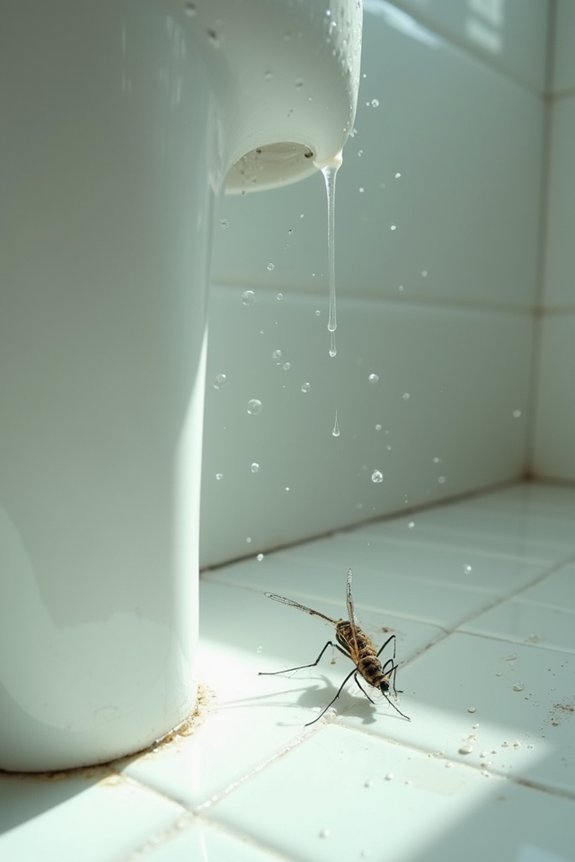
Standing water and hidden moisture sources are likely the main culprits behind your gnat problem, and they’re way more common than you’d think. I’ve found that bathroom gnats thrive in stagnant water sitting in sinks, tubs, and showers. But here’s what gets most people: hidden moisture lurking behind tiles, under fixtures, and within leaking pipes creates breeding sites you can’t even see. Your P-traps—those U-shaped pipes under drains—hold stagnant water that becomes a perfect habitat for drain flies and their larvae. These invisible nurseries enable continuous reproduction, keeping your gnat problem alive. You’re providing everything they need to multiply. Check those damp areas carefully, including corners and crevices where water accumulates. Eliminating standing water is your first real defense against bathroom gnats.
How Your Bathroom’s Humidity Speeds Gnat Breeding
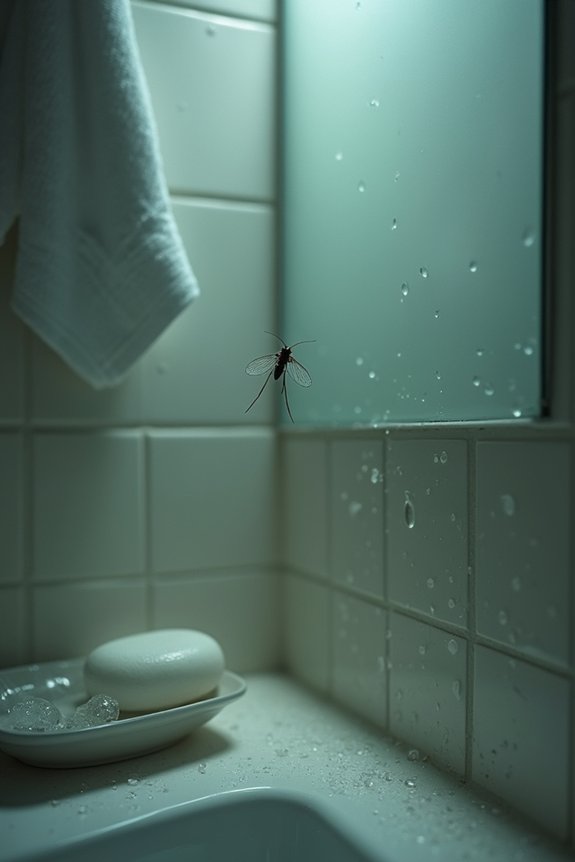
Your bathroom’s warmth and humidity create ideal conditions for gnat breeding—they reproduce faster in these environments than anywhere else in your home. The heat accelerates their entire life cycle, meaning you’re not just dealing with a few gnats; you’re dealing with generation after generation reproducing at an accelerated rate. That’s why a steamy bathroom becomes a breeding ground if you don’t actively control the moisture and temperature.
Moisture Creates Ideal Breeding
Ever notice how gnats seem to multiply faster in your bathroom than anywhere else in your home? That’s because moisture creates ideal breeding grounds. Your sink, shower, and tub constantly release water vapor, keeping humidity levels high. This damp environment accelerates gnat life cycles dramatically.
Standing water in P-traps beneath your sink is particularly problematic. Drain flies thrive there, laying eggs that hatch into larvae within days. Damp towels and wet shower curtains provide additional breeding sites worth addressing.
The real problem? Organic buildup. Soap scum, toothpaste residue, and hair fragments accumulate in drains, feeding developing larvae. This organic matter fuels rapid population growth. Combined with bathroom humidity that lingers due to poor ventilation, you’re creating conditions that support gnat infestations. Addressing moisture directly tackles the root cause of your problem.
Heat Accelerates Gnat Cycles
We’ve covered how moisture feeds gnat breeding, but here’s what really accelerates the problem: heat. Your bathroom’s warm air after hot water showers creates the perfect conditions for gnat life cycles. Here’s how temperature works against you:
- Larval development speeds up dramatically in warm, moist organic matter inside drains and pipe buildup
- Adult gnats become hyperactive in elevated heat, increasing mating encounters and egg-laying rates
- Hot water from showers maintains breeding-friendly microenvironments near drains, towels, and plant soil
- Combined heat and humidity drastically shorten the entire egg-to-adult cycle, meaning faster population growth
When you crank that hot water, you’re running an incubator for gnats. The warmth accelerates every stage of their development. Combined with bathroom humidity, heat turns your drains into breeding grounds. That’s why persistent sanitation and moisture control become absolutely necessary for breaking the cycle.
Bathroom Plants as a Gnat Source
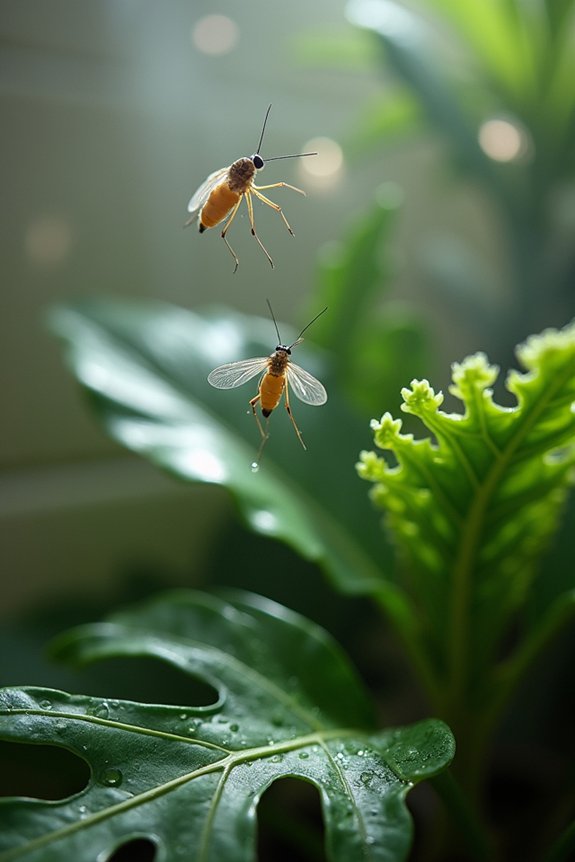
Did you know that the plants sitting on your bathroom shelf might actually be inviting gnats to settle in? Here’s the thing: fungus gnats love moist soil, and bathroom plants often get overwatered. You’re creating the perfect breeding ground for larvae without realizing it.
The problem starts with drainage. If your potting soil stays consistently wet, fungus gnats will find it irresistible. I recommend letting the top inch dry between waterings and using well-draining soil. It’s a straightforward fix that works.
Try adding a half-inch layer of sand or gravel on top of your soil. This stops adult gnats from laying eggs where they want to. If you’re still seeing activity, repot with fresh, sterile soil. Inspect bathroom plants regularly—catching problems early keeps gnats from taking over.
Empty Trash and Remove Organic Material
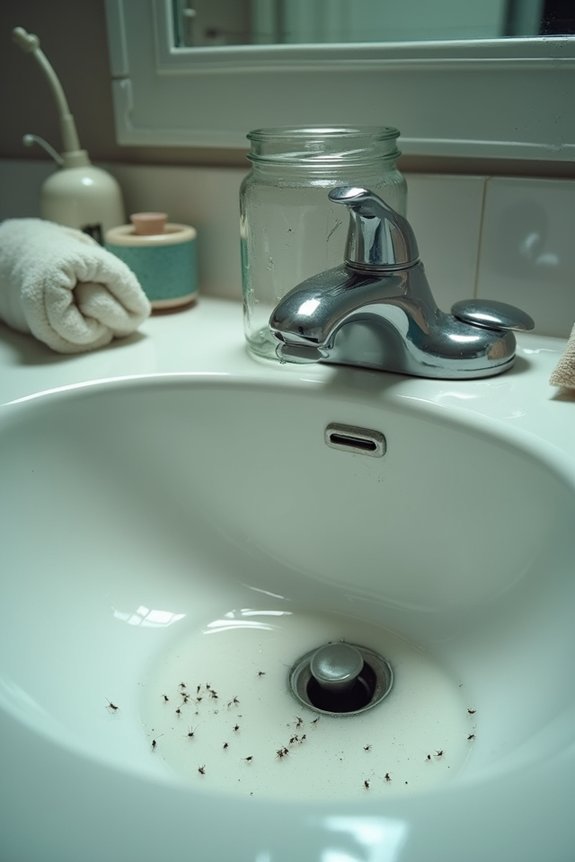
You’ll want to make trash removal a regular habit since gnats breed in organic waste and damp debris that accumulates in your bathroom bin. Start by emptying your trash at least twice a week, then rinse the container with hot water to eliminate sticky residue and food particles that attract insects. Don’t forget to wipe down the bin’s interior and make sure the lid fits snugly—this simple step blocks gnats from accessing their favorite breeding grounds.
Regular Trash Bin Emptying
- Empty your trash bin at least twice weekly to prevent organic buildup
- Remove moist items like used wipes and damp paper towels immediately after use
- Wipe down the bin interior weekly to eliminate residue that attracts gnats
- Dry the bin thoroughly after emptying to reduce moisture that gnats thrive in
Staying consistent with these habits reduces gnat problems. When you empty your bathroom trash regularly, you remove the food sources gnats need to survive and breed. It’s a straightforward step you can take.
Organic Waste Removal Strategies
How much of what’s sitting in your bathroom trash bin right now is actually organic material? I’d bet most of it—hair, cotton balls, tissues. That stuff breaks down and creates the perfect breeding ground for drain flies and gnats. Here’s what I do: I empty my bathroom trash twice weekly, especially during humid months. I also tackle organic buildup in my sink drains by removing visible debris and running hot water regularly. Don’t forget those hard-to-see spots. I wipe down my sink, shower, and tub after each use, clearing soap scum and toothpaste residue that larvae feed on. These sanitation practices cut gnat populations considerably. By staying consistent with organic waste removal, I’ve reduced my bathroom moisture problem and achieved a gnat-free space.
Cleaning and Sanitizing Containers
Since bathroom trash bins collect the exact materials gnats thrive on—hair, tissues, cotton balls—emptying them regularly is one of your most effective defense moves. I’ve learned that sanitizing these containers matters just as much as what goes inside them.
Here’s what I do to keep my trash situation under control:
- Empty trash bins twice weekly to prevent organic buildup from accumulating
- Rinse containers with hot water and a bleach solution (1 part bleach to 10 parts water) monthly
- Keep lids fitted tightly to block moisture and odors that attract gnats
- Wipe down the sink and surrounding areas after emptying to catch residual debris
When I stay consistent with this routine, gnats lose their foothold. It’s straightforward maintenance that works.
How to Spot Gnats in Your Bathroom?
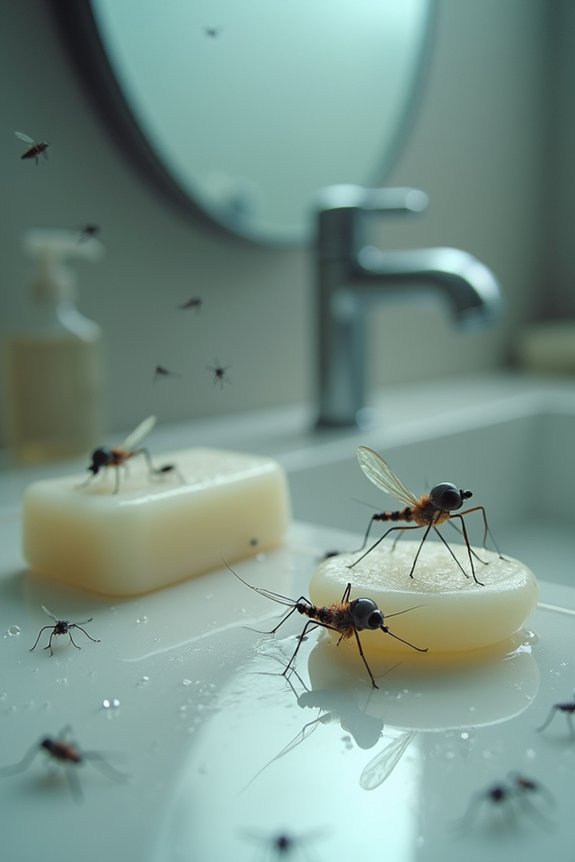
Spotting gnats in your bathroom comes down to knowing what you’re looking for and where they like to hide. I’ve found that drain flies and fungus gnats show up differently, so identifying which pest you’re dealing with matters.
| Gnat Type | Where to Look |
|---|---|
| Drain flies | Near bathroom drains and pipe gunk |
| Fungus gnats | Around damp plant soil and moisture spots |
| General signs | Hovering near sinks, tubs, and faucets |
Watch for tiny insects hovering around wet areas. They’ll emerge from drains when you run water, especially if organic buildup and biofilm have accumulated inside. Check damp towels, overwatered plants, and moisture lingering behind tiles. You’ll notice them clustering near moisture sources where they’re breeding. If you see small flying insects near water, gnats are likely present.
Use Your Exhaust Fan to Reduce Humidity
Once you’ve identified where your gnats are hanging out, you can start fighting back—and one of the easiest wins is running your exhaust fan right after you shower.
Here’s why this matters: gnats thrive in moisture. Your bathroom’s warm, humid air creates perfect gnat breeding conditions. When you run that fan, you’re actively removing moisture at the source.
Gnats thrive in moisture. Your bathroom’s warm, humid air creates perfect breeding conditions—but running your exhaust fan removes it at the source.
- Lower humidity below 60% makes your bathroom inhospitable for fungus gnats and drain flies
- Running the fan prevents condensation on walls and tiles where gnats breed
- Pair your exhaust fan with an open window for better moisture control
- Clean and dry surfaces while the fan runs to eliminate standing water
This simple humidity control interrupts the entire gnat life cycle. You’re not just reducing moisture—you’re eliminating their breeding sites entirely.
Fix Leaks and Improve Bathroom Ventilation
What’s that dripping sound you’ve been ignoring under the sink? That’s a gnat breeding ground waiting to happen. Leaky pipes and faucets create constant moisture where biofilm builds up in drains—exactly what gnats need to thrive. When you fix those leaks, you’re eliminating standing water in P-traps and shower bases where larvae hide.
Here’s the thing: persistent moisture keeps humidity high, letting gnats complete their life cycle faster. Once you’ve patched those leaks, pair that win with solid bathroom ventilation. Run your exhaust fan during and after showers to push humid air out. This one-two punch—fixing leaks plus ventilation—starves gnats of their favorite environment. You’re not just solving a problem; you’re reclaiming your bathroom as a functional, livable space.
Flush Drains Weekly to Stop Returns
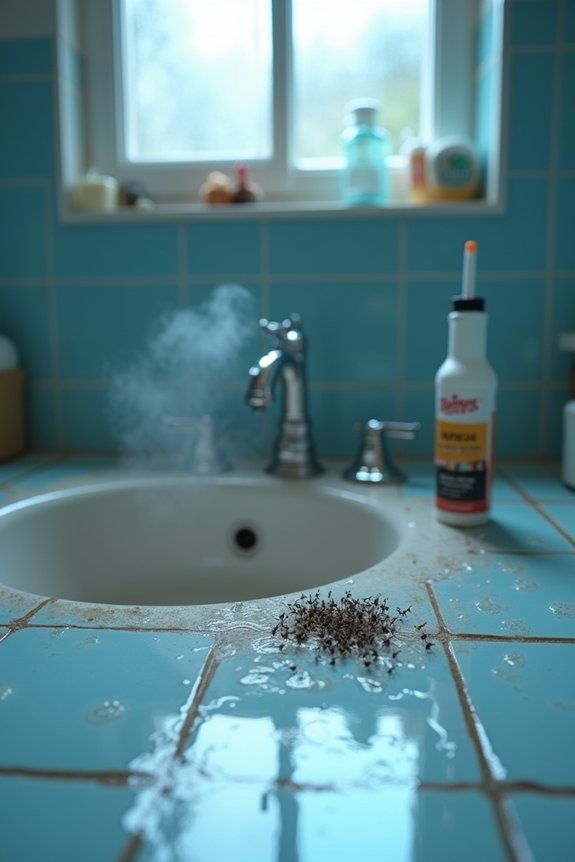
You’ve fixed the leaks and your bathroom’s finally drying out—but gnats can still come roaring back if you don’t hit their breeding grounds where it counts. Here’s what works:
- Flush drains weekly with boiling water to disrupt the gnat and drain flies life cycle by removing organic buildup that larvae feed on
- Try a vinegar-and-baking-soda flush followed by hot water to loosen stubborn gunk without harsh chemicals
- Use enzymatic drain cleaners monthly as your long-term solution—they continuously break down organic matter between treatments
- Monitor bathroom moisture levels since gnats return when conditions stay damp
Regular drain cleaning targets where these pests actually breed. You’re not just cleaning; you’re eliminating their food source entirely. Stay consistent, and you’ll keep them gone.