
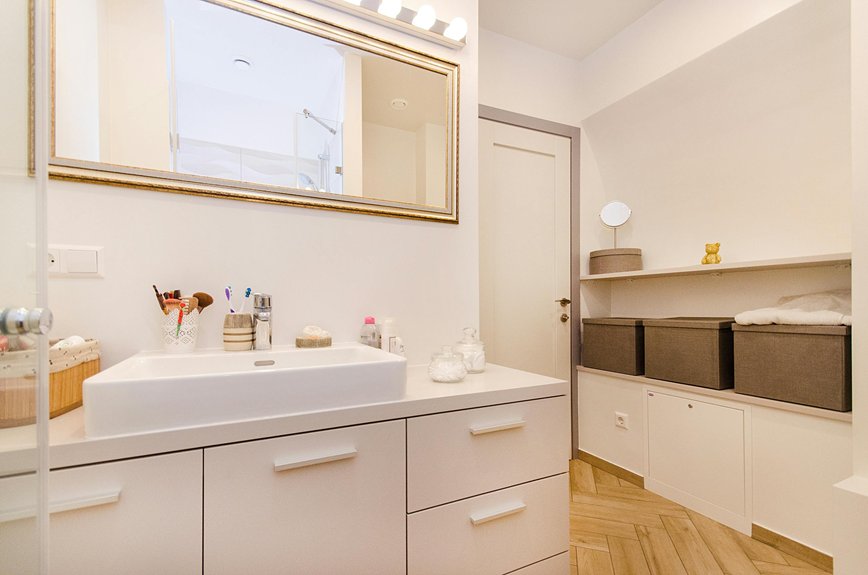
A bathroom vanity combines your sink, countertop, and storage into one functional unit that anchors your whole bathroom.
I’d measure your space first—you’ll need at least 30 inches of clearance in front for drawers to open properly. Then match it to how you actually live: dual sinks stop morning traffic jams, while drawers organize makeup and cabinets stash towels.
Consider materials like quartz countertops (they resist moisture without sealing) and choose between undermount or vessel sinks based on your counter space. There’s plenty more to discover about sizing, styles, and materials that’ll work well in your bathroom.
What a Bathroom Vanity Is and Why It Matters
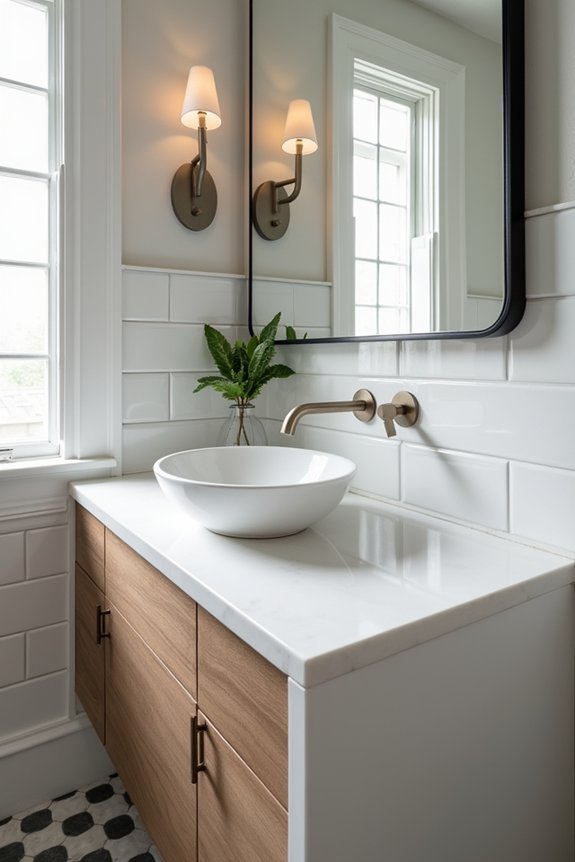
Ever wonder why your bathroom feels either functional or frustrating? A bathroom vanity is the answer. It’s a single unit that combines your sink, countertop, and storage—drawers and cabinets all together. Think of it as the hardworking anchor of your bathroom.
Here’s why it matters: a vanity organizes everything you need in one place. You have space for toothbrushes, makeup, and cleaning supplies. The countertop gives you room to set things down. Whether you choose freestanding or wall-mounted styles affects how spacious your bathroom feels and how easily you can clean underneath.
Materials matter too. Solid wood, MDF, quartz, and granite each handle moisture differently. Better materials mean your vanity lasts longer and requires less maintenance. Smart space planning—selecting the right size and style—changes your bathroom from chaotic to calm.
Match Your Vanity to How You’ll Actually Use It
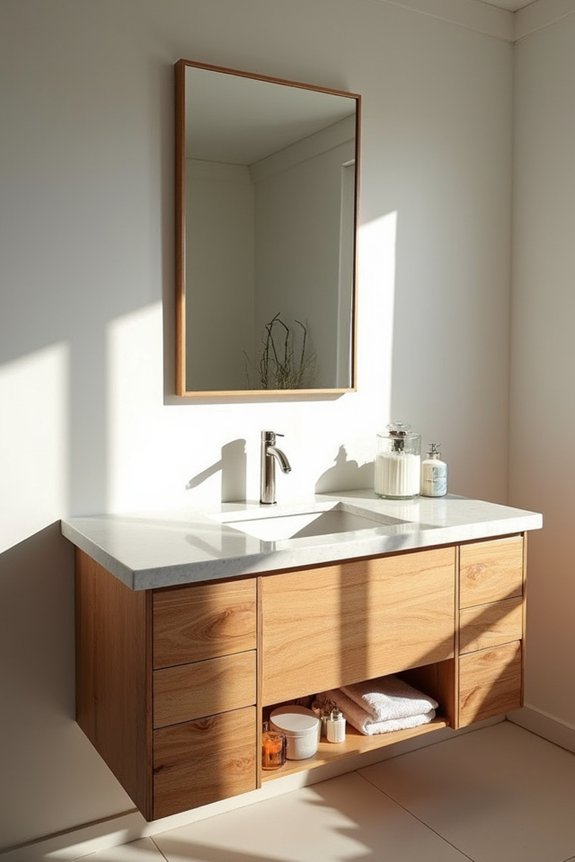
Now that you understand what a vanity does, let’s make sure the one you pick actually works for your life. Think about who’s using your bathroom. If you’re solo, a single vanity handles everything fine. Sharing a primary bath? Dual sinks prevent morning traffic jams. Consider your storage layout next—drawers keep makeup and brushes organized, while cabinets store towels and cleaners. Your daily routines matter too. Heavy makeup users need serious countertop space for products. Check your bathroom layout and plumbing location since these dictate where your vanity actually fits. Lower countertop height and open space underneath help kids and anyone with mobility concerns. Matching your vanity to real life beats something fancy but impractical.
Measure Your Space and Plan Vanity Placement
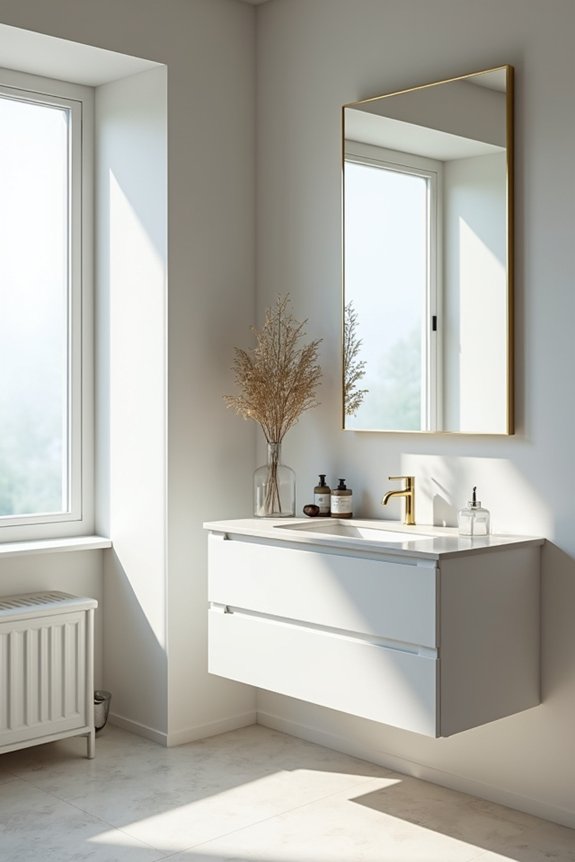
Where should your vanity actually go in your bathroom? Start by measuring your floor space, countertop depth, and vanity width carefully. You’ll want at least 30 inches of clearance in front for comfortable traffic flow and opening drawers without bumping into things.
Check your door clearance and account for how it swings. Look for plumbing rough-ins on your walls—they’ll determine where you can realistically place your vanity without expensive replumbing. Consider leg room underneath and have adequate space for comfortable use.
Plan your ergonomic height around 32–36 inches, matching your actual needs and how you’ll move through your room layout. Think about nearby fixtures and walls. This upfront space measurement prevents costly mistakes and makes your vanity placement work well for daily life.
Choose Style, Materials, and Storage for Your Bath
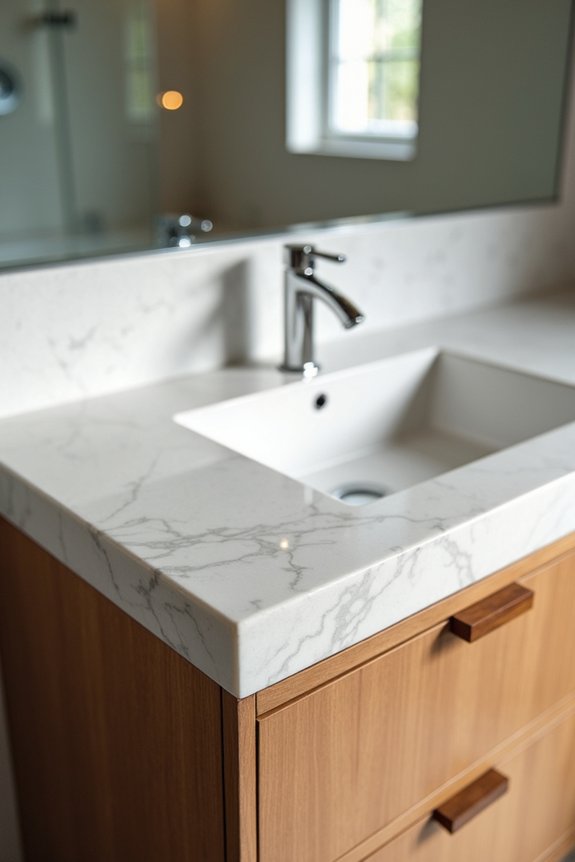
Once you’ve decided where your vanity’s going, it’s time to pick one that works for your life and matches your aesthetic. Your vanity style sets the tone—modern floating designs work well for contemporary bathrooms, while furniture-style vanities suit traditional spaces.
For materials, consider:
- Solid wood or plywood for durability and moisture resistance in quality cabinets
- MDF or melamine for affordable options that still resist moisture
- Undermount or vessel sinks depending on your counter space and cleaning preferences
Balance your storage by combining drawers for makeup and brushes with cabinets for towels. Think about your cabinet layout carefully—it’ll determine how efficiently you use that space. Finally, coordinate your hardware finishes, countertop materials, and lighting to create a functional bathroom that suits your needs.
Pick Sinks and Countertops That Last
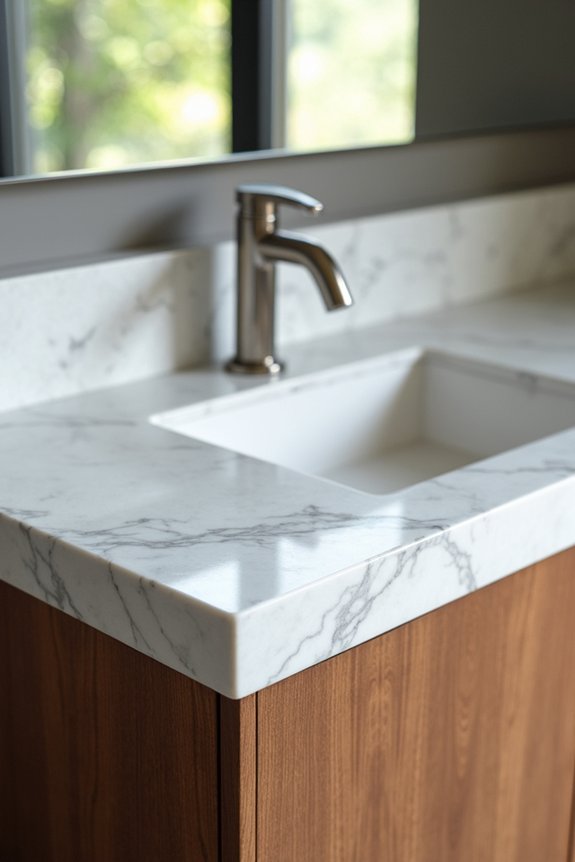
How you finish your vanity matters just as much as its structure—the sink and countertop you choose will take a beating from daily use, so you’ll want them to last. I’d recommend quartz countertops because they’re non-porous and require zero sealing. They resist moisture and stains naturally, meaning less maintenance work. For sinks, undermount options maximize your counter space and simplify cleaning. If you prefer vessel sinks, just know they’ll reduce under-sink storage. Solid-surface countertops like Corian offer seamless designs with excellent moisture resistance too. They’re easier to maintain than marble or granite, which demand regular sealing. Consider your lifestyle: if heat resistance matters, quartz outperforms laminate. Choose durability now, and you’ll appreciate it later when your vanity still looks fresh.