
Your bathroom’s sewage smell likely stems from a dried P-trap, clogged drain, failing toilet seal, blocked vent pipe, or cracked pipe. Start with the simplest solutions: run water for 60 seconds in unused sinks to refill the trap and block gases. Check your toilet’s base for water pooling. Clean drains with a plunger or snake, then flush with baking soda, hot water, and vinegar. If odors persist after these quick fixes, you’ll need to investigate what’s happening behind the scenes.
What Causes Sewage Smells in Your Bathroom
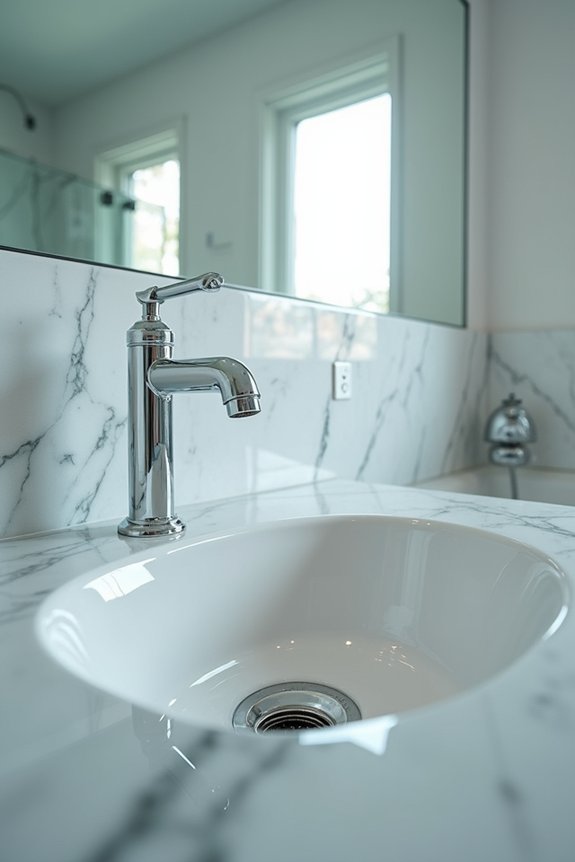
Why does your bathroom smell like a sewer? Several culprits could be responsible. A dry P-trap is often the main offender—when water evaporates from this U-shaped pipe, sewer gases escape into your space. Clogged drains filled with hair and soap scum harbor bacteria that create foul odors. Faulty vent pipes can’t properly channel sewer gases outside, so they back up indoors. Leaking pipes crack and release odors, sometimes hidden behind walls. Your toilet seal matters too; a worn wax ring allows gases around the base. If you’ve noticed persistent sewage smell despite basic drain cleaning efforts, a professional plumber can identify whether your issue involves the P-trap, vent pipe, or toilet seal problems that require expert attention.
Why Your Bathroom Smells Like Sewage: The Dry P-Trap Fix
How’s that P-trap doing under your sink? If you’re noticing sewage odors creeping into your bathroom, a dry trap’s likely culprit. Here’s what happens and how we fix it:
Sewage odors in your bathroom? A dry P-trap is likely the culprit—and it’s an easy fix.
- Water evaporates from unused P-traps, breaking the water seal
- Sewer gases escape through the dried-out trap into your bathroom
- Extended periods without use (vacations, guest bathrooms) cause this problem
- Regular maintenance prevents recurring odors and keeps air flowing properly
Refilling your trap takes just one minute—run water down the sink, shower, or toilet for sixty seconds. That water barrier returns, blocking sewer gases immediately. If your dry trap keeps happening, you’re dealing with infrequent use or a slow leak requiring inspection. Running water in all your bathroom traps weekly maintains those seals and keeps your space smelling fresh.
Inspect for Sewage Odor Sources: Toilet Seals, Pipes, and Drains
Once you’ve ruled out a dry P-trap, it’s time to look deeper—because sewage odors often come from multiple sources hiding in your bathroom.
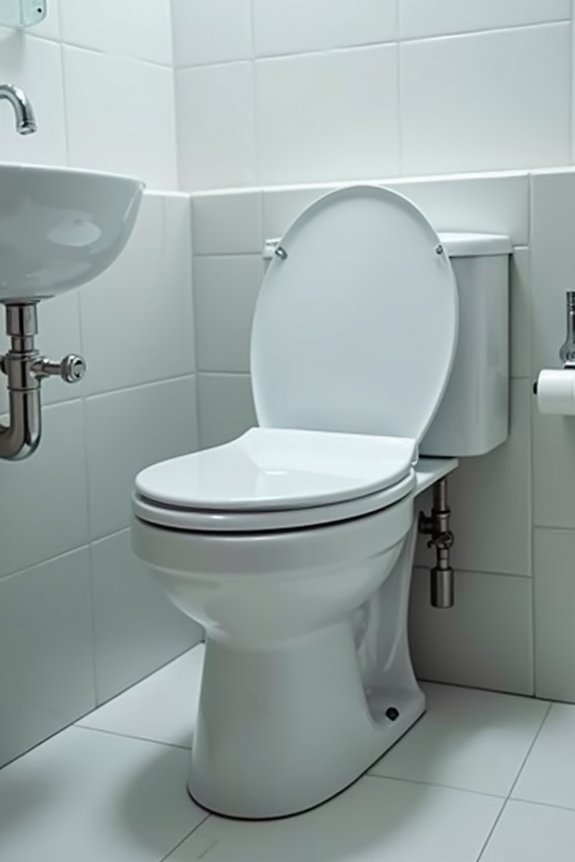
Start by inspecting your toilet. A compromised wax seal or poorly sealed connections allow sewer gases to escape into your space. Check the base for water pooling or damp spots—signs of a problem.
Next, examine your drains. Hair, soap scum, and debris create bacterial growth that emits foul odors and amplifies sewage smells. Run water regularly to maintain your odor seal.
Don’t forget pipes and gaskets. Damaged or cracked pipes, leaks behind walls, and faulty gaskets release sewer gases into your bathroom. A blocked vent pipe traps gases and pushes them back inside, often accompanied by gurgling sounds.
Locate these problem areas, and you’re halfway to fresher air.
Check Your Vent Pipe: A Common Cause of Bathroom Sewage Smells
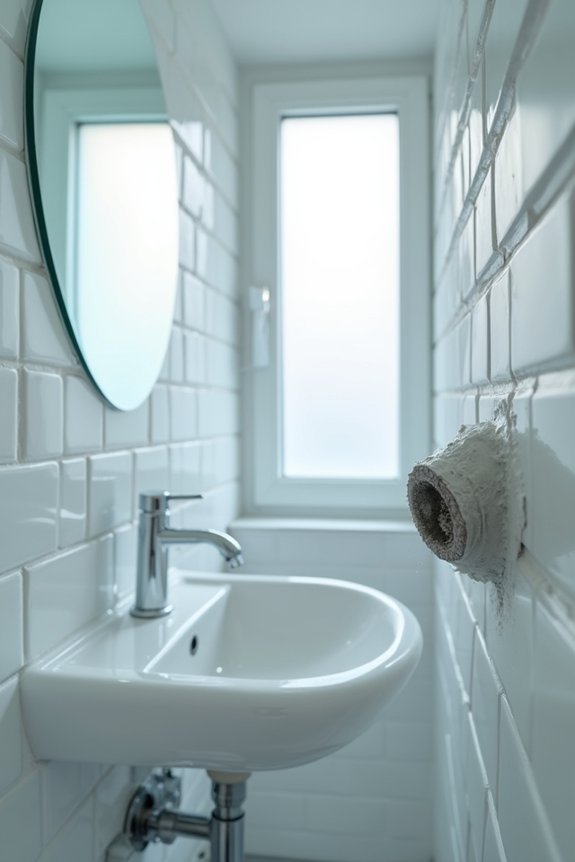
Your bathroom’s vent pipe is basically the escape route for sewer gases—and when it’s blocked, those gases have nowhere to go but back into your home. Vent blockage is more common than you’d think because it affects your entire drainage system.
Here’s what typically clogs your vent pipe:
- Leaves and dirt accumulating on the roof
- Animal nests blocking airflow
- Debris from nearby trees
- Ice buildup in winter months
When your vent pipe gets blocked, you’ll notice slow drains and gurgling sounds when using fixtures. A professional inspection reveals the damage quickly. Plumbers sometimes use a smoke test—harmless smoke pushed through your system—to locate exactly where blockage occurs. If your vent needs repair or you can’t access it safely, call a professional to restore proper sewer gas venting.
Quick DIY Fixes to Stop the Sewage Smell Today
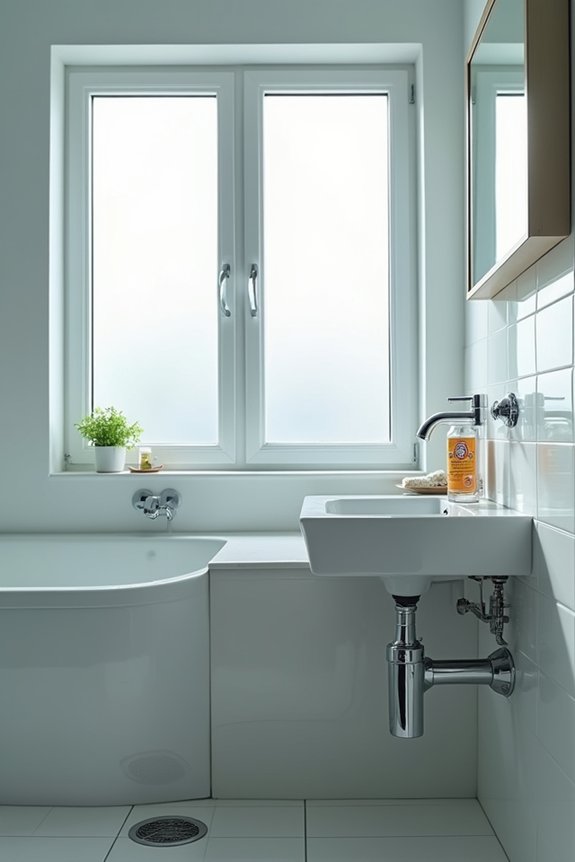
Want to tackle that smell before calling a plumber? I’ve found several quick fixes that work.
First, I run water for 15–60 seconds in unused sinks or tubs. This refills the P-trap, which blocks sewer gases from entering your bathroom. If you’re in a cold climate, add a bit of antifreeze to prevent evaporation.
Next, I inspect around fixture bases for gaps and seal them with caulk. Broken seals let sewer gases slip through.
For drain clogs, I use a plunger or plumber’s snake to clear buildup harboring bacteria. Then I flush with baking soda and hot water, followed by vinegar to break down organic material. Finally, I rinse with hot water again.
These steps address most bathroom smells like sewage right away.
When to Call a Professional Plumber
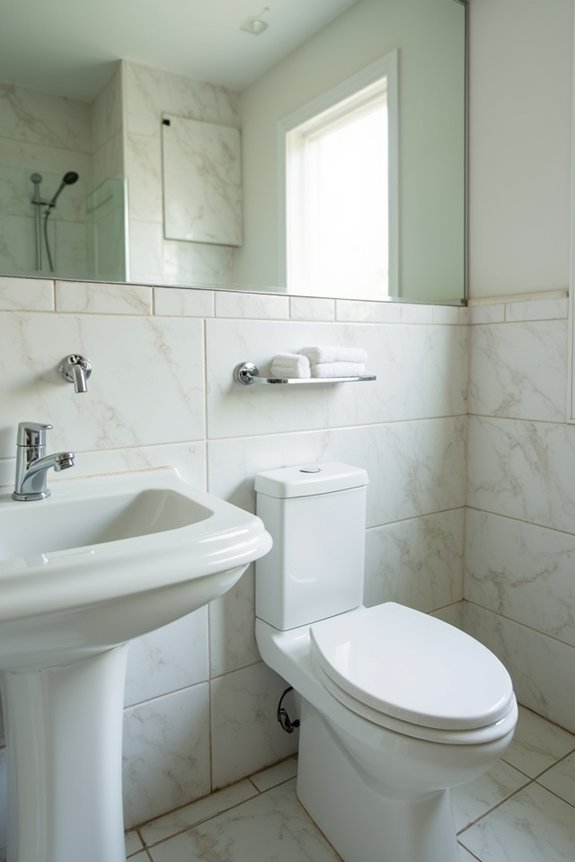
Those DIY fixes work great for minor issues, but some problems need a plumber’s expertise. You’ll want to call a professional when:
- Main sewer line problems – blockages, cracks, or tree roots require camera inspection and specialized repair methods like hydrojetting
- Persistent sewer gases and odors – if smells linger after cleaning or rainfall despite your efforts, a thorough diagnosis is necessary
- Leaking vent pipe issues – gurgling sounds, slow drains, or blocked vents indicate ventilation problems affecting your whole system
- Backflow backup or multiple fixtures – sewage backing up or simultaneous odors from several drains signal serious septic tank or clogged drain concerns
Pay attention to these warning signs. A professional can identify whether you’re dealing with a faulty toilet seal, broken water in P-trap, or deeper main sewer issues that will only worsen without proper intervention.