
I’d start by evaluating your light and space. A fiddle-leaf fig in a bright corner adds visual interest, while mirrors bounce natural light deeper into the room. If you want coziness, pair a comfortable chair with a floor lamp (2700K warm bulbs work best) and drape a throw blanket across it. Floating shelves display plants and photos without eating floor space. Layer these elements—vertical anchor, lighting, textiles—and you’ve made use of dead space. Stick around to discover which specific combo works for your room.
Choose the Right Solution for Your Space and Style
What’s the best way to tackle that awkward corner collecting dust in your living room? You’ve got options, and honestly, the best choice depends on what you need and what fits your style. If you’re craving greenery, plants bring life to empty spaces—fiddle-leaf figs work great for bright corners, while faux tall plants handle low-light areas perfectly. Prefer furniture placement? A cozy corner chair creates your personal reading nook. Want to maximize storage without eating up floor space? Shelving displays books and decor simultaneously. Maybe you’re after something mobile and functional—a bar cart works for both storage and style. The trick is matching your corner’s purpose with what complements your room’s vibe.
Fill Your Corner With a Statement Plant or Tall Tree
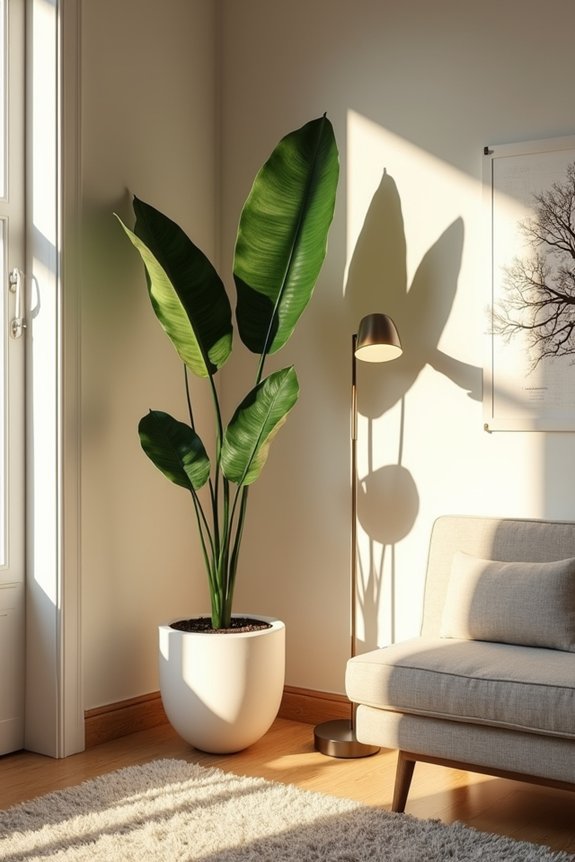
A fiddle-leaf fig or similar large-leaf plant draws the eye upward and anchors your corner with presence. If your living room doesn’t get much natural light, faux plants deliver that same height and visual weight without requiring sun exposure or maintenance. Either way, you’re filling that empty corner with something functional for your room.
Large-Leaf Plant Selection
Ever noticed how a single tall plant can completely change an empty corner? A large-leaf plant like a fiddle-leaf fig does exactly that. If you’ve got natural light streaming in, this is your moment to shine. These plants create dramatic vertical focal points that draw eyes upward and make spaces feel intentional.
Here’s the thing: pairing your large-leaf plant with a tall planter amplifies the effect. The extra height fills that vertical gap you’re trying to solve. You’re not just adding greenery—you’re defining the corner distinctly.
Don’t have enough natural light? No problem. Swap in a faux large-leaf plant instead. You’ll get the same beautiful presence without the daily care requirements. Either way, you’re creating that welcoming, put-together feeling in your living room.
Faux Options For Low Light
How do you fill a shadowy corner without watching a real plant slowly decline? Faux plants are your answer. I’ve found that tall faux plants work beautifully in low light corners because they maintain that lush, vibrant look without demanding sunlight or constant care.
What makes faux options perfect for corner decor is their reliability. You won’t stress over watering schedules or wondering if your plant’s getting enough light. A quality faux fiddle-leaf fig or similar statement plant stands tall and draws your eye upward, making cramped spaces feel more spacious and dynamic.
Pair your faux plant with a pedestal or stand to give it more presence. This combination turns an empty corner into a polished, intentional display that looks well-designed and welcoming—without the plant-parent guilt.
Brighten Empty Corners With Mirrors and Light
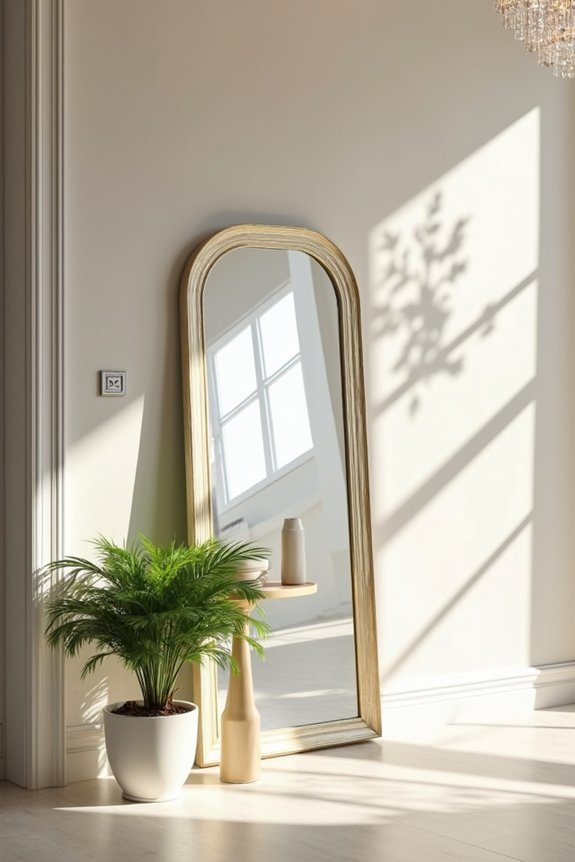
When you’ve got a dark corner that seems to swallow light, mirrors and strategic lighting can work together effectively. Combining these elements brings real improvement to forgotten spaces.
Here’s what works:
- Position a tall, slim mirror on the wall to bounce natural light deeper into your room
- Pair your mirror with a floor lamp or wall sconces for layered illumination
- Add light-colored, minimal furniture nearby to keep that airy feeling
- Arrange gallery-style wall decor adjacent to the corner for visual interest without floor clutter
The key is maximizing reflection from windows and existing light sources. When you layer a mirror with proper lighting, even a shadowy corner becomes inviting and spacious. Your guests will notice the difference, and you’ll feel it too when you’re actually using that space.
Create a Reading Nook With a Comfortable Chair
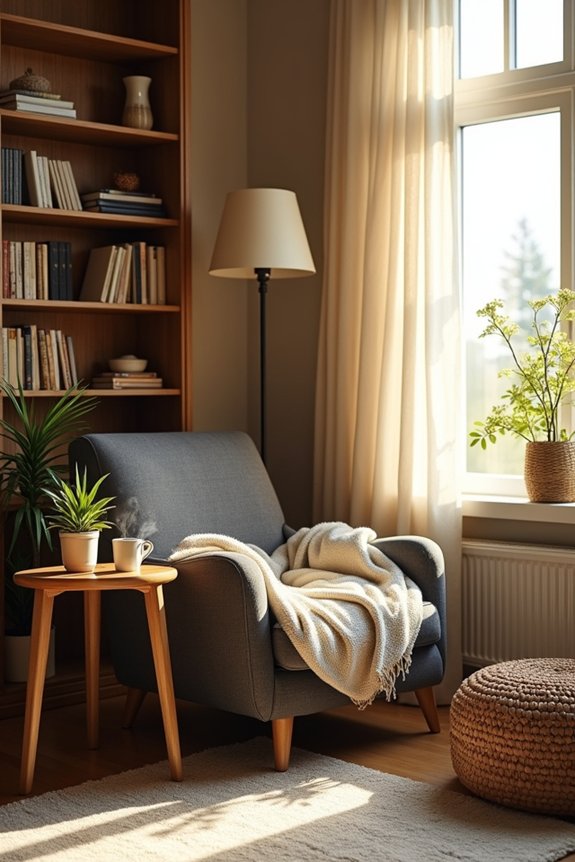
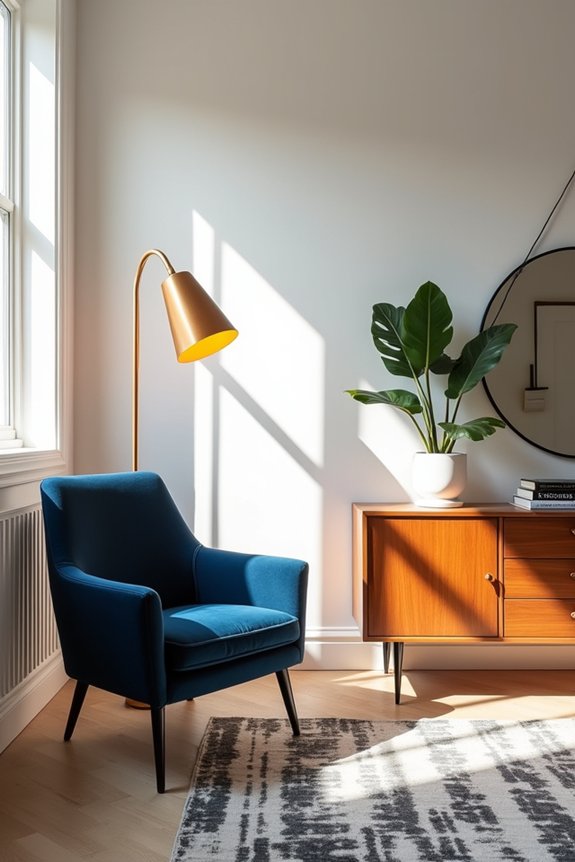
What’s stopping you from turning that empty corner into your personal retreat? A comfortable chair is your foundation. Pick one that’s genuinely cozy—a bench for two or window seat works well for larger spaces. You’ll want to avoid letting it become a storage dumping ground, so choose wisely.
Next, layer your lighting. A floor lamp or wall sconce nearby provides brightness for reading without annoying glare. Add a small side table for your coffee or book stack, then drape a soft throw blanket across the chair.
Frame your reading nook with a tall plant or compact bookshelf to draw the eye upward. These elements add vertical interest without crowding your space. You’ll have a cozy spot that actually gets used.
Install Floating Shelves for Display and Storage
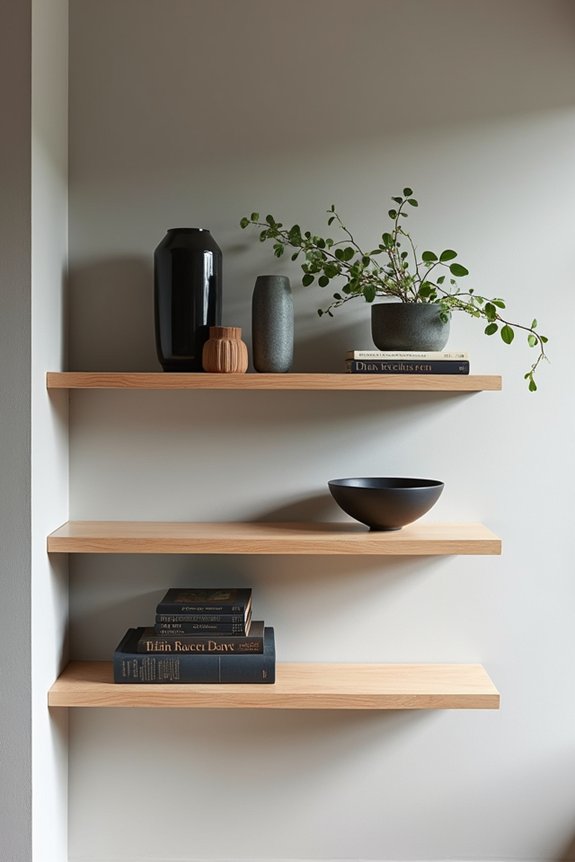
If you’re looking to fill that corner without eating into your floor space, floating shelves are a practical solution for wall storage. Here’s what you can do:
- Display books and decorative objects that match your taste
- Arrange potted plants for a living, breathing corner
- Showcase framed photos and personal mementos
- Mix textures with woven baskets for hidden storage
The key is spacing them properly so everything’s visible from your main seating area. I’d recommend staggering them rather than stacking them straight—it keeps corner decor organized and deliberate. Choose finishes matching your existing wood tones. You’ll need wall studs for support, but once installed, you’ve got versatile wall storage that makes that awkward corner functional and useful.
Place an Accent Table to Define the Space
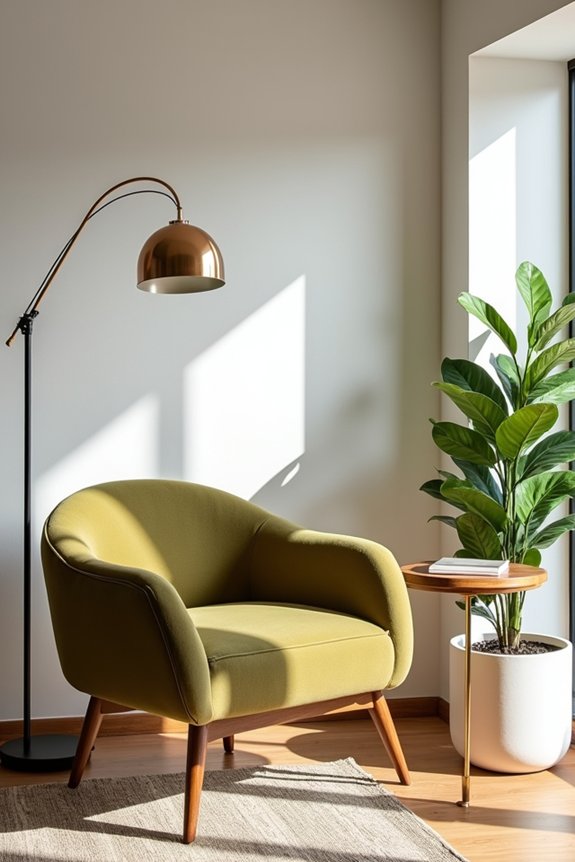
An accent table gives that empty corner a clear purpose with actual surface space for your belongings. Round or square tables work well for corner placement because they soften sharp angles and create a sense of deliberate design rather than wasted space.
Choose a shallow-profile table—around 24 inches deep—so it doesn’t obstruct your walking path. This maintains circulation while providing real surface area for styling. Pair it with a comfortable chair nearby to create a small reading area that anchors your living room layout.
Match the table’s finish and hardware with your existing furniture pieces. This visual coordination prevents your corner from appearing like an unplanned addition. Add a lamp, a few books, and some plants—and that unused space becomes genuinely useful and functional.
Add a Floor or Table Lamp for Ambient Warmth
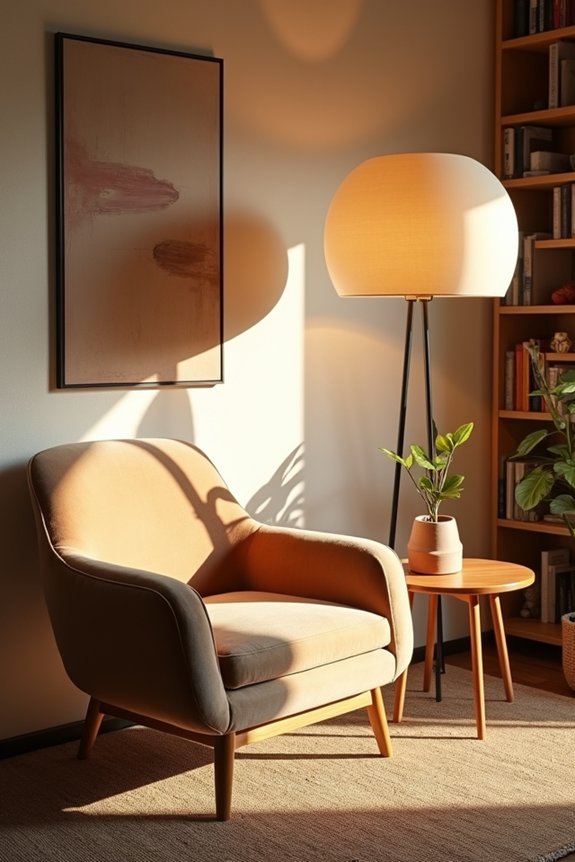
A floor or table lamp brings function to that bare corner by layering light that softens shadows and creates the warm atmosphere you want. Choose warm bulbs (2700K–3000K) since they work well with wood furniture and fabric textures while making the room feel welcoming rather than cold. If you’re renting or prefer flexibility, consider a plug-in sconce or dimmable lamp so you can adjust brightness without installing new wiring.
Layered Lighting Creates Ambiance
Why does a corner suddenly feel purposeful when you add the right light? Layered lighting makes that forgotten space into something useful. I’ve found that combining multiple light sources creates the ambient illumination you need for different times of day.
Here’s how I’d approach your corner decor:
- Install a tall arc floor lamp as your primary light source
- Add a table lamp on a side table for task lighting while reading
- Include wall sconces above to reduce shadows and brighten vertical space
- Use dimmer switches so you can adjust brightness for evening relaxation
This strategy means you’re not relying on one harsh overhead light. Instead, you’re building layers that work together. Your corner becomes a functional retreat—warm and inviting.
Functional Style Fills Space
Now that you’ve got your lighting layers working together, it’s time to pick the single piece that’ll anchor your corner and actually serve a purpose. A floor lamp is your best bet for space-saving corner decor that pulls double duty. Position it to bounce light off your walls and artwork, spreading warmth evenly across your seating area. Choose a shade that matches your wood tones and fabrics—you want it blending in, not screaming for attention. If you’re tight on square footage, grab an adjustable-arm model. This lets you redirect light throughout the day, whether you’re reading or just hanging out. Pair it with a small side chair, and suddenly that empty corner becomes a comfortable retreat. That’s functional style that actually works.
Warm Glow Enhances Corners
What makes a bare corner worth sitting in? Corner lighting does. I’ve found that adding a floor or table lamp creates the warm glow that makes a space feel deliberate and welcoming.
Here’s what I’d consider:
- Arc lamps that sweep overhead, directing ambient lighting exactly where you need it
- Torchiere styles that diffuse light upward for soft, shadow-free illumination
- Warm white bulbs (2700–3000K) that feel comfortable rather than clinical
- Dimmable options so you can adjust brightness to match your mood
Position your lamp near a reading chair or small side table. This setup grounds the corner and gives you a dedicated spot that actually works. Layer in a second wall sconce if shadows persist. You’re not just filling empty space—you’re building a corner that feels genuinely welcoming.
Hang Art or Create a Small Gallery Wall
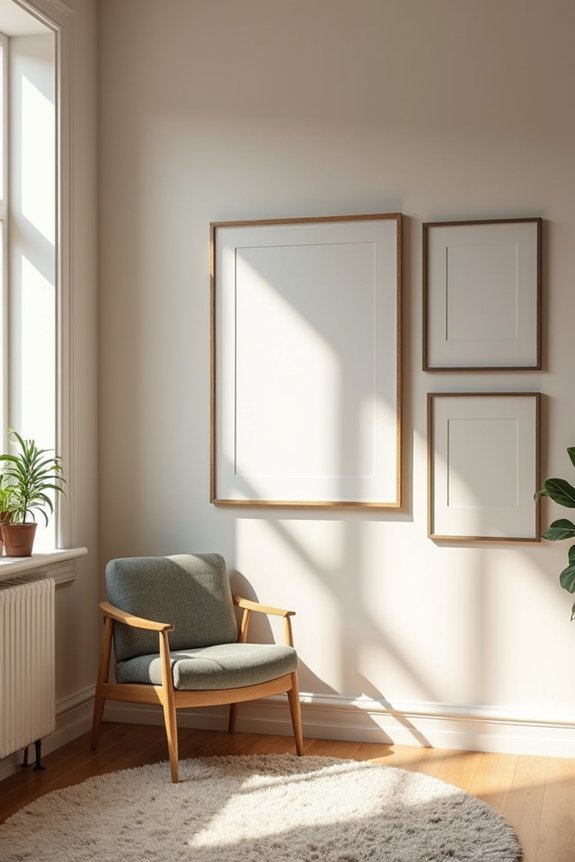
If you’ve got blank wall space in that corner, you’re sitting on gold. A gallery wall or strategic wall decor makes that awkward spot into something meaningful. You can display family photos, travel snapshots, or even a single large frame—whatever tells your story. Here’s what works: arrange frames in a grid pattern for cohesion, or mix sizes for visual interest. Mirrors are useful too; they bounce light around and make the corner feel bigger. Pair your corner display with a tall plant or pampas grass nearby. The vertical elements draw your eye upward and create balance. Choose frames that match your room’s vibe, then step back and look at how you’ve claimed that forgotten space.
Build a Coffee Cart or Bar for Function and Flair
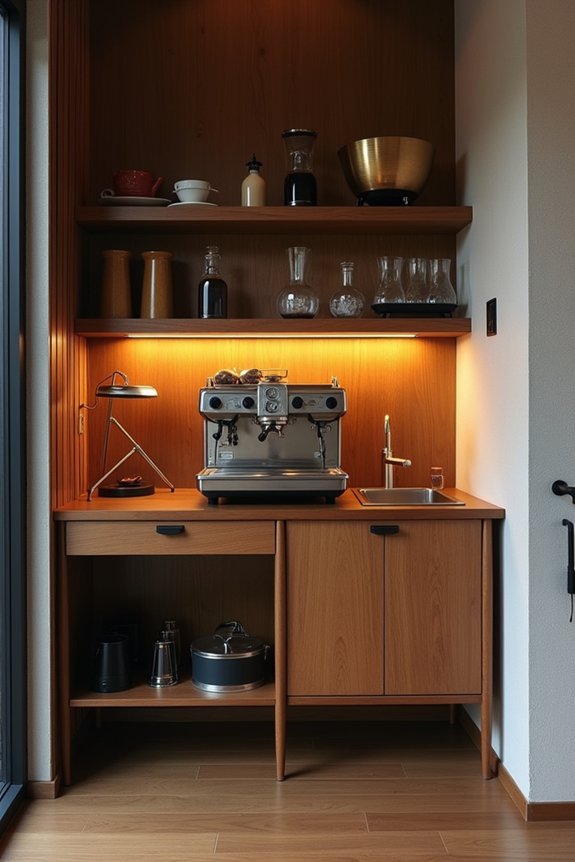
A coffee or bar cart puts that awkward corner to work as a functional beverage station where you’ll keep everything you need—mugs, coffee beans, sweeteners, spirits, and mixers—all within arm’s reach. Once you’ve got your essentials organized on the shelves, styling comes next: arrange glassware by height, tuck in some fresh flowers or candles, and add a few framed photos to personalize it. The benefit of this setup is that you can easily wheel it wherever your entertaining happens, whether that’s the living room today or the patio tomorrow.
Beverage Station Essentials
they’re perfect for a beverage station that pulls double duty as both functional storage and room decor. You’ll want to stock your bar cart thoughtfully to make it actually useful.
Consider these essentials:
- Glassware—cocktail glasses, mugs, and water glasses for different drinks
- Bottles—your favorite spirits, mixers, and syrups organized by height
- Barware tools—jigger, shaker, strainer, and bar spoon for mixing drinks
- Linens and napkins in closed storage drawers for easy access
Add a large surface tray to corral items and prevent spills. I’d suggest grouping similar bottles together and keeping frequently used items within arm’s reach. This setup frees your kitchen counter while creating an inviting focal point that visitors actually notice.
Styling Your Cart Display
Now that you’ve got your essentials stocked, it’s time to make your cart actually look good—because a cluttered bar just feels chaotic. I like to think of my cart display as a mini version of my whole room’s style. Start by adding decorative accents like small framed photos, fresh flowers, or candles that echo your existing decor. A decorative tray corrals bottles and glasses while looking purposeful. Layer items at different heights so nothing gets lost in the shuffle. This approach to room organization makes your cart functional and visually appealing. The goal? Creating a corner that feels deliberate, not like you’re just storing stuff there. When your cart looks polished, it improves your entire space.
Layer Multiple Elements for a Complete Corner Look
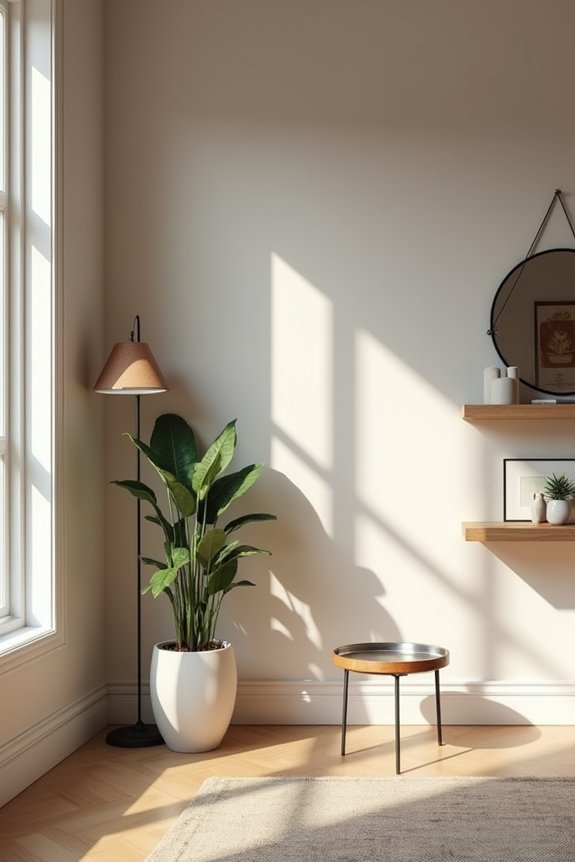
Why settle for a bare corner when you can create a whole vignette that actually works with your space?
Layering multiple elements turns that awkward empty spot into something useful. Here’s how I’d approach it:
Layering multiple elements transforms an awkward empty corner into a functional, purposeful space that enhances your entire room.
- Start with a vertical anchor—a tall plant, floor lamp, or sculpture that draws your eye upward
- Add a secondary surface like a console table or small bookshelf for decor and storage space
- Layer in soft textiles through cushions, throws, or a rug that connects to your room’s colors
- Use strategic lighting (floor lamp plus table lamp) so the corner feels welcoming day and night
The trick is treating your corner as a mini room within a room. Each element serves a purpose while creating a cohesive vignette that makes your whole living room feel organized and complete.