
You’ve got to start by calling your city clerk’s office—private property doesn’t automatically allow backyard shooting in California. Check if your city permits firearm discharge at all, then verify your land meets minimum requirements: typically 1–5 acres with neighbors 300+ feet away and a sturdy backstop installed. You’ll likely need written local permission, and you must transport your firearm unloaded in a locked case. Get these details straight before you set anything up, or you’re risking felony charges. The specifics vary by location, so there’s more to understand about your particular area.
Check Your City Ordinances First
Before you set up a target in your backyard, you’ll want to check what your city actually allows—and this step matters more than you’d think. Many California municipalities ban BB gun discharge within city limits, even on private property. Local ordinances vary widely depending on where you live. You’ll need to contact your city or county clerk’s office and ask specifically about backyard shooting regulations. They’ll tell you whether discharge is prohibited entirely or permitted under certain conditions. Don’t assume private backyard means you’re automatically in the clear with local ordinances. Understanding Penal Code restrictions and your specific city’s rules prevents expensive legal troubles. This foundation keeps your private backyard shooting both legal and safe.
Make Sure Your Property Qualifies in California
Once you’ve confirmed your city allows backyard shooting, you’ll need to verify your property actually qualifies. Not every piece of private land is suitable for this dangerous activity. You must check whether local ordinances impose specific requirements on your property size, location, or setup.
| Property Requirement | What It Means | Your Action |
|---|---|---|
| Minimum acreage | Often 1-5 acres needed | Measure your lot size |
| Distance from neighbors | Usually 300+ feet required | Check property lines |
| Backstop/berm presence | Mandatory safety barrier | Install if necessary |
Your private property doesn’t shield you from criminal liability if something goes wrong. Some areas require designated shooting zones or written permissions before you can legally discharge firearms on private land. Contact your local police department—they’ll clarify whether your specific property meets all requirements under local ordinances. Don’t assume; verify everything first.
Set Up Your Backyard Shooting Area and Backstops
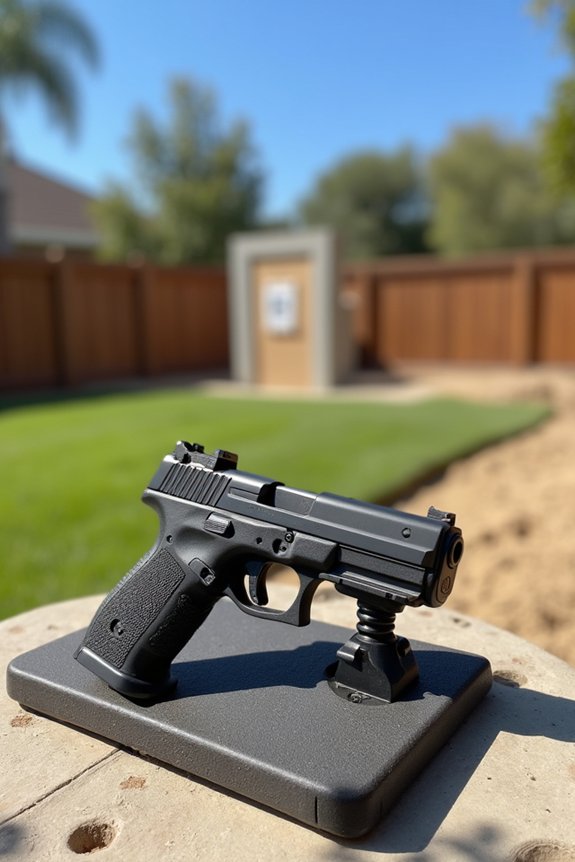
The actual setup of your shooting space is where safety becomes real and tangible. I’d recommend designating a specific zone on your private property, positioned away from neighbors’ homes and property lines. Install a sturdy backstop—either a commercial shooting berm or DIY wooden frame filled with sand—that’ll catch all projectiles safely. Position it so bullets travel away from structures and streets. Clear the area of obstacles and spectators. Check local ordinances regarding distance requirements; some municipalities mandate 100+ yards between your shooting spot and occupied buildings. Arrange proper drainage around your backstop to prevent water pooling. Mark your shooting zone visibly so family members know when firearms handling is active. This setup makes backyard shooting responsible and safe.
Know California’s Display and Brandishing Laws
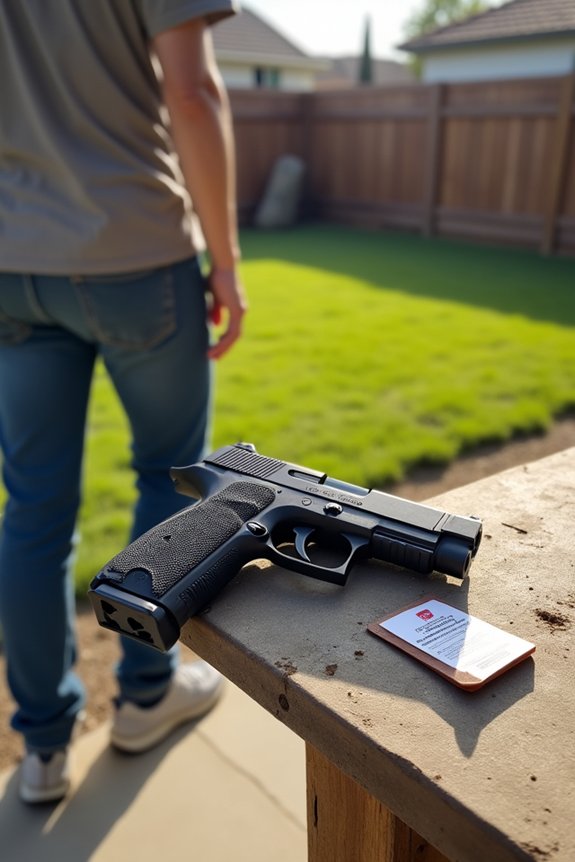
I need to understand California’s strict rules about displaying and brandishing firearms before I set up my backyard range, since even on private property, I can’t openly show a BB gun or handle it in threatening ways. The law prohibits displaying imitation firearms in public or where outsiders might see them, which means I’ve got to keep my setup contained and away from view—think fence-lined areas or garage spaces rather than open yards. If I’m transporting my BB gun to my backyard, I’ll keep it unloaded, hidden from sight, and ideally locked in a case to stay completely clear of California Penal Code 20170 PC.
Public Display Restrictions
Why does it matter how you handle a BB gun in public? California’s strict laws protect communities by regulating imitation firearms. Under Penal Code 16700 and 20170, you can’t display a BB gun openly on streets or in parking lots—it’s simply illegal here.
If you’re transporting your BB gun anywhere, keep it unloaded, locked in your trunk or case, and completely hidden from view. Public display, even accidentally visible through a car window, violates state law.
Here’s what trips people up: private property doesn’t grant you immunity. Many California cities restrict BB gun use within city limits regardless of where you’re shooting. Before setting up in your backyard, check your local municipal ordinances. Open carry of imitation firearms invites serious legal consequences, so understand your specific area’s rules first.
Threatening Manner Prohibitions
How you handle your BB gun matters just as much as where you use it—even on your own property. I can’t point it at anyone or discharge it in ways that look threatening, because that’s unlawful discharge under California law. Even on private property, I’m bound by Penal Code 16700, which covers public display rules for imitation firearms like BB guns.
| Prohibited Action | Legal Consequence |
|---|---|
| Pointing at a person | Assault charges |
| Threatening discharge | Penal Code violation |
| Reckless aiming | Battery charges |
| Intimidating gestures | Criminal liability |
| Unsafe handling | Weapon confiscation |
I’ve got to keep my BB gun pointed downrange, away from people and homes. Treating it responsibly protects me legally and keeps my neighbors safe.
Private Property Limitations
Keeping my BB gun pointed downrange on my own property sounds like it should be enough, but California law’s got more layers than that. Your private property doesn’t shield you from local ordinances—many cities explicitly prohibit firing BB guns within city limits. I’ve learned this the hard way: I need to check my municipal code before shooting anywhere.
Here’s the reality: displaying an imitation firearm in public, even on my front yard, violates Penal Code 20170 PC. If my BB gun harms someone or damages property, I’m facing battery or assault charges. Penalties include up to $2,000 fines or jail time.
The bottom line? Private property comes with serious liability. I always verify local rules first and keep my shooting completely out of public view.
Secure Local Permission or Permits
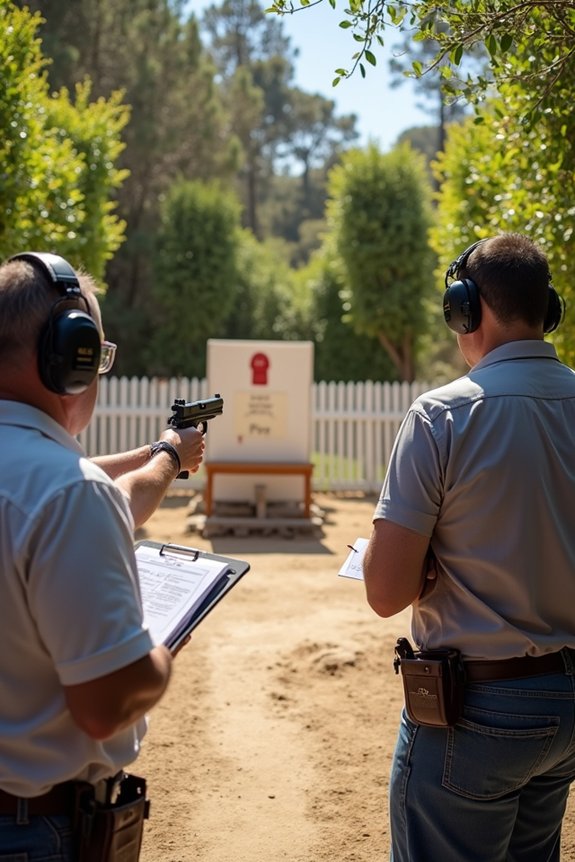
Before you set up your backyard shooting range, you’ll need to figure out what your local government actually allows—and this step matters far more than you might think. Start by contacting your city or county office to learn about local ordinances specific to your area. Many California municipalities prohibit BB gun discharge within city limits, even on private property. You’ll want to ask about permits, discharge restrictions near occupied dwellings or roadways, and transport and storage requirements. Some jurisdictions demand written permission before you can legally shoot. Skip this at your own risk—violating these rules carries real consequences. Getting official approval upfront protects you, your neighbors, and keeps you compliant with public safety standards.
Transport and Store Your Firearm Securely
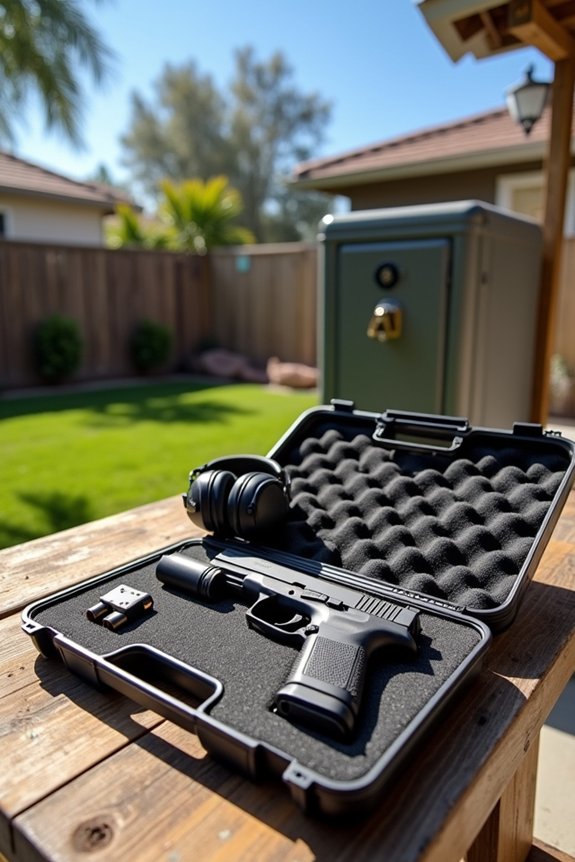
Once you’ve got your local permits squared away, the real responsibility kicks in—keeping your firearm locked down between your home and your backyard range. When transporting your BB gun, keep it unloaded and secured in a locked case. This protects you legally and prevents accidents during transportation. Store your firearm in a locked cabinet or safe on your private property, away from curious hands. Never leave it visible to the public—that’s asking for trouble. Your storage area should be climate-controlled to prevent rust and damage. Check your ammunition separately; it belongs in its own locked container. This approach demonstrates you take safety seriously, which matters to everyone in your community who values responsible shooting.
Understand Criminal Penalties for Illegal Discharge
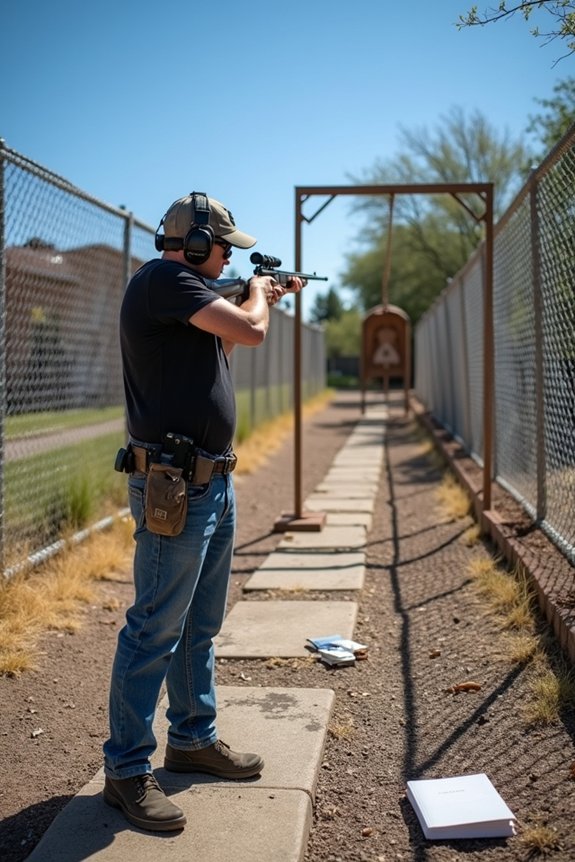
If you discharge a firearm illegally in your backyard, you’re risking misdemeanor battery charges (PC 242) or assault charges (PC 240) if someone gets hurt, plus potential assault with a deadly weapon penalties that can jump to felony status with 2–4 years in prison. Displaying or firing an imitation firearm in a way that causes fear also violates California law, even on your own property, and violating firearm display statutes can result in criminal charges that seriously complicate your future. The penalties are severe—stick to licensed ranges or get proper permits for backyard shooting, because one negligent discharge can land you felony convictions and civil liability that’ll follow you for years.
Misdemeanor Battery Charges
Shooting a gun in your California backyard can quickly turn into a criminal matter if someone gets hurt—and that’s where misdemeanor battery charges come into play. Under California Penal Code 242, misdemeanor battery occurs when you intentionally use force against another person, causing injury. Here’s what matters: even on your private property, if your discharge causes injury to someone, you’re potentially liable. Local ordinance violations compound this problem. You might think you’re safely shooting downrange, but a ricochet or stray shot changes everything. Penalties include up to six months in county jail, fines reaching $1,000, or both. The charge escalates if you acted recklessly or showed negligence. Bottom line? Know your city’s specific regulations before you shoot.
Assault and Deadly Weapon Penalties
While misdemeanor battery covers situations where someone actually gets hurt, assault and assault with a deadly weapon charges come into play when you threaten harm or intentionally point a firearm at someone—even without making contact. Assault with a deadly weapon is a wobbler, meaning prosecutors can charge it as either a misdemeanor or felony depending on circumstances. As a misdemeanor, you’re facing up to one year in county jail. As a felony, you’re looking at two to four years in state prison. Even pointing a BB device at someone counts. That’s why checking local ordinances before shooting matters—they exist to keep everyone safe and keep you out of legal trouble.
Firearm Display Violation Consequences
California’s firearm display laws create real criminal liability that you’ll want to understand before you set up that backyard shooting area. Under Penal Code 17170/16700, it’s unlawful to display any firearm—even a BB gun—in public view. Here’s what matters: even on private property, you can’t just show off your weapon carelessly. Local ordinances often prohibit this entirely within city limits. If you violate these rules, you’re facing potential misdemeanor charges. The law doesn’t care whether your gun’s concealed or loaded; the threatening display itself crosses the line. Check your city’s specific regulations first. Breaking firearm display laws creates criminal liability that complicates your life unnecessarily. I’d recommend keeping everything secured and hidden during transportation and storage too.
Communicate With Neighbors and Document Compliance
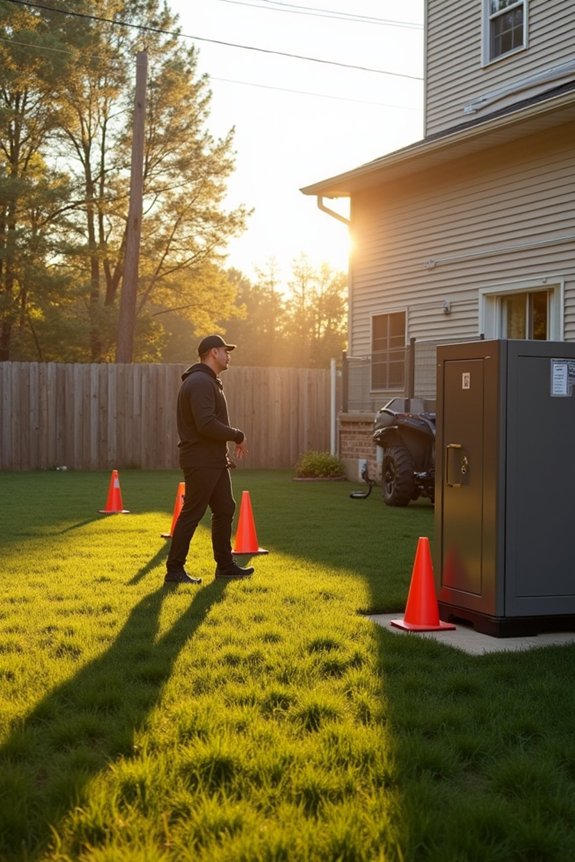
How’s your relationship with the folks next door? I’d honestly give them a heads-up before backyard shooting starts. Unexpected gunfire surprises nobody positively. Let them know your schedule and safety plan. I keep written records of when I shoot, what I’m using, and that my firearm stays unloaded between sessions. This documentation proves you’re serious about safety if questions arise.
Check local ordinances together if they’re interested. Many neighbors appreciate transparency more than secrecy. I’ve found that showing them your designated range setup or explaining why you chose it over public ranges builds confidence. Keep receipts for safety equipment too. When authorities later ask (and they might), you’ve got solid evidence you’re following regulations and respecting your community’s trust.