
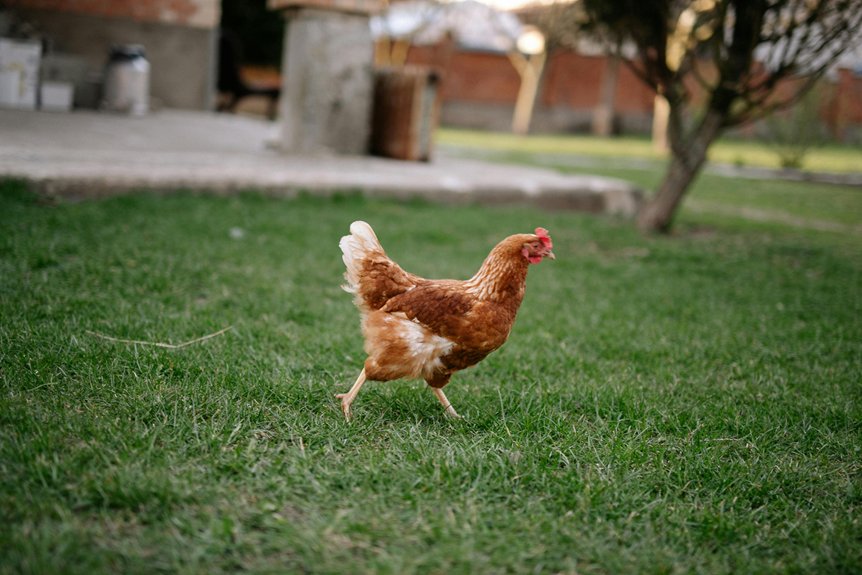
Whether you can keep backyard chickens depends entirely on your local zoning laws and city or county ordinances—not state rules. Your jurisdiction matters: if you’re inside city limits, city codes control; outside them, county regulations apply.
Most areas cap residential flocks at three to six hens, though some ban chickens entirely in residential zones. Roosters are typically prohibited. You’ll likely need a permit and must meet setback requirements (usually 10-50 feet from neighbors).
Contact your local zoning office directly to confirm what’s actually allowed where you live, because the specifics vary widely from one neighborhood to the next.
Is It Legal to Have Backyard Chickens Where You Live?
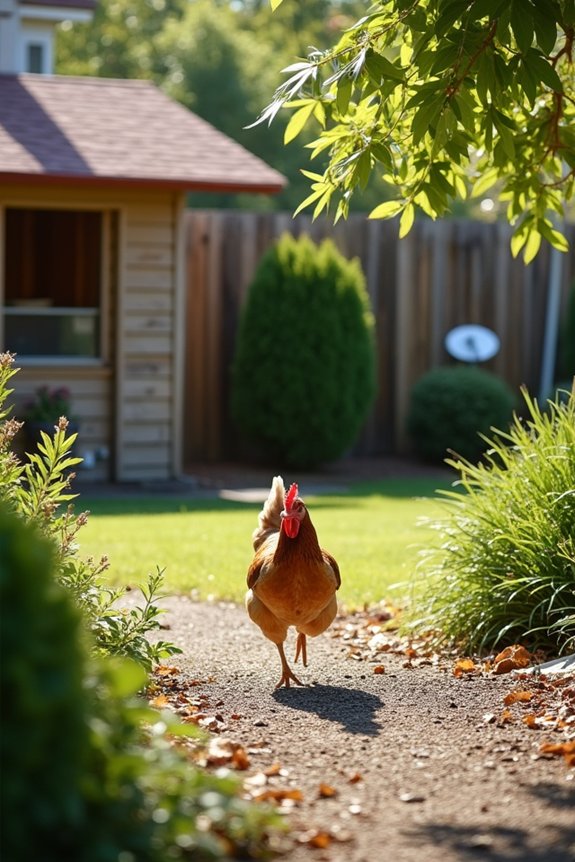
How’s this for a reality check: the legality of keeping backyard chickens isn’t determined by your state—it’s determined by your city or county. Your local ordinances are the boss here, not statewide rules. Before you bring home your first bird, you’ll need to check with your township or city zoning office about specific requirements. Many areas require a permit, and some have rules about coop setbacks from property lines. Others limit how many chickens you can keep based on your property size. Roosters? Often prohibited. You’ll also encounter nuisance and fencing standards that keep your flock contained. Each zoning district might have different rules too. Don’t guess—contact your Code Enforcement office directly for current, exact requirements specific to your address.
How State Laws and Local Ordinances Overlap (And Which Controls)
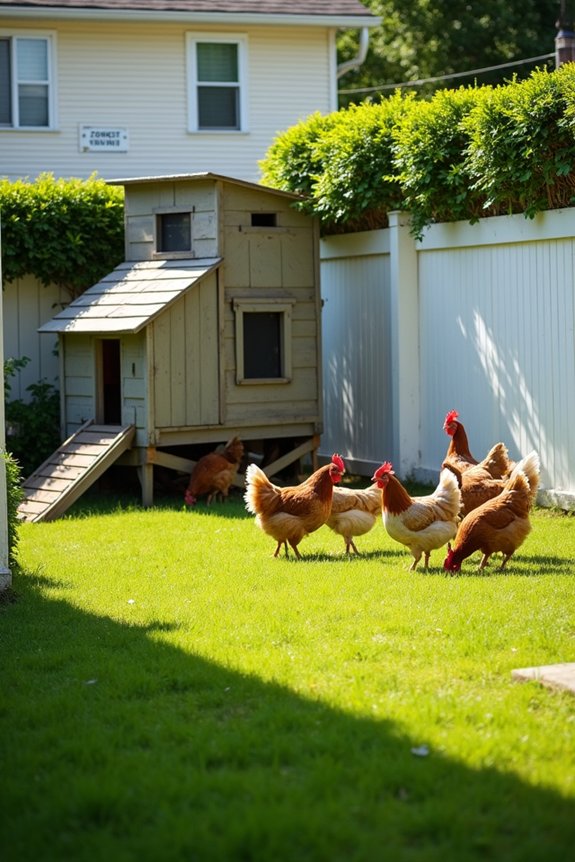
What actually governs whether you can keep chickens—your state’s laws or your city’s rules? Local ordinances control. Your state might stay silent on backyard chickens entirely, but your city code does not. Local zoning and permits are what matter for your flock.
Local ordinances control backyard chickens—not state laws. Check your city codes for the actual rules governing your flock.
Here’s what you’re navigating:
- Your state sets a baseline (or nothing at all)
- Your city layers on specific rules about coop setbacks and lot sizes
- Your county might add livestock restrictions
- Your neighborhood could have additional population ownership limits
Maryland requires registration, but local jurisdictions set the real boundaries. Oklahoma City caps you at six hens. Pennsylvania leaves everything to cities and counties. Check your specific city codes because that’s where the actual rules live for your backyard operation.
Identify Your Jurisdiction: City vs. County Rules
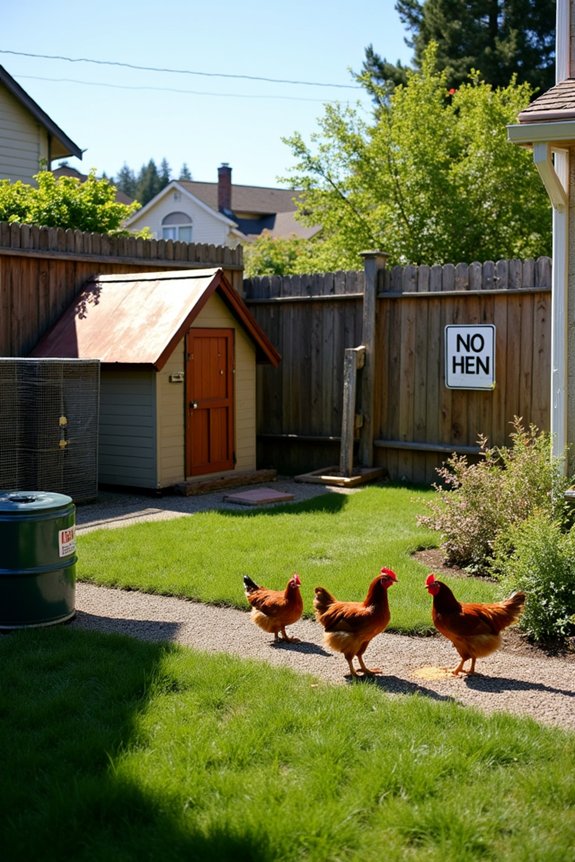
Now that you understand how state laws set the stage but don’t actually run the show, you need to figure out which specific rules apply to your address.
Here’s the thing: if you live inside city limits, your city rules trump everything else. They’ll dictate how many backyard chickens you can keep, whether roosters are allowed, and required coop setbacks from property lines. You might need permits or registrations too.
Live outside city limits? Then county zoning takes over. County livestock regulations often focus on property size and nuisance concerns rather than specific chicken counts.
The move is simple: contact your local town hall, zoning office, or code enforcement. They’ll tell you exactly what’s permitted at your address. Don’t guess—ask.
Do You Need a Permit? What About Registration?

The permit question doesn’t have one answer—it depends entirely on where you live. You’ll find that some jurisdictions let you keep backyard chickens freely, while others require formal approval. Here’s what you might encounter:
- No permit needed—you’re free to start your flock immediately
- Agricultural or livestock permit required from your zoning office
- Registration or licensing mandatory through your county health department
- Conditions attached to approval (coop distance from property lines, maximum bird count, rooster bans)
Since local ordinances vary dramatically, you can’t assume your neighbor’s rules match yours. That’s why I’d strongly recommend contacting your township or city zoning office directly. They’ll clarify exactly what compliance steps you need before bringing home your first chickens. Getting this right upfront saves headaches later.
How Many Backyard Chickens Can You Keep?
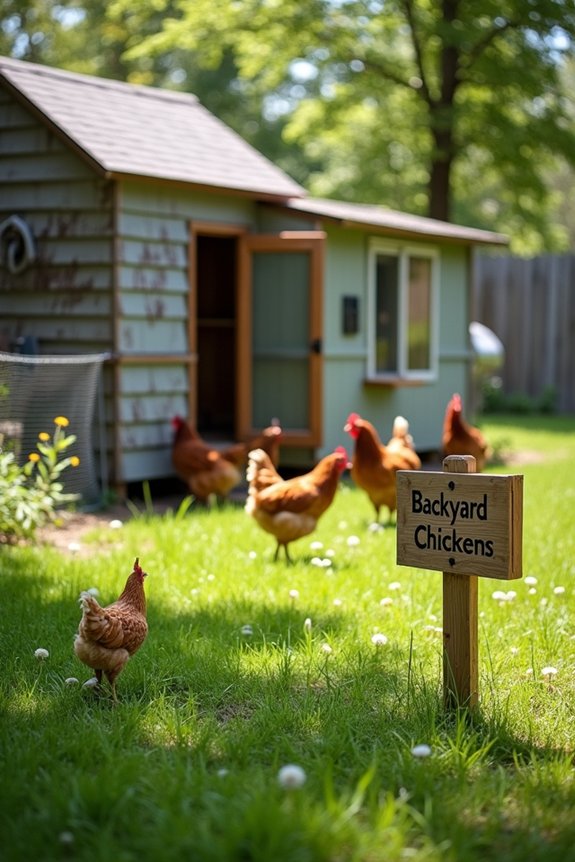
The number of chickens you’re allowed to keep depends entirely on your local zoning rules, property size, and what your city or county permits—there’s no single nationwide limit. Most residential areas cap you at somewhere between 3 and 6 hens on smaller lots, though you might keep more if you’ve got acreage or live in an agricultural zone. You’ll also need to check setback requirements (how far your coop must sit from property lines and houses) and minimum coop sizes, since many jurisdictions tie higher chicken counts to these specific measurements.
Property Size Requirements
How much land you’ve got directly shapes how many chickens you’re allowed to keep—it’s one of the biggest factors in local chicken ordinances. Your lot size determines everything from maximum hens to setback requirements that protect neighbors.
Here’s what you’ll typically encounter:
- 0.25-acre minimum for keeping multiple birds in residential zones
- 4-6 hen cap on smaller lots without rooster permission
- Agricultural zoning allowing significantly larger flocks than standard residential areas
- Permit requirements triggered when you exceed your district’s limits
Different zoning districts have wildly different rules. Single-family residential zones are stricter than agricultural zones. I’d recommend measuring your property and checking your local ordinances before getting started. Knowing your exact lot size prevents costly violations down the road.
Local Quantity Limits
Most places won’t let you keep as many chickens as you’d like—your city or county ordinance sets the actual limit, not your state. I’ve found that quantity limits typically range from 2–4 hens in stricter areas to 6–8 or more in rural zones. What determines your number? Local ordinances consider your zonal lot size, setback requirements from property lines, and whether you’re in a residential neighborhood. Roosters are usually prohibited outright because of neighbor nuisance concerns. Maryland and Pennsylvania jurisdictions, for example, tie their rules directly to these factors. Before you bring home your backyard chickens, grab your local ordinance and read it carefully. Your city clerk or county extension office can clarify exactly how many you’re allowed.
Zoning And Setback Rules
Once you’ve checked your city or county’s chicken limits, you’ll need to review the zoning rules that make those limits possible—and that’s where setback requirements come in.
Setback requirements determine where you can physically place your coop on your property. Here’s what you’re typically looking at:
- Distance from property lines – usually 5 to 25 feet, depending on your jurisdiction
- Distance from neighboring homes – often 10 to 50 feet to minimize noise and odor concerns
- Minimum lot size – some areas require a quarter-acre or more before chickens are permitted
- Coop placement zones – restrictions on backyard versus front yard locations
Your permit requirements and neighborhood restrictions vary significantly between city and unincorporated county areas. Before building or buying a coop, contact your local township or building office directly. They’ll confirm exactly what setback distances apply to your specific address and property size.
Rooster Bans and Housing Requirements
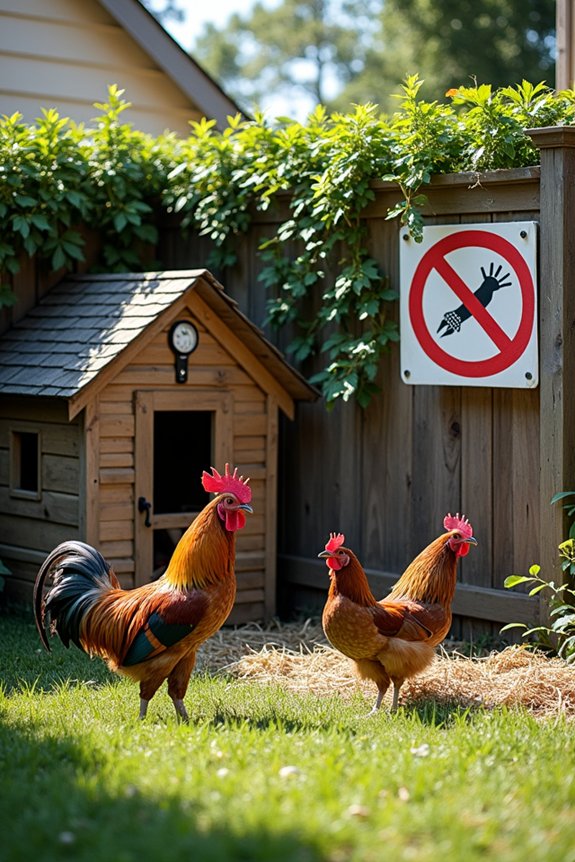
Before you bring home your first flock, you’ll need to understand that most areas ban roosters entirely within city limits, even when hens are perfectly legal—mainly because their early morning crowing doesn’t sit well with neighbors. Your coop’s location matters just as much: you’ll typically need to maintain specific setback distances from property lines and neighboring homes, with roosters requiring even stricter placement rules if they’re allowed at all. Meeting housing security standards means building sturdy coops that keep predators out and your birds contained, so they won’t escape and create additional nuisance complaints.
Roosters: Restrictions And Prohibitions
Why are roosters treated so differently from hens in backyard chicken regulations? Most jurisdictions recognize that roosters create noise restrictions that hens simply don’t. Here’s what you’re likely facing:
- Outright bans in residential zones, regardless of your lot size
- Permits required only for agricultural or larger properties (typically 1+ acres)
- Mandatory enclosure distance requirements—often 50-150 feet from neighbors’ property lines
- Secure housing mandates keeping roosters confined during dawn hours
Your zoning laws probably prohibit roosters entirely unless you’ve got substantial acreage. Even where permits exist, you’ll navigate strict enclosure distance rules and housing requirements. Before getting that rooster you’re considering, contact your local code enforcement office directly. They’ll tell you exactly what’s allowed where you live.
Coop Design And Setback Standards
Since rooster bans eliminate that concern for most backyard chicken keepers, you’ll want to focus your energy on meeting your local coop design and setback requirements instead. Your municipality likely specifies minimum distances from property lines—sometimes 5 to 50 feet or more—and from neighbors’ houses. These setback rules exist to maintain peaceful coexistence in residential areas. Your coop itself must be secure and predator-proof, typically positioned in your rear yard. You’ll need a sturdy enclosure or fence preventing your backyard chickens from wandering onto neighboring properties. Many jurisdictions also cap coop size and hen counts based on lot dimensions. Check your local ordinances carefully; they’re your roadmap to keeping healthy, legal birds while respecting community standards.
Housing Security And Containment Requirements
Once you’ve confirmed that roosters are banned in your area (and they usually are), your real focus shifts to building a coop that’ll actually keep your chickens contained and safe.
You’ll need to invest in proper housing infrastructure to protect your flock and respect your neighbors:
- A predator-proof coop with secure latches and hardware cloth (not chicken wire)
- An enclosed run attached to the coop for daytime roaming
- Setback placement—typically 5–50 feet from property lines and neighboring dwellings
- Rear-yard positioning to keep your operation out of sight
These requirements exist because chickens naturally wander, and an escaped flock creates real neighborhood friction. Your enclosure keeps birds contained on your property while protecting them from foxes, raccoons, and hawks. Think of it as building a secure home, not just a pen.
Coop Setback Distances and Property Line Requirements
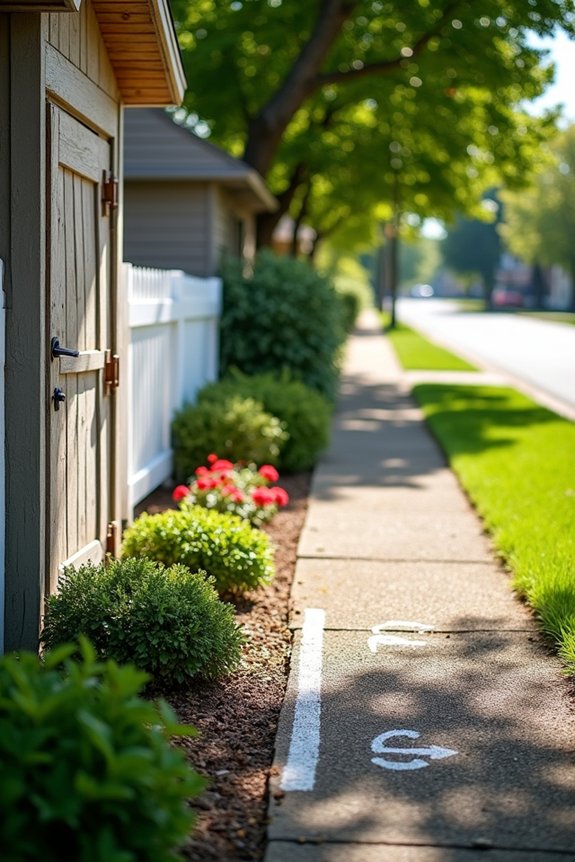
Where you place your chicken coop on your property matters just as much as what you put inside it. Your local zoning ordinances likely spell out specific setback distances—the required space between your coop and property lines. These typically range from 5 to 50 feet depending on where you live. Oklahoma City requires 5 feet from side lines and 10 feet from rear lines, while Bartlesville demands 50 feet from neighboring residences.
Most jurisdictions want your coop tucked in the backyard, away from public view and lot lines. Some areas require neighbor notification or even written consent before you build. Check your local codes carefully—they’re designed to keep everyone happy and prevent disputes before they start.
What Makes Backyard Chickens a Nuisance (And How to Avoid It)
Even well-intentioned chicken keepers can run into trouble if they’re not careful about noise and odor—two of the biggest complaints neighbors lodge against backyard flocks. You’ll want to skip roosters entirely (they’re often banned anyway), keep your coop at least 10-15 feet from property lines as many codes require, and clean bedding twice weekly to prevent the ammonia smell that drifts. Secure enclosures and regular maintenance aren’t just good neighborly practice; they’re what keep code enforcement from showing up at your door.
Noise And Odor Control
Why do some neighbors embrace backyard chickens while others file complaints? The difference often comes down to noise and odor control. Roosters crow loudly, and multiple hens create constant chatter that travels across property lines. Uncleaned coops smell terrible—droppings and wet bedding breed flies and attract complaints fast.
You can prevent nuisance problems by:
- Installing soundproofing materials inside your coop to muffle rooster calls
- Using odor-control bedding like pine shavings or diatomaceous earth
- Maintaining proper setbacks (typically 10-15 feet from neighbors’ homes)
- Cleaning litter boxes daily and securing waste in sealed containers
Regular coop management matters here. Ventilation prevents ammonia buildup. Prompt waste removal stops fly breeding. When you handle these details seriously, your neighbors stay happy—and you keep your flock.
Setback And Containment Standards
Beyond keeping your coop clean and quiet, you’ll need to follow your local setback and containment rules—and they’re stricter than you might think. Most jurisdictions require your coop distance from property lines to range anywhere from 5 to 50 feet, depending on where you live. That’s why checking urban poultry regulations early matters so much.
Containment is equally important. You’ll need a secure fenced run that’s predator-proof and clearly prevents birds from roaming free. Many codes mandate 4–10 square feet per bird inside the coop itself, with larger space in your fenced run. Violating these standards—letting chickens escape or positioning your coop too close to neighbors—triggers nuisance complaints and potential fines. Getting these details right protects both your flock and your community standing.
How to Apply for a Chicken Permit in Your Area
Once you’ve confirmed that backyard chickens are allowed where you live, here’s what you’ll need to do next: apply for a permit. You’re joining a community of chicken keepers, so you’re not alone in navigating this. Here’s your action plan:
Once you’ve confirmed backyard chickens are allowed, the next step is applying for a permit to join your local chicken-keeping community.
- Contact your local zoning office or city planning department to request a chickens permit application
- Review your local ordinances carefully, noting setback distance requirements and minimum lot size for your property
- Gather required documents: site plan, proof of setback distance compliance, and neighbor notification forms
- Submit your permit application with applicable fees and schedule an inspection
Each jurisdiction differs, so call ahead. Ask specifically about setback distance rules and lot size minimums. This groundwork helps you follow regulations properly and keep your chicken plans on track.
Where to Look Up Your City or County’s Exact Chicken Rules
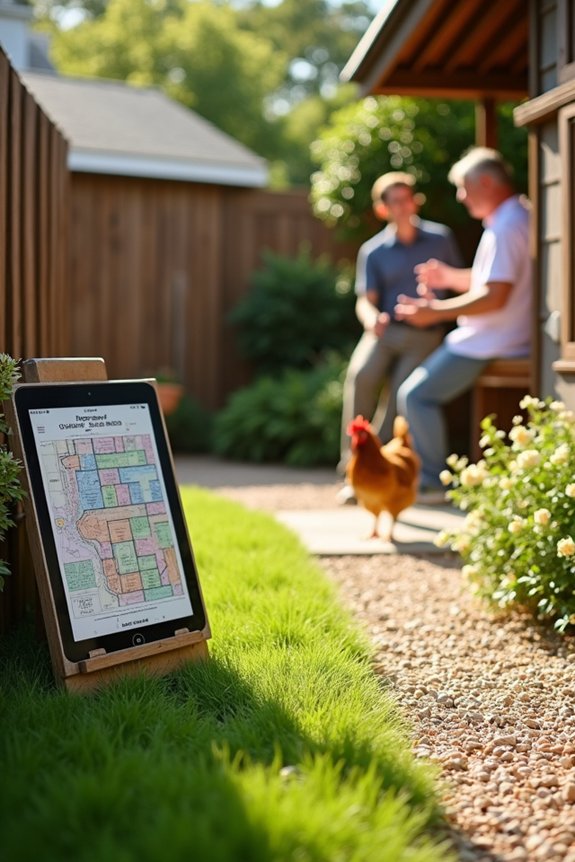
Since chicken rules vary wildly depending on where you live, you’ll need to dig into your specific locality’s code rather than relying on any statewide standard. Start by visiting your city or county’s official website and searching for terms like “chickens,” “poultry regulations,” or “livestock.” You’ll find their local zoning ordinances and city ordinances listed there. If you’re in an unincorporated area, check your county code instead. Call your township or city clerk’s office directly—they can point you toward the exact permits and setback requirements you need. This step matters. Your backyard chickens project depends on understanding these specific rules before you build anything.
Common Restrictions That Surprise New Chicken Keepers
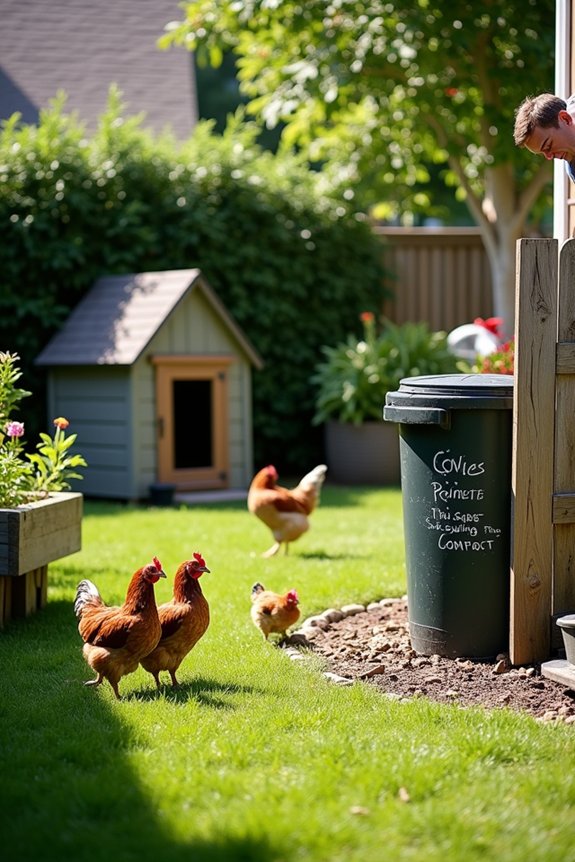
Most new chicken keepers walk into this hobby assuming there’s a simple statewide rule they can follow, but that’s where things get tricky—your state allows chickens, yet your specific city or county might heavily restrict them.
Here’s what often catches people off guard:
- Permit requirements – Many jurisdictions demand you get approval before building that coop.
- Setback distances – Your coop can’t sit five feet from your neighbor’s property line; local ordinances typically demand 10–25 feet minimum.
- Maximum flock size – Zoning restrictions often cap you at three to six birds, depending on lot size.
- Nuisance and sanitation rules – Clean coops aren’t optional; predator-proof runs and waste management are enforced conditions.
These restrictions exist for good reasons, protecting your neighborhood’s peace and health.
Ready to Raise Chickens? Next Steps After Confirming Local Rules
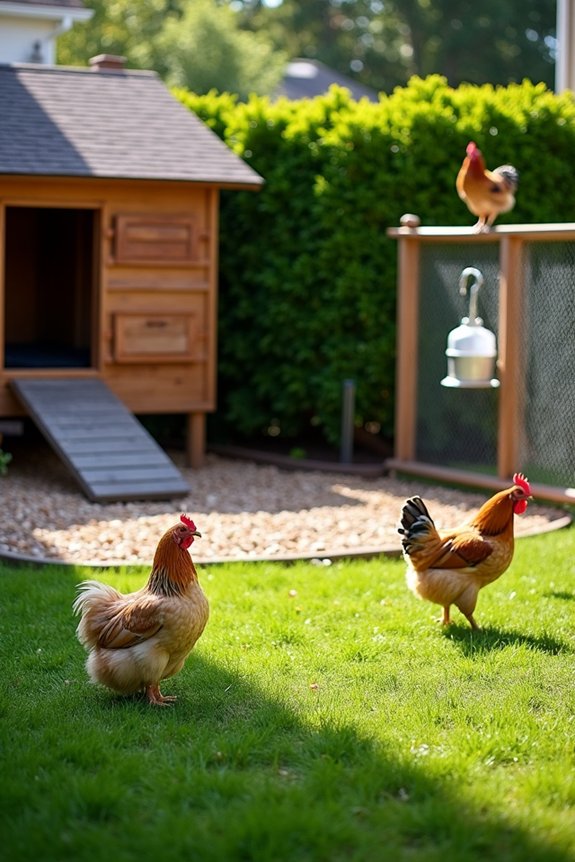
You’ve confirmed that your area allows backyard chickens—now the real work begins. Contact your zoning office directly to understand specific permits and setback requirements from property lines. They’ll clarify exactly how many birds you can keep and whether roosters are permitted in your zone.
Next, review your local ordinances thoroughly. Rules about coop standards vary substantially between townships, covering everything from ventilation to predator protection. Some areas mandate minimum distances from neighbors’ windows or lot boundaries.
Get any required registration or permits before building your coop. Ask about nuisance regulations too—noise and odor complaints can create problems fast. Once you’ve got official approval and understand every requirement, you’re ready to start planning your actual setup. Document everything the zoning office tells you.