

Your bathroom’s basically an all-you-can-eat buffet for ants. They’re drawn to moisture from leaks and dripping fixtures, food residues like soap and toothpaste, and the warm humidity near your pipes. Entry points? Cracks in tile grout, gaps around windows, and spaces beside vents give them easy highways inside. Once they’re in, they leave pheromone trails that guide more ants to your bathroom. You can reclaim your space by fixing leaks, cleaning surfaces, and sealing entry points—though you’ll want to know which ant species you’re dealing with.
What Attracts Ants to Your Bathroom
Ever wondered why you’re suddenly spotting ants marching across your bathroom floor? Your bathroom is basically an all-you-can-eat buffet for ants. Moisture is the main draw—leaks, dripping fixtures, and standing water attract them like beacons. Beyond water sources, ants find entry points everywhere: tiny gaps around windows, cracks in tile grout, and open vents give them easy access. Once inside, they discover bathroom residues like soap, shampoo, and toothpaste that keep them fed. The warm, humid areas behind walls near pipes provide ideal nesting spots. Identifying what attracts these invaders helps you address the problem effectively and reclaim your bathroom.
How Ants Get Inside
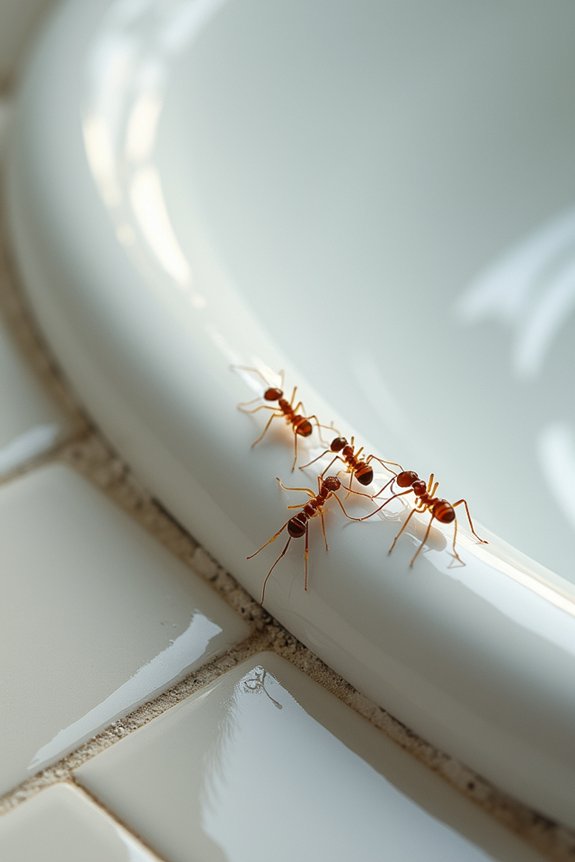
Just how are these tiny invaders finding their way into your bathroom in the first place? Ants discover entry points you’ve probably never noticed. They slip through hairline cracks in tile, flooring, and walls. Those tiny gaps around your windows, doors, and vents? Perfect highways for ant scouts. Your plumbing becomes their gateway too—they navigate around pipes and through spaces where plumbing outlets meet walls. Cracked grout lines and hidden voids offer both access routes and shelter. Here’s the thing: moisture acts like a beacon. Dripping faucets, leaky pipes, and standing water create trails ants follow straight inside. Damp areas behind walls and under sinks become their nesting headquarters. Once one ant finds your bathroom’s moisture and shelter, it’ll recruit others. That’s when you have a serious problem.
Common Bathroom Ant Species
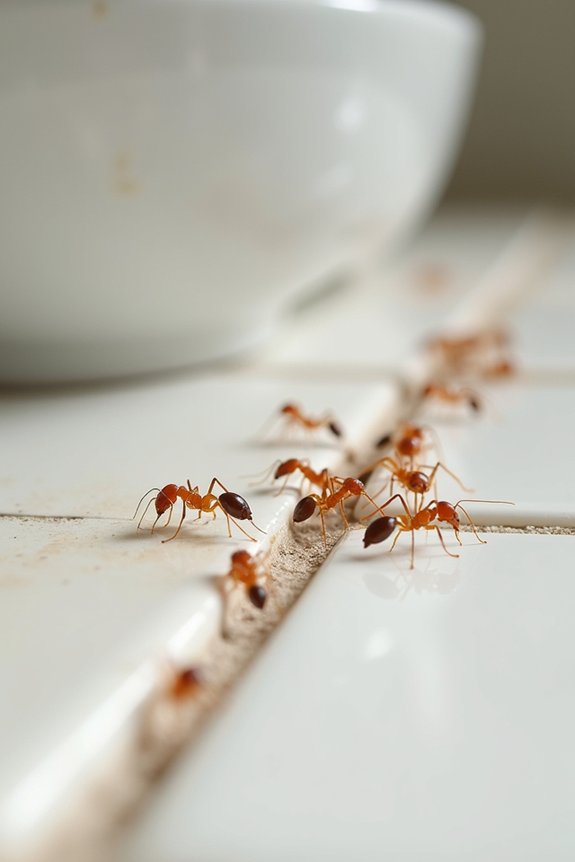
Now that you know how ants’re getting into your bathroom, let’s identify which species you’re actually dealing with. Different bathroom ants tell you something important about what’s attracting them.
Here’s what you’ll commonly find:
- Carpenter ants target damp or rotting wood near leaky fixtures, creating nests behind walls that can cause real damage over time
- Ghost ants hide in wall voids and under sinks, drawn to moisture and scent in high-humidity spots
- Odorous house ants cluster behind baseboards near plumbing leaks, attracted to moisture and sugary residues
The species you’re seeing matters because each one signals different problems. Carpenter ants mean water damage potential. Ghost ants indicate moisture issues. Odorous house ants suggest plumbing leaks or spills. Identifying your specific bathroom ants helps you target the real problem—usually moisture or water sources feeding their colonies.
DIY Treatments That Work
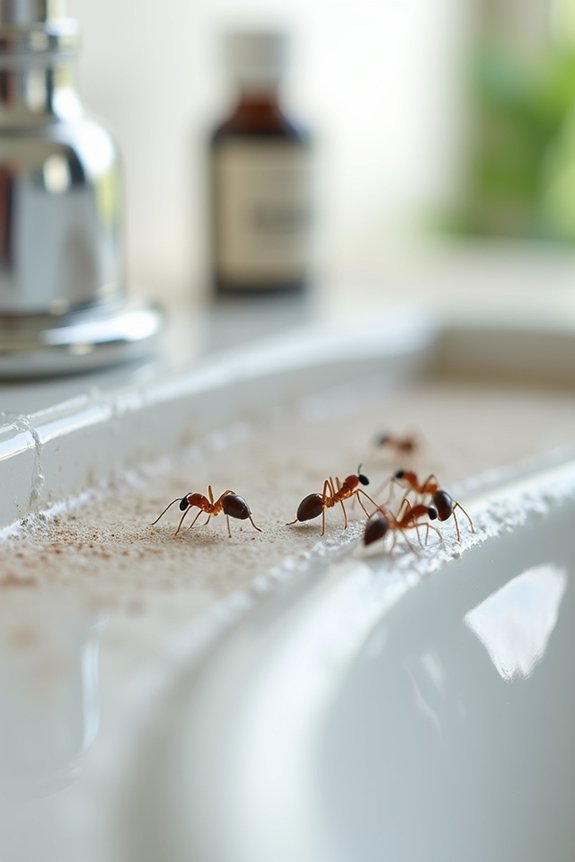
Once you’ve identified your bathroom ant problem, you can tackle smaller infestations yourself with some straightforward treatments. Start by cleaning surfaces thoroughly to eliminate pheromone trails that guide ants to resources. I’d recommend wiping down sinks and shower areas regularly, plus keeping drains covered.
Next, address moisture issues. Fix any leaks promptly since bathroom ants need water to survive. This removes half their motivation for staying.
For actual pest control, try Terro gel or sugar-borax bait traps near ant trails. These attract workers who carry poison back to the nest, eliminating the colony.
Finally, seal entry points around tiles, windows, doors, and pipes. This prevents reinforcements from arriving.
These DIY treatments work well for small infestations. Persistent problems? That’s when professionals become your best option.
When to Call a Pest Control Professional
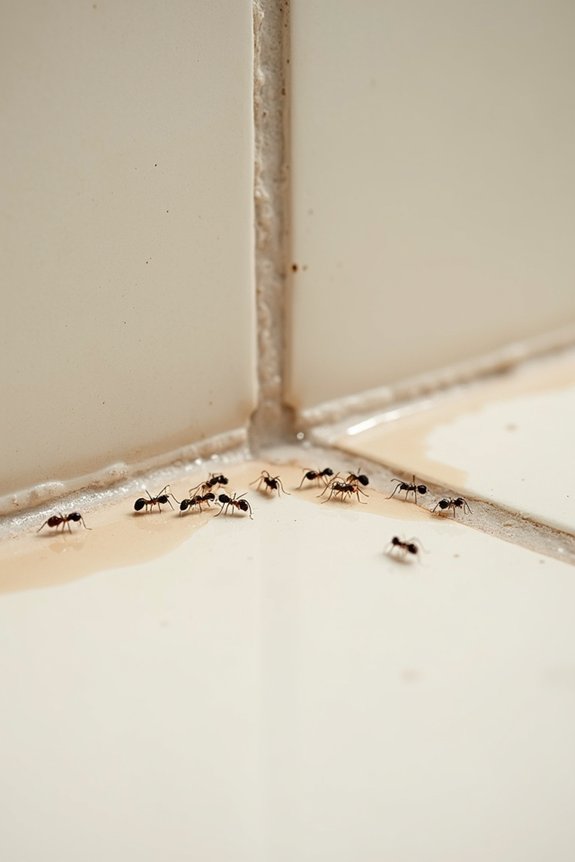
If you’re still seeing ants after cleaning, reducing moisture, and sealing entry points, you likely have a nest in a location you can’t access—such as inside your walls or behind baseboards. A professional pest control company like Orkin can locate those hidden nests and moisture sources, including plumbing leaks, that continue to fuel your ant problem. They’ll develop a treatment plan and prevention strategy that stops the cycle rather than just addressing visible activity.
Signs Of Severe Infestation
What’s the difference between a manageable ant problem and one that’s spiraled out of control? If you’re seeing these warning signs, you’ve likely got a serious situation:
- Large numbers of ants skating across counters and tiles in coordinated patterns
- Frequent sightings in multiple bathroom areas, especially near standing water and behind cabinets
- Visible nesting in wall voids or behind baseboards indicating an established colony
When ants keep returning despite your cleaning efforts and moisture control, they’ve built foraging trails into your bathroom. Check for persistent leaks and damp conditions—these scent and moisture attractants fuel infestation severity. Sudden swarms of winged ants signal a growing colony nearby. If the problem persists after sealing cracks and removing attractants, call a professional. They’ll assess whether nesting exists behind walls or under floors, requiring specialized treatment.
Professional Identification And Treatment
Calling in a professional pest control service makes sense once you’ve tried the basic fixes—cleaning, sealing cracks, controlling moisture—and the ants keep coming back. Professionals excel at identifying hidden problems you can’t spot yourself. They’ll locate precise entry points, uncover moisture sources, and find nests tucked behind baseboards or inside wall voids. Their treatment approach targets active colonies directly while addressing root causes. They’ll inspect for leaks creating the damp conditions ants love and recommend moisture control strategies tailored to your bathroom. Most companies offer free consultations to evaluate your situation. Beyond immediate treatment, they’ll seal entry points and implement long-term prevention plans, significantly reducing re-infestation risk and providing lasting peace of mind.
Long-Term Prevention Strategies
Once you’ve tackled the quick fixes—cleaning up crumbs, sealing obvious cracks, running your exhaust fan—you’ve bought yourself some time, but you’re not done yet. Real prevention means addressing what’s actually drawing ants into your bathroom: moisture and hidden entry points.
Here’s your long-term plan:
- Fix leaky pipes and faucets immediately, since standing water creates ideal ant habitats behind walls
- Use dehumidifiers or exhaust fans consistently to keep humidity below 50%, making your bathroom unattractive to moisture-loving species
- Seal every entry point—grout cracks, window frames, door gaps, and pipe penetrations—preventing repeated invasions
You’ll also need to monitor for hidden nests behind baseboards and under sinks regularly. If ants keep returning despite your efforts, that’s when calling professionals makes sense. They’ll locate what you’re missing.
Keeping Ants Out for Good
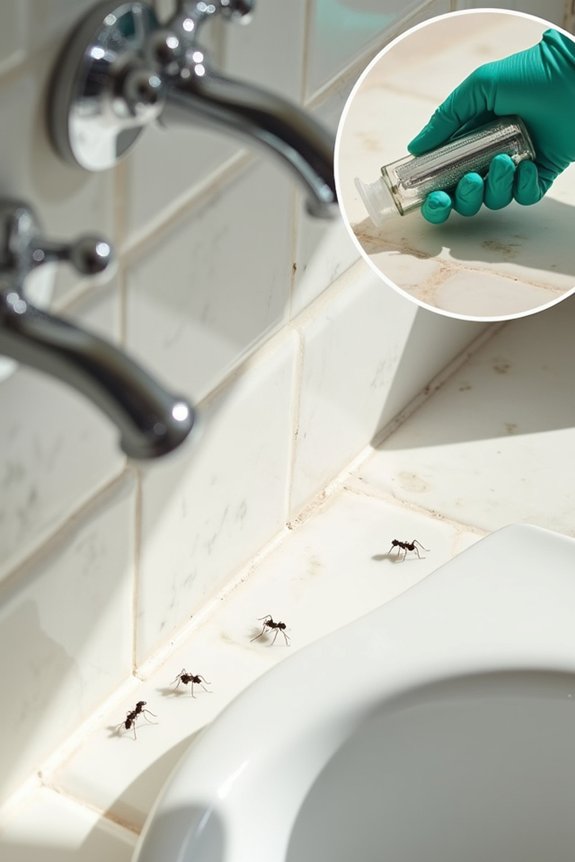
Now that you’ve dealt with the ants currently invading your bathroom, here’s the truth: they’ll be back unless you tackle the root causes. Your main enemy? Bathroom moisture. Ants need water to survive, and your damp bathroom is basically a five-star resort for them.
Start by fixing leaks around pipes and under sinks. Run your exhaust fan during and after showers. Wipe down wet surfaces daily. Next, hunt down entry points. Seal cracks in tile grout, around windows, and near doors with caulk. Don’t forget plumbing access points either.
Finally, keep baits and traps handy as backup. When you see stragglers, deploy them immediately. This combination—moisture reduction plus sealed entry points—keeps your bathroom ant-free long-term.