

First, pick a spot away from fans, windows, and air vents—they’ll mess with your detector’s sensitivity. Mount it 4–12 inches below the ceiling or centered on it for best coverage. Use screws with proper anchors; they’re more reliable than adhesive backing. Press the test button and listen for that loud, steady alarm. Finally, test it monthly and swap batteries yearly to keep it working. There’s more technique to nailing this installation if you want the full breakdown.
Position Your Detector Away From Drafts and Fans
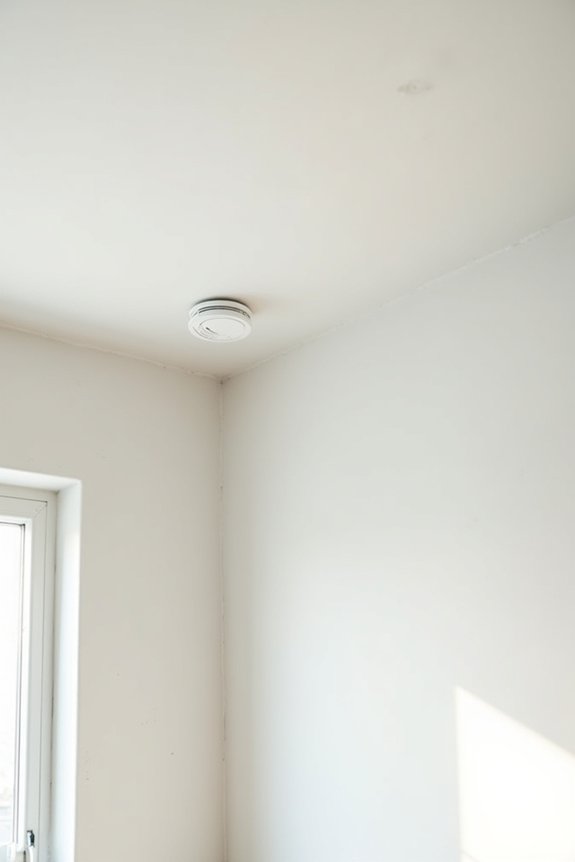
Where should you actually put that smoke detector once you’ve got it in your hands? I’d place it away from anything that moves air around your bedroom. Keep it at least 4–12 inches from where your ceiling meets the wall, and definitely avoid mounting it near windows, doors, or air vents. Fans are smoke detector placement enemies—they’ll push smoke away or trigger false alarms, which defeats the whole purpose.
For ceiling mounts, position your detector away from these airflow sources entirely. If you’re doing a wall mount instead, keep it 4–12 inches below the ceiling to minimize draft interference. Once you’ve installed it, test it regularly and watch for any airflow interference that might affect sensitivity. This straightforward approach to smoke detector placement keeps your bedroom properly protected.
Mount 4–12 Inches Below the Ceiling or Centered on It
At what exact height should you mount that detector? Place it 4–12 inches below the ceiling on a wall, or centered on the ceiling itself. This matters because it avoids dead air space where smoke lingers without triggering your bedroom smoke alarm. Wall mounting distance stays within that 4–12 inch range on inside walls, keeping away from corners where drafts interfere. Ceiling mounting center placement maximizes coverage across your room. For pitched ceilings, maintain the 3-foot guideline from the apex while respecting those measurements. Following NFPA guidelines keeps your smoke detector placement working reliably. These installation best practices make smoke alarm testing easier too. Getting this height right prevents false alarms and catches real threats when it counts.
Install With Screws or Adhesive Backing
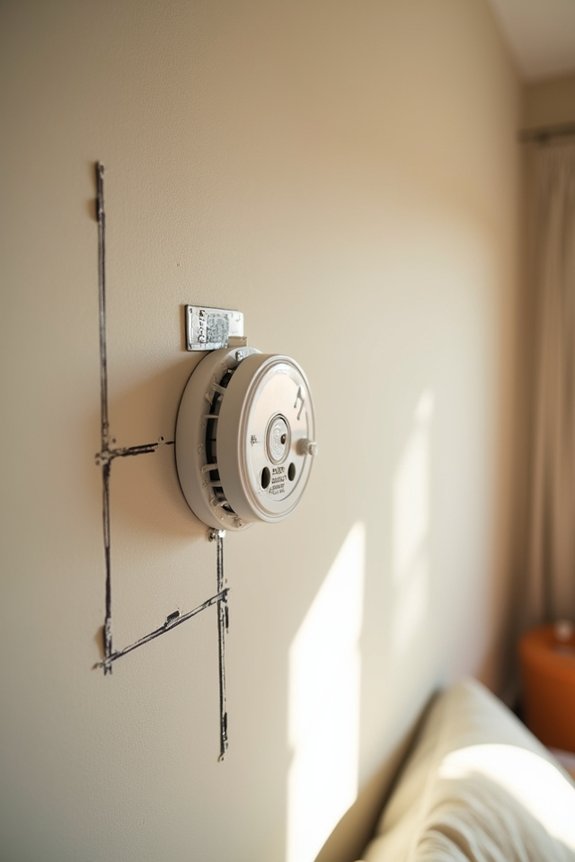
Once you’ve figured out that perfect spot 4–12 inches below your ceiling, you’ll need to actually secure the detector so it stays put. I’d recommend using screws with proper wall or ceiling anchors matched to your surface material—whether that’s drywall, plaster, or something else. Drive those screws firmly so your smoke detector sits flush against the mounting plate without gaps. If screws aren’t your thing, manufacturer-approved adhesive backing works too, though it’s less reliable against vibration and temperature swings. Either way, you’re creating a stable installation that won’t budge. After mounting, hit that test button to confirm everything’s working properly and your mounting method hasn’t compromised the detector’s sensitivity. A solid installation means real protection for your bedroom.
Press the Test Button and Listen for the Alarm
Now that your smoke detector’s mounted securely, it’s time to verify it’ll actually do its job when you need it. Press and hold the test button for several seconds. You’re listening for a loud, continuous alarm sound—that’s what you want to hear.
Here’s what to expect during functionality testing:
- A loud, steady alarm indicates your detector’s working properly
- A chirp or silence means you need fresh batteries immediately
- No sound after battery replacement suggests professional maintenance is needed
Before testing, let your bedroom occupants know what’s happening so nobody panics. According to NFPA guidelines, you should test monthly. This simple habit keeps your installation location effective and provides early warning capability when it matters most. Regular testing builds confidence in your home’s safety.
Test Monthly and Replace Batteries Annually
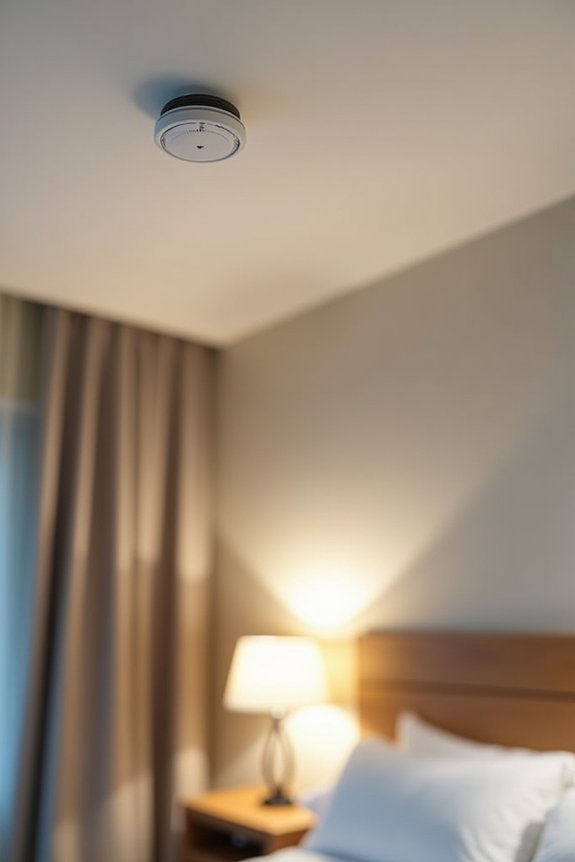
Why does your smoke detector need regular attention after installation? Because a detector that sits untested is basically decoration. I test mine monthly by pressing and holding the test button for several seconds—it’s quick and satisfying when that alarm blares. For your bedroom smoke detector with replaceable batteries, swap them annually or whenever you hear those annoying low-battery beeps. Follow your manufacturer’s instructions for the correct battery type. If you’ve got one of those 10-year non-replaceable batteries, mark your calendar to replace the entire unit after a decade. Build this maintenance routine into your seasonal home safety checks. Consistent testing keeps your detector ready to protect your sleeping area when you need it most. It’s one of those habits that matters.