
Your fence’s total cost depends on five key factors working together. First, material choice matters—chain link runs $8–$40 per foot, while vinyl costs $17–$38. Second, your perimeter length drives the price; a 200-foot fence shows real differences between styles. Third, height and design upgrades (think 8 feet instead of 6) add 25–35% to costs. Fourth, terrain challenges like slopes or rocks mean extra labor. Finally, regional labor rates ($22–$30 hourly), permits, and site conditions push expenses higher than base estimates suggest.
Material Costs: From Budget Chain Link to Premium Vinyl
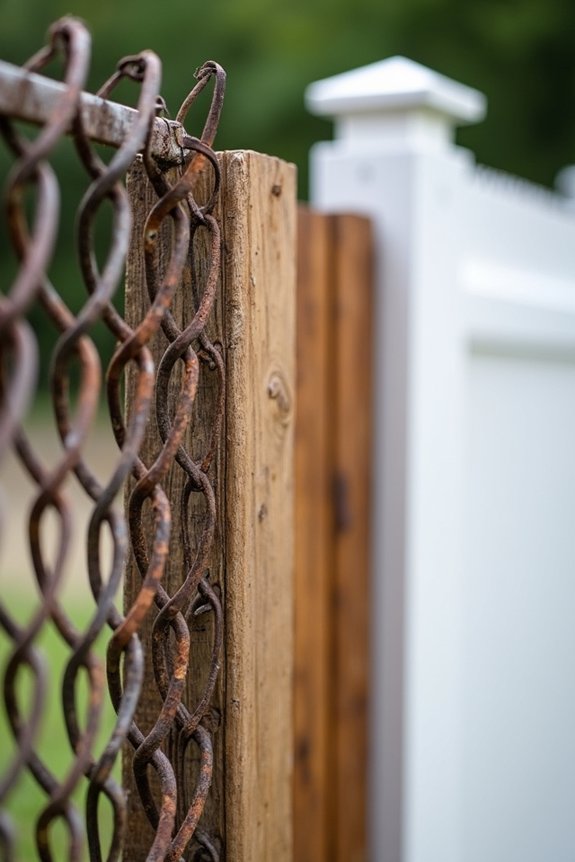
When you’re pricing out a backyard fence, the material you choose will hit your wallet differently—and that’s where we’ll start, because honestly, it’s the biggest factor shaping your total cost. Chain link runs $8–$40 per linear foot, making it your most budget-friendly option. Wood fence costs $10–$45 per linear foot depending on whether you choose treated pine or premium cedar. Vinyl sits in the middle at $17–$38 per linear foot, offering lower maintenance costs despite higher initial expenses. Composite fencing tops out around $28–$58 per linear foot but delivers serious durability. Here’s the thing: your upfront material costs directly influence long-term maintenance expenses. Cheaper initial costs sometimes mean more maintenance headaches down the road, while premium options require less upkeep over time.
Calculating Your Perimeter: How Linear Footage Drives Price
Ever wonder why two fence quotes for similar yards come in so differently? Your perimeter length is the main culprit. Here’s the deal: contractors charge you a cost per foot based on your linear footage, and that number drives everything else.
Let’s say you’re comparing a privacy fence versus a rail fence. Privacy fences run $15–$35 per foot, while rail fences cost $12–$25 per foot. On a 200-foot perimeter, that’s a $600 difference right there. Add in your fence height, terrain impact, and labor costs, and the numbers increase.
Vinyl fences ($17–$38 per foot) cost more upfront than wood, but fence materials matter less than knowing your exact perimeter. Measure twice, calculate your linear footage, then multiply. That’s your baseline.
Going Taller or Fancier: Design Choices That Add Up
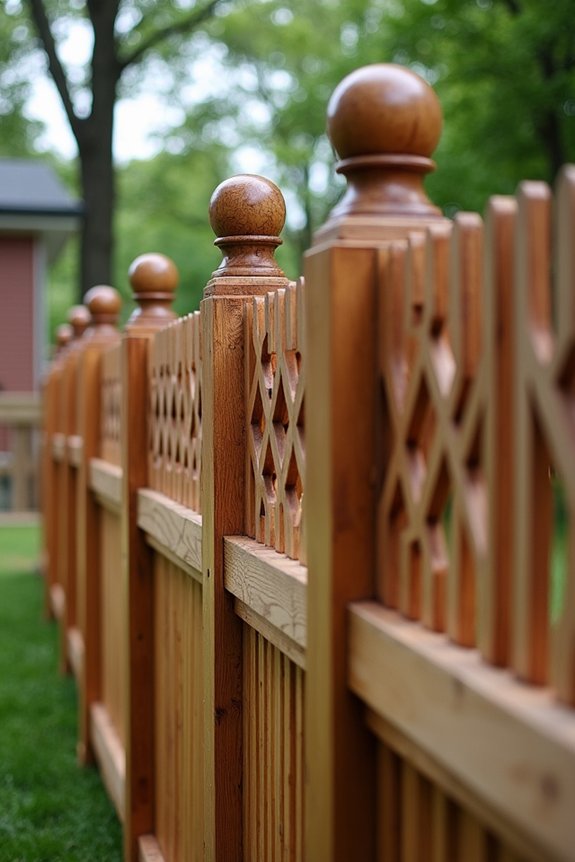
How much does it actually cost to upgrade from a basic fence to something with more personality? Your design choices dramatically reshape your total project price, and I’ll walk you through what matters most.
Your design choices dramatically reshape your total fence project price—let’s explore what matters most.
When you increase fence height from 6 to 8 feet, expect a 25%–35% budget bump. Switching materials makes an even bigger impact—vinyl or ornamental iron costs far more than chain link or treated pine. Then there’s the fun stuff:
- Gates run $400–$1,200 each (automatic versions exceed $2,000)
- Post caps add decorative flair and expenses
- Custom designs require precision labor and specialty materials
- Paint or stain increases per-foot costs with ongoing maintenance needs
- Ornamental toppers enhance standard fencing significantly
These upgrades aren’t wasteful; they’re investments in a fence that fits your home’s character and your neighborhood’s standards.
Why Some Yards Cost More to Fence: Labor and Site Challenges
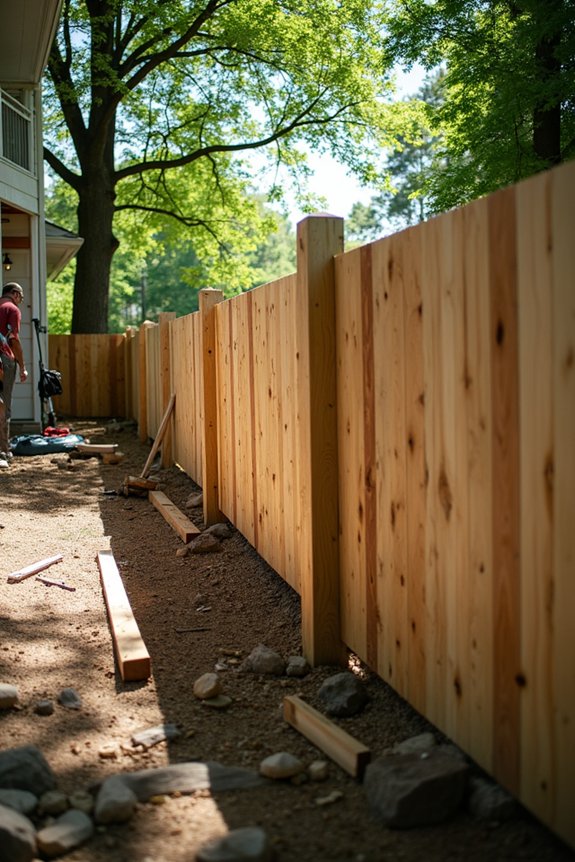
Your design choices matter, but here’s what really moves the needle on your final bill: the actual conditions of your yard and the labor it takes to work with them. Uneven terrain and terrain slope complicate installation complexity. You’re looking at stepped or racked panels, plus extra post-hole digging that increases labor costs quickly.
Larger yards demand more materials and labor expenses—a 2,000 sq ft yard runs roughly double a 500 sq ft one. If you’re going with an 8 ft fence instead of standard 6 ft, expect labor costs to jump 25%–35%. Heavy equipment like backhoe or excavator use pushes expenses higher still. Add gate or design complexity into the mix, and you’re investing serious money. Your site challenges determine what you’ll actually spend.
Regional Labor Rates, Permit Fees, and Hidden Costs
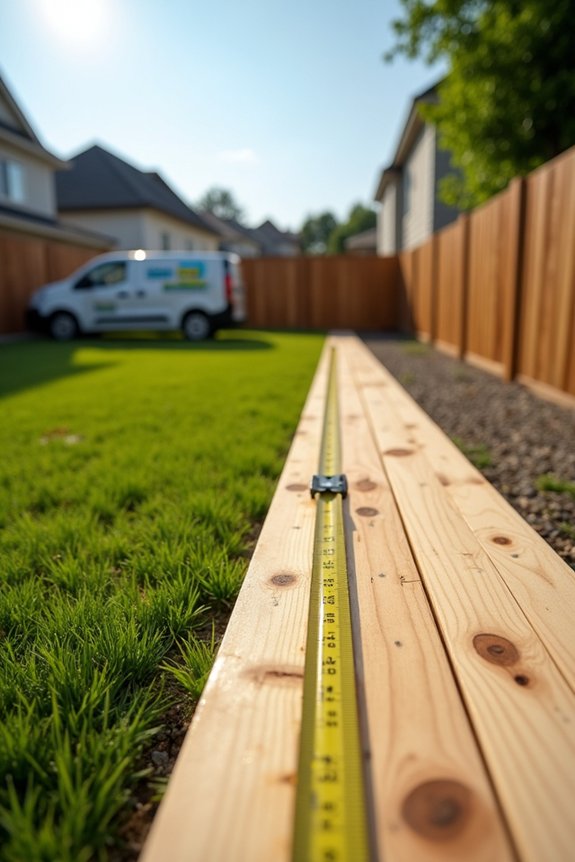
When I start calling contractors for fence quotes, the labor rates they quote me vary wildly depending on where I live—and that’s before we even talk about permits or surprise charges.
Regional labor rates typically run $22 to $30 per hour, but that’s just the beginning. Here’s what I’ve discovered hidden in the fine print:
- Permit fees add $20 to $60 depending on local regulations
- Fences over 6 feet require additional approvals in certain districts
- Site conditions like uneven terrain, rocks, or roots noticeably increase digging time
- Debris removal and old fence removal aren’t always included in base estimates
- Multi-person crews boost total labor costs considerably
I’ve learned that getting multiple contractor quotes and using online labor calculators helps me account for local estimates, permit requirements, and site-specific challenges before committing to anything.